

Diageo and Burberry Shares Rally Following US Supreme Court Tariff Decision
Shares in two of the FTSE 100's most prominent retail giants experienced a significant rally on Friday afternoon after the United States Supreme Court delivered a landmark ruling against President Trump's expansive global tariff regime. The court determined that Trump had exceeded his executive authority by attempting to implement steep tariffs across major trading partners using emergency-powers legislation.
Market Reaction and Share Price Movements
Burberry, the renowned London-based luxury fashion retailer, saw its shares close the trading session up 3.2 percent, reaching 1,212 pence. Simultaneously, Diageo, the global beverage conglomerate behind iconic brands like Guinness and Johnnie Walker, witnessed an even more substantial jump of 3.9 percent to 1,851 pence. This positive market response reflects widespread investor relief at the removal of a significant trade barrier that had threatened to impact numerous international companies.
Supreme Court Ruling and Judicial Split
The Supreme Court's decision revealed a notable judicial split, with all three liberal justices—Ketanji Brown Jackson, Elena Kagan, and Sonia Sotomayor—voting against the tariffs. They were joined by conservative justices Amy Coney Barrett, Neil Gorsuch, and Chief Justice John Roberts, forming a six-to-three majority. Justices Brett Kavanaugh, Samuel Alito, and Clarence Thomas dissented from the ruling. President Trump had previously warned that losing this case would create a "complete mess" and force the United States to "unwind" existing trade deals, highlighting the high stakes involved.

Burberry's Exposure and Strategic Turnaround
Burberry had explicitly highlighted the threat posed by Trump's tariffs in its recent financial accounts, noting "heightened volatility and instability across key regions." The company's reports detailed concerns about trade tariffs and divergent government policies potentially impacting the macroeconomy, financial markets, and supply chains in core operating areas. With US sales accounting for approximately 21 percent of total revenue, the tariff relief is particularly significant. In the 2024-25 financial year, Burberry generated £510 million from the Americas, representing a 15 percent decrease from the previous year, out of total revenues of £2.4 billion.
The fashion house is currently navigating a strategic turnaround under new chief executive Joshua Schulman, who described recent performance as "disappointing." In communications to shareholders, Schulman acknowledged that the brand had moved "too far, too fast," with an overly modern expression that neglected its heritage. The tariff ruling removes a substantial external pressure as Burberry works to revitalize its brand and operations.
Diageo's North American Operations and Financial Impact
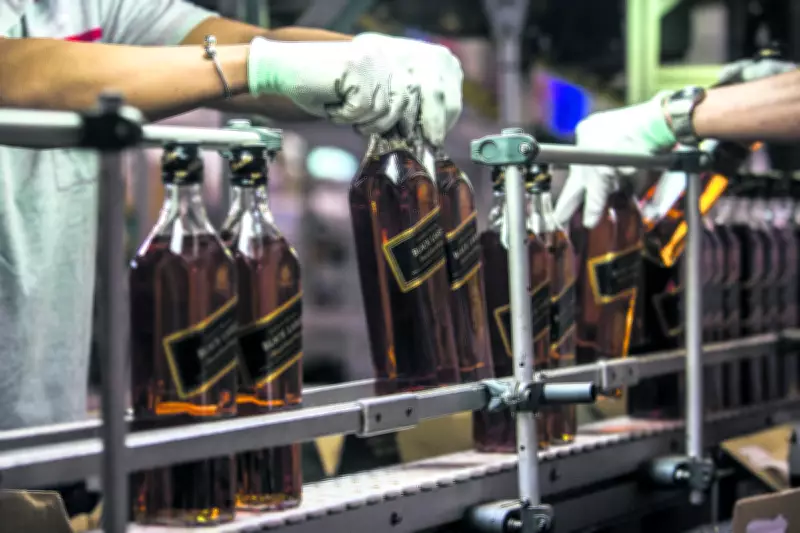
Diageo, which owns the world's best-selling Scotch whisky, Johnnie Walker, alongside Guinness, had prepared for a substantial financial hit from the US tariffs. The company estimated an annual impact of $150 million (£111.2 million), based on assumptions of a 10 percent tariff on imports from Europe while maintaining exemptions for Mexico and Canada under the USMCA trade agreement. North America represents a critical market for Diageo, accounting for up to two-fifths of global sales—approximately $8 billion in 2024. The region had already seen a 10 percent decline in net sales for key brands like Johnnie Walker last year, making the tariff relief a crucial development for future growth prospects.
Broader Market Implications and Expert Analysis
The ruling's implications extend far beyond individual companies, touching on fundamental questions of US presidential power and the separation of powers between the executive and legislative branches. Rob Burdett, head of multi-manager at Nedgroup Investments, emphasized the decision's significance as a macro catalyst across equities, bonds, currencies, and global trade flows. He noted that the ruling against tariffs is widely expected to lift both US and global equities, with relief from trade uncertainty potentially benefiting cyclical sectors and import-dependent industries such as IT hardware, retail, and industrials.

In the United States, major fashion retailers also experienced stock surges following the announcement, with Victoria's Secret shares rising as much as 5.6 percent and Abercrombie & Fitch surging 5.5 percent. This synchronized positive response across Atlantic markets underscores the interconnected nature of global trade and the far-reaching consequences of US trade policy decisions.





