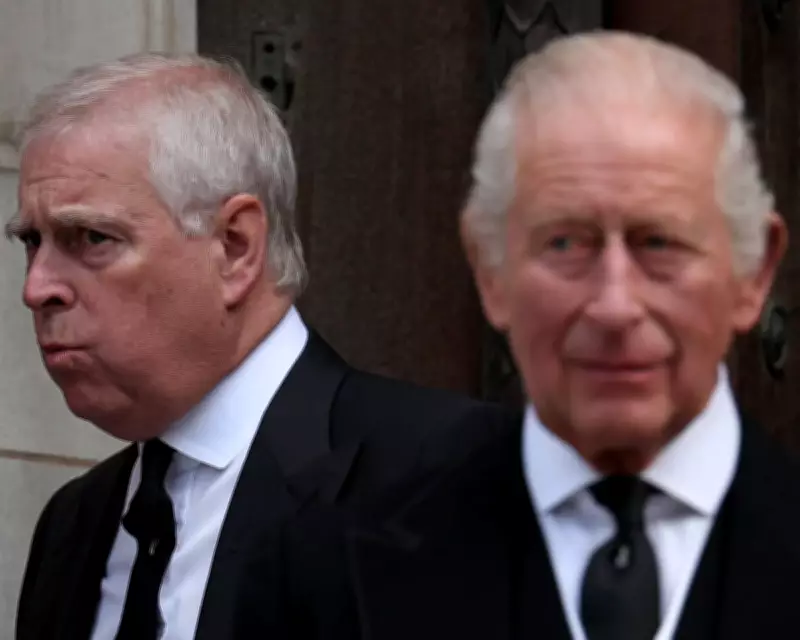
A Constitutional Crisis Unfolds: Andrew's Arrest Shakes the Monarchy
The late Queen Elizabeth II appears to have shielded her favored son, Prince Andrew, and settled portions of his financial obligations, potentially diminishing King Charles III's inheritance. This revelation surfaces amid a deepening scandal that threatens to destabilize the British monarchy.
The Most Damaging Day in Centuries for the Royal Family
Thursday marked a pivotal and devastating moment for the royal institution, arguably the most severe since the Glorious Revolution of 1688 or the execution of King Charles I in 1649. The arrest of Prince Andrew on suspicion of misconduct in public office has eclipsed previous crises, including Princess Diana's death and the 1936 abdication, by directly undermining the monarchy's core foundations.
King Charles III, attending London Fashion Week, likely found his mind preoccupied with the crumbling of his reign's aspirations. Diagnosed with cancer and anticipating a short tenure, he never envisioned his brother's alleged actions would upend his plans so profoundly.

Questions of Accountability and Deference
The Andrew crisis persists, raising not only concerns about his behavior but also broader issues regarding royal finances, privacy, and unaccountability. If Charles indeed warned their mother against appointing Andrew as a trade envoy in 2001, why did the palace delay action for so long?
Known for years as "Airmiles Andy" due to his extravagance, Andrew's alleged proclivities were reportedly overlooked, reflecting excessive deference to the late queen. Her protection of him may have compromised Charles's inheritance, highlighting a failure to prioritize the institution's preservation for succession.
Gradual measures, such as stripping Andrew of public duties and titles, have proven insufficient and belated, failing to prevent the escalating scandal.
The Legal and Public Fallout
In a rushed statement following his brother's arrest, King Charles emphasized that the law must proceed, a minimal stance in an era of intense media scrutiny. Should Andrew face trial, it would occur in the king's court, under the royal coat of arms, with any imprisonment served at His Majesty's pleasure.
Andrew's arrest, involving plainclothes officers at Sandringham, has drawn global attention, with images of him looking shell-shocked circulating widely. This contrasts sharply with his previous arrogant demeanor, as evidenced by disproven claims in his 2019 BBC interview regarding associations with Jeffrey Epstein and Virginia Giuffre.
Broader Implications and Public Sentiment
The scandal's impact is more pronounced in the UK than the US, where it has become a constitutional rather than political issue. Unaddressed questions remain about young women trafficked by Epstein, potentially involving UK airports like Stansted and Luton, prompting calls for investigations.
Despite being eighth in line to the throne and a counsellor of state, Andrew's roles are now symbolic, with removal possible through parliamentary action. Public opinion polls indicate declining support for the monarchy, with 25% favoring abolition and 50% doubting its survival in 50 years.
While the monarchy endures, hopes rest on Prince William, but another major scandal could push the institution toward irrelevance. The age of deference has ended, demanding greater accountability and transparency from the royal family.