

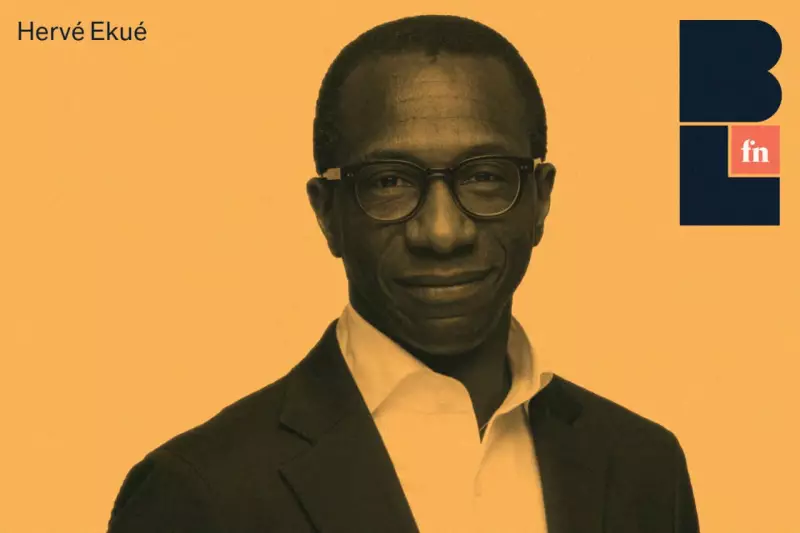
Hervé Ekue, a respected figure in the City of London, has highlighted a persistent and significant barrier to diversity and inclusion within the UK's financial heartland. He argues that a profound lack of visible role models from underrepresented backgrounds makes it considerably harder for individuals to see a clear path for their own progression to senior leadership positions.
The Visibility Deficit in Leadership
Ekue, who serves as the chair of the board of trustees at the Chartered Institute for Securities & Investment (CISI), pinpointed the core issue during a recent discussion. He stated that when people from diverse ethnic or socio-economic backgrounds look towards the upper echelons of financial firms, they often see few, if any, leaders who resemble them or share similar lived experiences.
This absence creates a psychological barrier. "If you can't see it, you can't be it," is a commonly echoed sentiment that Ekue reinforces. The scarcity of visible, successful role models in top roles sends an implicit, yet powerful, message about who belongs in those positions and who does not. This can dampen ambition and limit self-belief among talented junior and mid-level professionals from non-traditional backgrounds.

Beyond Recruitment: The Progression Pipeline Problem
Ekue was careful to note that the industry has made some strides in improving the diversity of its intake at graduate and entry levels. However, he emphasised that the real crisis lies in the "progression pipeline." Many firms struggle to retain and advance this diverse talent, leading to a 'leaky bucket' scenario where promising individuals leave due to a perceived lack of opportunity or a non-inclusive culture.
The problem, he suggests, is not merely one of numbers but of environment and perception. Without leaders who act as beacons, it becomes challenging for others to navigate the often-unwritten rules of corporate advancement. Ekue's comments underscore that true inclusion requires more than just hiring policies; it demands a fundamental shift in culture and a conscious effort to make success stories visible and accessible.
Practical Steps and Organisational Responsibility
So, what is the solution? Ekue points to concrete actions that firms must take. Firstly, there must be a deliberate and sustained effort to identify, promote, and visibly champion leaders from diverse backgrounds. This involves giving them prominent platforms, involving them in key decision-making, and ensuring their achievements are communicated internally and externally.
Secondly, mentorship and sponsorship programmes are critical. While mentorship offers guidance, sponsorship involves senior leaders actively advocating for high-potential diverse talent, putting their names forward for promotions and high-profile projects. Furthermore, Ekue stresses the importance of collecting and analysing data on progression rates broken down by ethnicity and gender to identify where the pipeline is failing.
Ultimately, Ekue's message is a call to action for the City's institutions. Creating a more equitable and successful financial sector requires moving beyond superficial diversity metrics. It demands a committed, long-term strategy to cultivate and showcase a wide array of role models, thereby inspiring the next generation and proving that the top is within reach for everyone, regardless of their starting point.






