

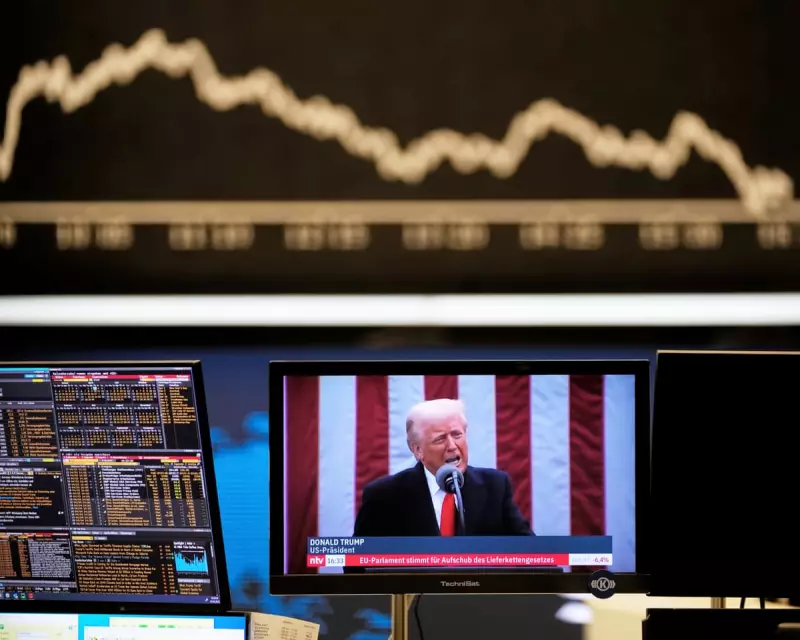
The global economy demonstrated unexpected resilience through a turbulent 2025, navigating a potent mix of geopolitical strife and trade wars. However, as we look towards 2026, forecasts point to a period of moderated growth, shaped significantly by the lingering impact of Donald Trump's tariff policies and the uncertain promise of artificial intelligence.
While the worst of the recent inflation shock may be receding, allowing major central banks to cautiously lower interest rates, the era of ultra-low borrowing costs is firmly in the past. The economic landscape remains fragile, with slowing growth and persistent risks on the horizon.
The AI Promise and the Peril of a Tech Bubble
After years of anticipation, 2026 is poised to be a critical test for artificial intelligence's catalytic effect on the global economy. Businesses are investing colossal sums into datacentres and automation, raising the question of whether this will finally ignite a new wave of productivity growth.

Yet, enthusiasm is tempered by a palpable fear of a speculative bubble. A Deutsche Bank poll of institutional clients revealed that 57% of respondents ranked a tech bubble bursting among their top three risks for 2026, making it the single dominant concern entering the new year. Jim Reid, the bank's global head of macro research, noted the unprecedented lead this risk holds over others.
Despite the potential AI tailwind, global GDP growth is forecast to moderate in 2026. This slowdown is attributed in large part to the sustained damage to international trade flows from Trump's tariff policies. Consumer demand, still reeling from years of high inflation and borrowing costs, continues to face pressure.
Inflation, Interest Rates and Political Pressure
Households across rich nations can expect some relief as inflation is predicted to cool significantly in 2026, moving towards a "normalisation" that would allow central banks to conclude their rate-cutting cycles. However, the path is fraught with potential pitfalls.
In the United States, a major focal point will be the end of Federal Reserve Chair Jerome Powell's term in May. Markets will scrutinise whether his successor will implement deeper cuts amid potential political pressure from the Trump administration, with fears of Washington interference weighing on financial sentiment.
The UK risks being an outlier in the disinflation process. The International Monetary Fund previously forecast that Britain would suffer the highest inflation in the G7 this autumn. However, the Bank of England has since indicated that Chancellor Rachel Reeves's budget could help bring headline inflation close to the 2% target by summer.
Economists remain wary, however, that inflation could rekindle, limiting how much further interest rates can be cut. Jack Meaning, UK chief economist at Barclays, suggests the conversation is shifting towards smaller adjustments, a return to a more familiar pre-inflation shock environment.
Trade Tensions and the Jobs Market Squeeze
While the immediate shock of Trump's "liberation day" tariff announcement has subsided, the global trade landscape is permanently altered. US tariff rates remain significantly higher, and policy uncertainty persists. Economists like Carsten Brzeski of ING note that trade tensions between the US and China, and increasingly Europe and Beijing, appear "baked into a new normal."
This fragmented environment is forcing companies to accelerate supply chain diversification and near-shoring efforts, which in the longer term is likely to reduce trade volumes, raise costs, and dampen worldwide growth.
Perhaps the most pressing domestic concern for 2026 is the labour market. Hiring demand tumbled across advanced economies in 2025, leading to sharp rises in unemployment. In the UK, the rate has already reached 5.1%, the highest level outside the Covid pandemic in almost a decade, and could climb further. In the US, unemployment hit a four-year high of 4.6%.

The combined impact of tax policies, business uncertainty, and AI adoption is expected to continue weighing on employment. Youth unemployment in Britain is causing particular political alarm. Despite these pressures, wage growth is expected to remain oddly resilient, a factor that continues to spook central bankers mindful of inflation risks.
As Hannah Slaughter, a senior economist at the Resolution Foundation, warns, Britain is likely to enter 2026 with rising joblessness and the risk that pay growth could stall, a trend policymakers must urgently address.





