

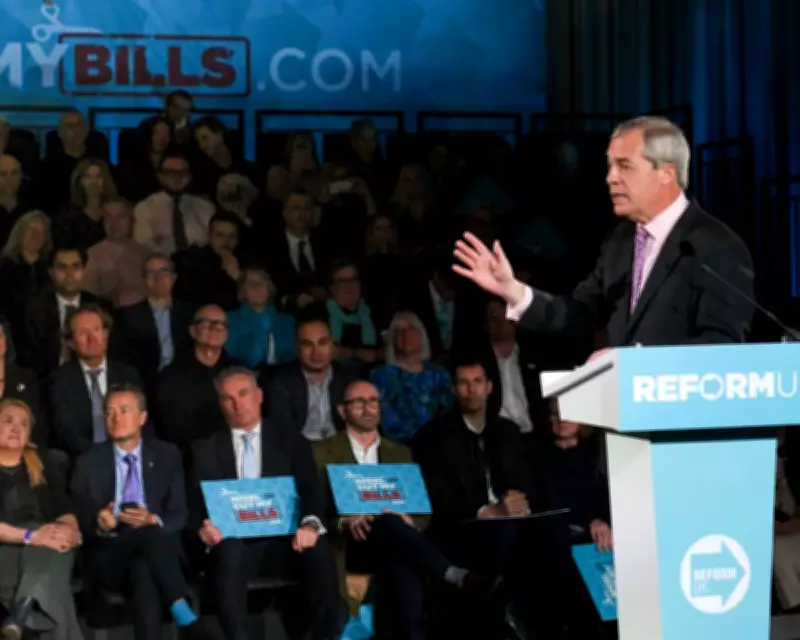
Britain could face economic turmoil reminiscent of the Liz Truss era if a Reform UK government follows through on its promise to cancel subsidy contracts for renewable energy projects, according to the industry's leading lobbyist. Tara Singh, chief executive of RenewableUK and former energy adviser to David Cameron, warned that the policy proposed by Nigel Farage's populist party would severely damage investor confidence in both the energy sector and the broader UK economy.
Impact on Investor Confidence
"The signal this would send to the entire investor community would be really damaging," Singh said. She cautioned that the policy could raise the cost of building new infrastructure across the economy if investors lose faith in a potential government's economic agenda. "We've all lived through a Liz Truss era, and I don't think this is something that we would want to go back to," she added.
Reform UK's deputy leader, Richard Tice, last summer gave "formal notice" to large renewable energy developers that the party would cancel any deals struck in the government's subsidy auction if it came to power. In a letter to energy companies, Tice stated that the "political consensus that has sheltered your industry for nearly two decades is fracturing" and the party would "seek to strike down all contracts" if it formed a government.

Growing Concerns
While the industry's initial reaction was calm, concerns have deepened as Reform UK has gained momentum in recent byelections. One senior industry figure noted, "What has changed is that they're clearly positioning themselves as a force to be reckoned with, as the next government in waiting. They are absolutely preparing for government, and you can't ignore that."
The figure highlighted the economic benefits of offshore wind operations along UK coastlines, which bring billions in investment and employ local people. "If you want to generate economic growth, then you need to invest in infrastructure and energy security. If you strip away the political colours you find that every party wants this," they said.
Legal and Economic Consequences
Singh argued that scrapping subsidies would not save money because developers could sue the government for breach of contract. She cited Spain's experience after the financial crisis, where cancelling solar subsidies led to over 50 international lawsuits and reputational damage that increased the cost of all new infrastructure. "Everything has become so tribal," Singh said, urging all parties to avoid a "culture war" over energy policy and instead focus on energy security, costs, and job creation.
She emphasised that renewable energy projects are now cheaper than new gas plants, even before the Middle East war caused a fossil fuel supply crisis. The industry is expected to support 112,000 jobs by 2030, many in areas that lean towards Reform UK. "Even among conservative voters there's a clear majority in favour of net zero. Voters do like renewables," she said. "In the world that we are in today, renewables offer by far the best value."
Reform UK has been contacted for comment.






