

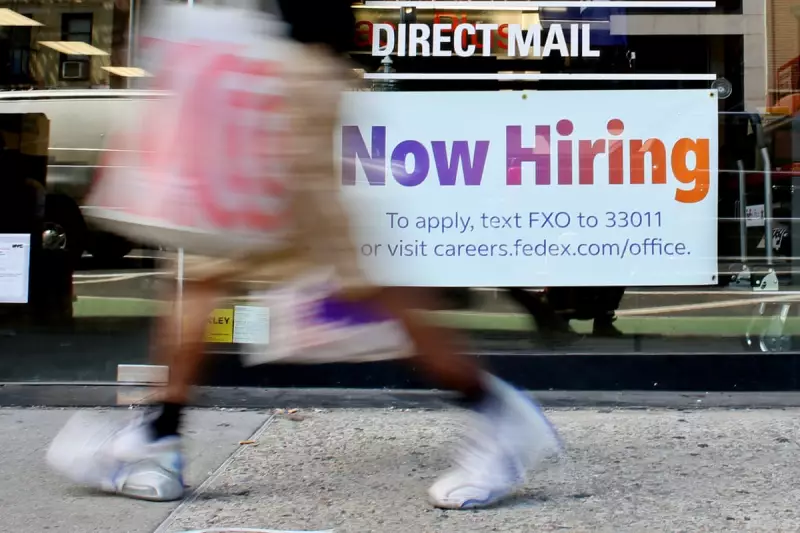
The US labour market demonstrated resilience in the final month of 2026, holding firm amidst ongoing economic uncertainty. Official data reveals a continued, albeit subdued, phase of job creation, leading analysts to characterise the environment as one of cautious stability.
December Data Shows Steady but Subdued Growth
According to the US Bureau of Labor Statistics (BLS), employers added 50,000 jobs to the workforce in December. This closely watched figure fell slightly short of economist forecasts, which had anticipated approximately 73,000 new positions. The report also included downward revisions for the previous two months, with the BLS now estimating that 76,000 fewer jobs were added in October and November than initially reported.
In a positive shift, the unemployment rate dipped to 4.4% in December, recovering from a four-year high of 4.6% recorded in November. The data for December was particularly significant as it was the first complete collection by the statistics bureau following a federal government shutdown that had halted economic data gathering in October and early November.

A 'No Hire, No Fire' Phase for the Labour Market
Economists are now describing the current condition as a 'no hire, no fire' phase. This term indicates that while job growth persists, it remains muted, and large-scale layoffs are also not prevalent. Supporting this analysis, data from outplacement firm Challenger, Gray & Christmas showed that layoffs in December were nearly half the level seen in November.
This labour market data is set to be a critical factor for the Federal Reserve. Officials are expected to weigh the report at their next policy meeting scheduled for the end of January, where they will decide whether to adjust interest rates, which currently sit in a range of 3.5% to 3.75%.
Federal Reserve Caution Amid Political Pressure
The path forward for interest rates appears contentious. Minutes from the Fed's December meeting, where officials made a third consecutive cut, revealed stark divisions among members. "Some participants suggested that, under their economic outlooks, it would likely be appropriate to keep [rates] unchanged for some time," the notes stated.
Fed Chair Jerome Powell emphasised a cautious approach in a recent press conference, expressing hope that the labour market would stabilise and inflation would continue to cool. Prices rose by 2.7% in November, down from 3% in September.
However, the Fed's vigilant stance continues to clash with the outlook of the White House. Treasury Secretary Scott Bessent recently urged the Fed to continue cutting rates, arguing it is "the only ingredient missing for even stronger economic growth." The White House has previously attributed rises in the unemployment rate to more Americans re-entering the job market, a claim made despite data showing an increase in the number of people not in the labour force over the preceding year.
As the new year begins, the US economy finds itself at a crossroads, with the strength of the jobs market serving as a key barometer for both monetary policy and political debate.






