

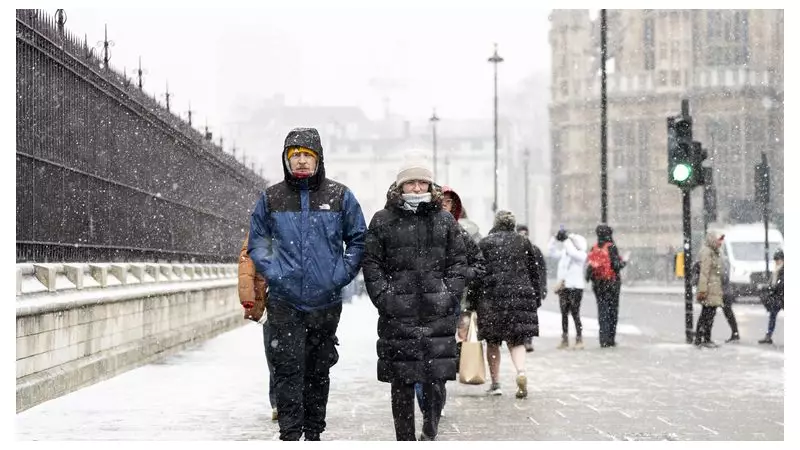
As the UK braces for further heavy snow and strong winds from the first named storm of 2026, Storm Goretti, a critical question arises for many: how cold is too cold to go to work? With scenes of disruption across the country, including significant snowfall in central London on 6 January, understanding your rights in freezing conditions is paramount.
What Does UK Law Say About Workplace Temperatures?
Contrary to popular belief, there is no specific law in the UK that sets a legal minimum or maximum temperature for workplaces. However, this does not give employers free rein. Under health and safety legislation, they have a clear duty to provide a "reasonable" and "comfortable" temperature for their staff, with access to clean and fresh air.
General guidance from the Health and Safety Executive (HSE) suggests a minimum of 16°C (60.8°F) for indoor workplaces, or 13°C (55.4°F) if the work is physically demanding. The key principle is that employers must conduct risk assessments and take practical steps to protect workers from the cold.

Employer Responsibilities for Outdoor and Cold Work
For staff required to work outside or in unheated environments, such as refuse collectors, road maintenance crews, or construction workers, the HSE outlines specific measures employers should take. These are crucial for preventing cold stress, which can lead to serious conditions like hypothermia or frostbite.
Key employer duties include:
- Providing appropriate protective clothing and equipment.
- Ensuring access to mobile facilities for warming up, with hot drinks available.
- Introducing more frequent rest breaks.
- Monitoring workplace temperatures and their impact on staff, reviewing working habits if necessary.
- Offering health screening for vulnerable workers, including those who are pregnant, have illnesses, or are on certain medications.
- Where possible, considering delaying work until warmer weather or implementing flexible patterns and job rotation.
Employers must also ensure workers can manage their thermal comfort and be vigilant for signs of cold stress, which can impair safety, especially when handling machinery.
What Can You Do If Your Workplace Is Too Cold?
The government's primary advice for employees is to "talk to their employer" if they find the working environment unacceptably cold. A wide range of health and safety regulations support this, and employers are legally obligated to listen and address reasonable concerns.
Health experts, including those cited by the Met Office, warn that cold temperatures pose increased risks. For older workers especially, the body becomes less efficient at detecting cold and warming up, elevating the danger of:
- Heart attacks and strokes.
- Pneumonia and worsened arthritis.
- Depression and an increased risk of accidents.
With Storm Goretti underscoring the UK's vulnerability to severe winter weather, both employers and employees must be proactive. Understanding these guidelines is not just about comfort—it's a fundamental aspect of workplace safety and welfare during the coldest months.






