

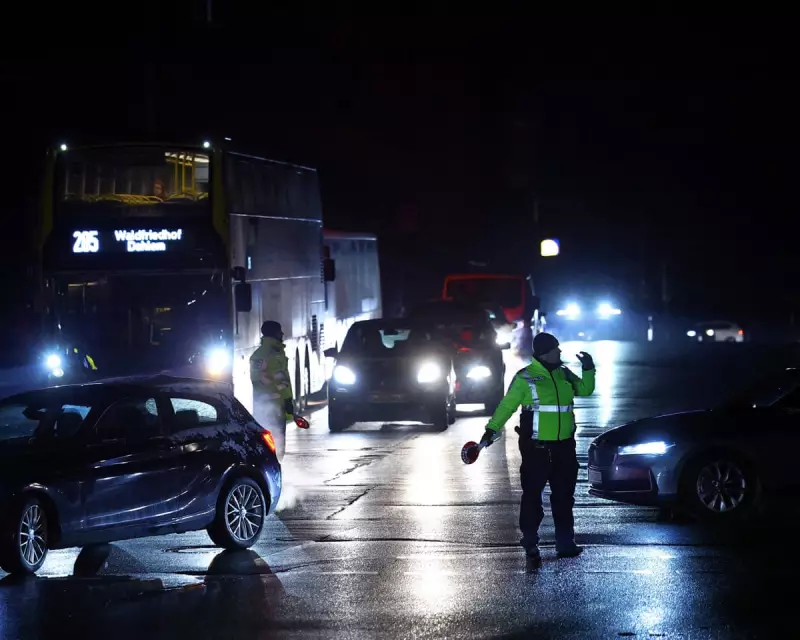
Residents of Berlin are demanding urgent answers after a deliberate act of sabotage triggered the German capital's longest power cut since the Second World War. A leftwing anarchist group's arson attack on Saturday left tens of thousands of households and businesses in darkness for more than three days, exposing critical vulnerabilities in the nation's infrastructure.
An Attack on Critical Infrastructure
The blackout, which began on Saturday, was caused by an arson attack on a bridge carrying high-voltage electricity cables in south-western Berlin. The militant group known as Vulkangruppe (Volcano Group) claimed responsibility, stating their aim was to "turn off the juice of those in power" and protest Germany's reliance on fossil fuels.
The consequences were severe and widespread. The sabotage cut power to approximately 45,000 households and nearly 2,000 businesses. The outage also severely impacted public services, hitting four hospitals, 74 care homes, 20 schools, and a significant portion of the local public transport network. Federal state prosecutors have taken over the criminal investigation, but admit they have few leads beyond some footprints left in the snow.

A City Struggles in the Dark
For Silke Peters, a resident of the affluent Zehlendorf district, the crisis validated her decision to buy emergency supplies like a crank radio and camping stove after Russia's invasion of Ukraine. "He put me down, only half-jokingly, as a prepper," she said of her husband's initial reaction. Her wind-up radio, with its torch and charging point, became indispensable during the prolonged outage.
The human impact was profound. The Red Cross distributed thermal flasks and food, while the army was deployed to deliver diesel to hospitals running on emergency generators and to assist with repairs. Berlin's mayor, Kai Wegner, faced anguished questions from affected citizens during a visit to a sports hall serving as an emergency dormitory. "What is wrong with this city?" one man demanded, as his elderly mother lay on an army camp bed after being evacuated from her care home.
Anar, a cleaner in her 60s, was stranded on a train during the blackout, worried about missing work and pay. "How is it possible that the power grid is so insecure?" she asked. "This has made a lot of people very angry."
Systemic Vulnerabilities Exposed
The attack has ignited a fierce political debate about the resilience of Germany's critical infrastructure. Berlin's energy and economy senator, Franziska Giffey, called the sabotage a "serious blow," admitting the perpetrators likely used publicly available maps to plan their attack. "You can find a lot of information on the internet," she conceded, suggesting a future need to balance transparency with security.
Experts have long warned of such weaknesses. Manuel Atug, a founder of the independent working group AG Kritis, stated his organisation has repeatedly highlighted systemic shortfalls. "Resilience costs money," he said, pointing out that utility companies only do what is legally mandated and that politicians often prefer visible projects over mundane but vital protective measures.
The far-right Alternative für Deutschland (AfD) party sought to capitalise on public frustration, distributing blankets and accusing the government of failing to keep citizens safe. Meanwhile, an outpouring of community support saw hotels, libraries, museums, and private individuals open their doors to those affected.
By Wednesday morning, the final 20,000 households and 850 businesses were reconnected. For Silke Peters and her husband, returning home revealed a secret: her spouse had been secretly stockpiling tinned fish and water. "Everyone in Germany is doing it these days," she observed. "The difference... is that most readily admit it now without fear of ridicule." The attack has left a lasting mark, forcing a national reckoning with the security of the systems that power modern life.






