

China's Independent Refineries Face Mounting Pressure Amid Global Oil Crisis
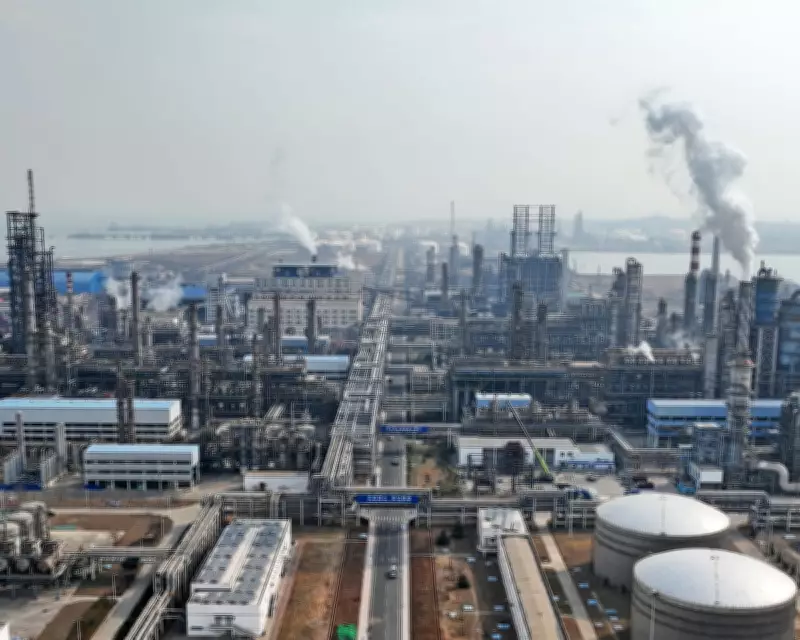
The industrial landscape of Shandong province in northeastern China presents a deceptively quiet facade during global energy turmoil. Wide highways carry oil trucks with minimal traffic, while boarded-up shops in crumbling low-rise buildings hint at faded local vitality. Yet this region serves as the bulwark of China's energy security, powered by independent "teapot" refineries that derive their name from their comparatively diminutive appearance relative to state-owned giants.
The Teapot Refinery Ecosystem
Shandong's teapot refineries operate on exceptionally thin margins, surviving by sourcing inexpensive crude oil globally and converting it into gasoline and diesel for neighboring provinces. These facilities collectively account for approximately one-quarter of China's total refining capacity, making them indispensable to the nation's economic stability despite oil representing less than twenty percent of China's overall energy mix.
At lunchtime, a ramshackle noodle shop serving hand-pulled dough ribbons stands nearly empty, occupied only by a few construction workers and a teacher watching videos on Douyin while eating. The proprietor remains unconcerned about the midday quiet, explaining that peak business arrives at midnight when thousands of refinery workers finish their shifts and stream from nearby gated factory complexes.

Global Crisis Strains Local Operations
The current pressure stems from US-Israeli strikes on Iran in late February, which unleashed Middle Eastern chaos and prompted Tehran to effectively close the Strait of Hormuz—a vital waterway transporting about one-fifth of global oil and gas. While this crisis has triggered school closures in Pakistan, a national emergency declaration in the Philippines, and record-high oil prices worldwide, Iranian crude continues flowing predominantly to China, which purchases over eighty percent of Iran's oil exports.
Data intelligence firm Kpler reports China's Iranian crude imports currently running at approximately 1.6 million barrels daily, slightly above 2025 levels. "We are not seeing any disruption to Iranian oil flows," confirms Muyu Xu, a senior crude oil analyst at Kpler.
Sanctions and Market Dynamics
China's state-owned refiners exercise caution regarding Iranian oil purchases to avoid exclusion from the US dollar-based international financial system. However, teapot refineries serving domestic markets face no such reservations. "Western sanctions have paved the way for Iran and Venezuela and Russia to become the biggest suppliers to China," observes Erica Downs, a senior research scholar at Columbia University's Center on Global Energy Policy.
The financial landscape has shifted dramatically for these refineries. Before the US-Israeli strikes, Iranian light crude traded approximately eleven dollars cheaper per barrel than Brent crude. That discount has now narrowed to as little as two dollars per barrel, coinciding with Brent prices reaching unprecedented highs.
Local Impacts and Worker Concerns
Uncle Wang, a septuagenarian petrol station proprietor in Weifang who requested pseudonymity, reports stable local diesel and gasoline supplies since the conflict began, though rising prices have reduced his profits to "almost zero." He remarks, "It's not that other countries can't get oil, it's that they are too scared to buy it because Donald Trump won't let them. But China isn't afraid of him." His office features a jade-colored figurine of a frog biting a gold coin—a traditional prosperity symbol now facing challenging economic realities.
Workers directly experience the economic shock. A twenty-two-year-old Luqing Petrochemical employee, whose identity the Guardian protected, works on production lines converting crude oil into light plastics for everyday goods like shopping bags. "Before the war, profits were OK. After the war started, because the crude oil prices went up so much... clients started buying less," he explains, noting that haulage vehicles now arrive less frequently. He anticipates his monthly salary of 5,000 yuan (approximately £545) dropping to about 4,000 yuan next month.

Broader Economic Implications
Luqing Petrochemical, employing over 2,700 people, faces particular challenges after US sanctions last year for allegedly purchasing millions of Iranian oil barrels. The worker reports recent company pressure on employees to resign through salary reductions and difficult work site relocations. "I'm quite worried because the benefits and treatment here are very good," he admits, fearing further cuts if conflict persists. Luqing did not respond to comment requests.
While most ordinary Chinese citizens remain insulated from this economic shock, the government made a rare retail fuel market intervention recently, reducing planned petrol and diesel price increases by approximately fifty percent. This prompted drivers to flock to stations before costs rose.
Uncle Wang identifies a more significant long-term threat than international conflict: "War is short-term. The bigger threat to my petrol station business comes from a domestic trend—electric vehicles." As teapot refineries and their thousands of employees withstand mounting pressure, some operations risk collapse if prices continue climbing, potentially destabilizing a crucial component of China's economic infrastructure.





