

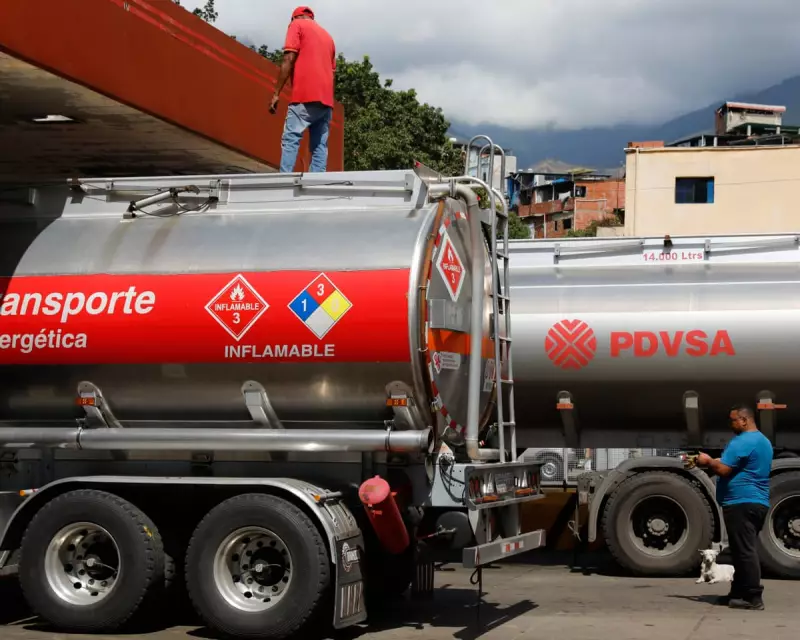
In a bold move this week, the Trump administration has laid claim to billions of dollars' worth of Venezuelan crude, seizing control of nearly $3bn (£2.3bn) of oil stranded in tankers and storage. The White House declared its intention to manage all of Venezuela's oil sales 'indefinitely', marking the opening gambit in a plan to harness the country's vast reserves, estimated at almost a fifth of the world's proven total. The immediate prize is up to 50 million barrels for the world's largest oil consumer, but the ambition stretches far beyond a one-off cargo grab. Experts warn, however, that unlocking the 'tremendous wealth' of Venezuela's long-neglected industry presents a monumental, costly, and risky challenge with no quick fixes in sight.
The Daunting Scale of Decay and Investment
Venezuela, a founding member of the Opec cartel, once pumped a peak of 3.5 million barrels per day in the late 1990s. Decades of neglect and alleged corruption have left the state-run industry in tatters, with current output languishing below 1 million barrels daily—less than 1% of the global market. Analysts at Rystad Energy paint a stark picture of the revival effort: returning production to just 2 million barrels a day could require a staggering $183bn and might not be achieved until 2040.
This colossal sum covers the cost of repairing and upgrading the ageing, broken infrastructure owned by PDVSA, the state oil company, and the complex extraction of Venezuela's dense, heavy crude. This particular oil grade is more expensive to produce than lighter US shale but is highly sought after by specialised US refineries. Rystad notes that even with an estimated $53bn for maintenance, an additional $8-9bn in annual investment would be needed to meet Trump's output targets, requiring a $30-$35bn commitment in the first two years alone—funds likely only forthcoming from international oil companies with full confidence in the country's stability.

Market Realities and the 'Break-Even' Barrier
US officials have begun talks with oil executives, but the discussions are fraught. Companies, under shareholder pressure to maintain capital discipline, demand significant guarantees for their multibillion-dollar investments. The economics are challenging: while the break-even price for Venezuelan crude from the Orinoco region was around $49 a barrel in 2020, lack of investment may have pushed it to $65-$80 per barrel. With oil prices falling due to a global supply glut, and US shale projects needing about $65 to break even, Venezuelan oil must compete for capital against more enticing global opportunities.
Goldman Sachs had already predicted the average Brent crude price would fall from $69 in 2025 to $56 this year. Any success in boosting Venezuelan output could drive that price down to $54, further squeezing potential returns and making the gamble less attractive to cautious investors.
The Peak Oil Dilemma and Stranded Asset Risk
Compounding these financial hurdles is the long-term threat of peak oil demand. The International Energy Agency predicts global oil demand could peak around 2030, driven by electric vehicle adoption and green energy. Research by Carbon Tracker warns that Trump's move risks a 'scramble for stranded assets', as the falling cost of renewables makes Venezuela's heavy crude increasingly unviable. If full production isn't achieved until 2040, investments could be seriously undermined by a declining market.
Beyond the direct climate impact of exploiting more fossil fuels, analysts suggest the intervention's most significant effect may be indirect: 'distracting from the urgent transition to renewables; reinforcing a 20th-century paradigm of resource conflict... and potentially creating regional instability that hinders coordinated climate policy.'
Political Instability and Cautious Capital
Despite Trump's assertions of transformative investment from US oil majors, the industry is wary. The region's history of political instability and popular opposition to foreign interference, coupled with the unpredictability of US policy itself, gives pause. As one private equity investor told the Financial Times, 'No one wants to go in there when a random fucking tweet can change the entire foreign policy of the country.'

History offers cautionary tales: Iraq's production took nearly a decade to recover post-2003 invasion, and Libya's output collapsed after 2011. The largest listed oil companies, with stringent duties to shareholders, will conduct lengthy risk analyses. The first beneficiaries are thus likely to be service companies and smaller, risk-tolerant 'wildcat' drillers for whom securing a world-class Venezuelan asset could be a 'company-making' opportunity increasingly scarce elsewhere.
In conclusion, while the seizure of stranded cargo offers a short-term win, the path to reviving Venezuela's oil industry and fulfilling the Trump administration's broader ambitions is littered with immense financial, logistical, and geopolitical obstacles. The gamble hinges on securing unprecedented investment in a broken system, against a backdrop of falling oil prices, rising green alternatives, and profound political uncertainty.





