

Thailand's Agricultural Heartland Grapples with Fuel Shortages Amid Regional Energy Crisis
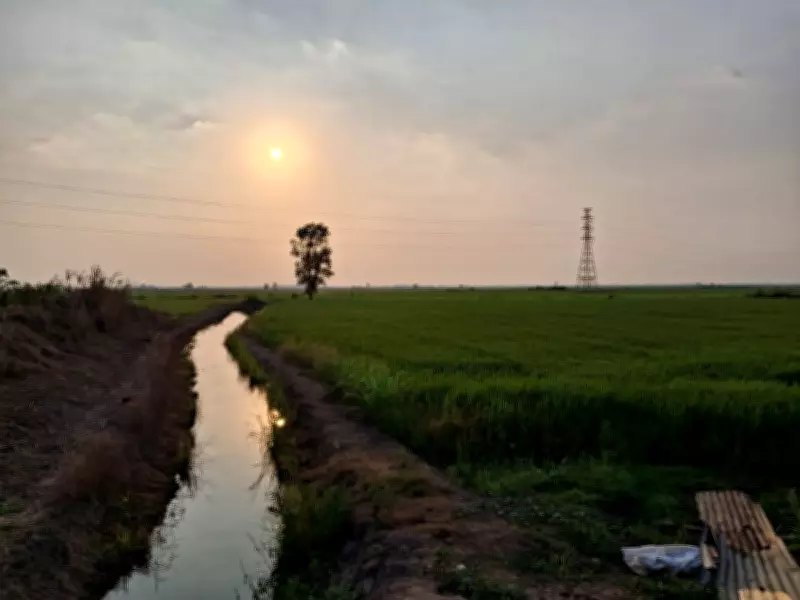
In the historic rice paddies of Ayutthaya, central Thailand, farmers like Thanadet Traiyot are experiencing unprecedented challenges as fuel shortages threaten their livelihoods. Thanadet recently waited for hours at a local gas station, only to be told supplies had run dry just as he reached the front of the queue. Five days later, he still hasn't managed to secure adequate diesel for his farming operations.
Farmers Forced to Ration Critical Resources
"It's affecting us tremendously as farmers because we rely completely on fuel for our operations," explained Thanadet as he waded through his rice fields, carefully assessing water levels and deciding which pumps to deactivate. "We need fuel for crop maintenance and water pumping to sustain our rice crops." The problem extends beyond mere scarcity to include dramatic price increases that have followed the escalation of conflict in the Middle East.
Thailand, along with numerous neighboring nations that depend heavily on Middle Eastern energy imports, finds itself on the frontline of a developing energy crisis triggered by ongoing warfare. While the Thai government claims to have sufficient energy reserves for approximately 100 days, evidence of strain appears across the country in the form of lengthy queues and "out of stock" signs at fuel stations.

Widespread Economic Disruption Across Multiple Sectors
The crisis has created ripple effects throughout Thailand's economy. Large taxis have reduced services from Bangkok's main international airport, tour boats have suspended operations, and even some temples have halted cremation services due to fuel constraints. However, the agricultural and fishing industries face particularly severe consequences.
As one of the world's leading exporters of rice, sugar, and processed fish products, Thailand's production disruptions could have global implications. Farmers cannot obtain adequate diesel to power essential machinery for harvesting, while many fishing vessels remain docked. A prominent fisher organization warned this week that the multi-billion dollar industry might come to a complete standstill within days without government intervention to offset fuel costs.
Dramatic Price Increases and Future Concerns
Thai diesel prices surged to 38.94 baht per liter following the expiration of government subsidies, representing a significant jump from pre-conflict levels of 29.94 baht per liter. Pairote Rodpai, whose family operates an 11.2-hectare farm in Ayutthaya, expressed deep concern about future costs. "Looking ahead one month, how high will prices go? When harvest time arrives, we'll need even more fuel than we use for water pumps."
His uncle, Theerasin Thanachawaroj, noted that three generations of family farming had never before encountered this level of disruption. Pramote Charoensilp, president of the Thai Agriculturist Association, warned of potentially worsening conditions if the conflict persists. "In May, if the war continues, the price problem will become more difficult and severe," he cautioned, highlighting that farmers will soon need to purchase fertilizer—another product largely imported from the Middle East.
Global Fertilizer Production Faces Parallel Challenges
The Persian Gulf region serves as a crucial hub for global fertilizer production and exports. Even countries with domestic fertilizer plants frequently depend on Middle Eastern gas imports to maintain operations. Facilities across India, Bangladesh, and Malaysia have already slowed production or shut down completely due to supply shortages.
Unlike petroleum products, the fertilizer sector lacks internationally coordinated strategic reserves, making supply chain disruptions particularly difficult to manage according to the UN's Food and Agriculture Organization. The organization has warned that the conflict represents a "major shock" to global food systems that could have far-reaching consequences.

Regional Responses and Humanitarian Implications
Across Southeast Asia, governments are implementing emergency measures to conserve fuel. The Philippines has introduced a four-day work week for many public sector employees, while Laos encourages students to cycle or use public transportation. Thailand has announced support measures for farmers, including plans to purchase rice above market rates and subsidize fertilizer costs.
The World Food Programme projects that continued conflict could push global acute hunger to record levels by 2026, with approximately 363 million people facing food insecurity. In neighboring Myanmar, already grappling with political instability since the 2021 military coup, food production costs could double compared to last year's harvest, exacerbating existing hunger affecting a quarter of the population.
Farmers Adapt with Resilience and Hope
Pairote's family acknowledges they currently possess sufficient resources to manage, but worry about less fortunate farmers without savings or those dependent on purchased food. "If prices continue rising like this, some farmers may have to abandon their crops this year," Pairote noted, suggesting some might revert to farming only for personal consumption.
For now, farmers preparing to harvest off-season rice crops have little choice but to absorb increased costs. "We can't leave crops to rot in the fields," stated Thanadet, who conserves fuel meticulously. He now carries jerry cans whenever he travels, hoping to encounter fuel stations with available supplies. Like many throughout the region, he maintains hope for a swift resolution to the conflict. "For ordinary people, no one benefits from war," he concluded soberly.





