

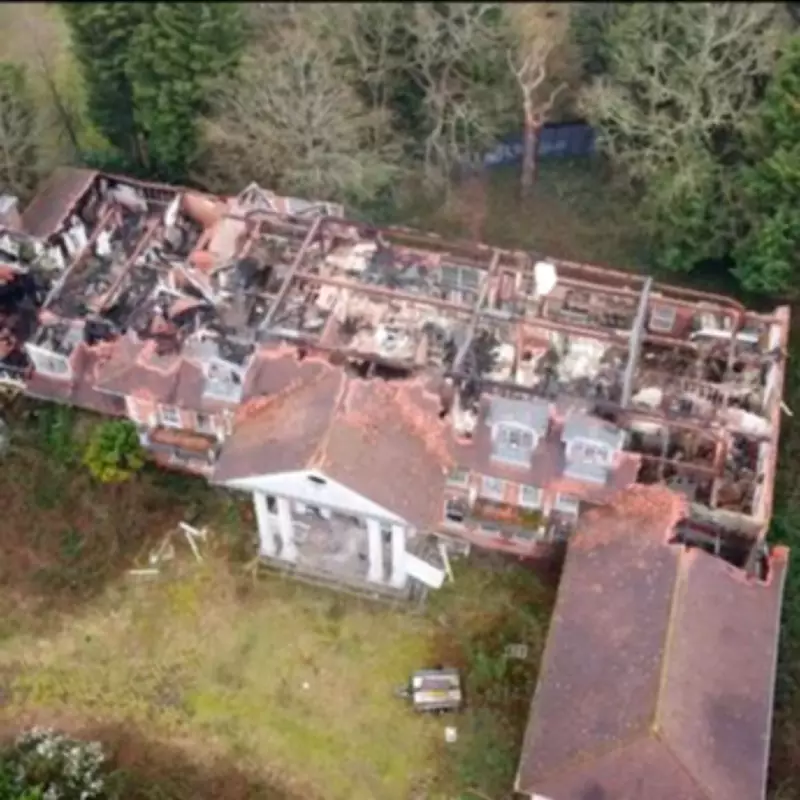
London's Abandoned Palatial Mansions: The Mysterious Ruins of Billionaire's Row
In the heart of London, just a stone's throw from affluent areas like Hampstead and Highgate, lies The Bishops Avenue, a street dubbed "the most expensive street in the world" and "Billionaire's Row." This remarkable avenue boasts more than 60 colossal mansions, collectively worth hundreds of millions of pounds, yet many stand empty and in ruins as life thrives around them. The proprietors of these palatial properties remain shrouded in mystery, with ownership frequently registered to companies based in offshore tax havens, making them virtually impossible to trace without forensic accountants.
A History of Wealth, Intrigue, and Tragedy
The history of The Bishops Avenue is both intriguing and enigmatic, earning the nickname "Millionaire's Row" as early as the 1930s. Among its earliest residents was sugar tycoon William Lyle, an early occupant of Heath Hall, which has since been rented by stars like Justin Bieber and Salma Hayek for reported sums of £27,000 per week. The street has hosted a diverse array of owners, including the Saudi royal family, who purchased a collection of mansions called "The Towers" in the 1980s as a precaution against potential invasion by Saddam Hussein's Iraq.
Other notable property owners include:

- The Sultan of Brunei, once the world's wealthiest man.
- A former Lebanese prime minister.
- The last king of Greece, Constantine II.
- Publisher and businessman Richard Desmond.
However, the street's history is also marked by tragedy and crime. Aristos Constantinou, a Greek-Cypriot fashion magnate, was fatally shot at his residence on New Year's Day in 1985 in what became known as the "Silver Bullets Murder," an unsolved case where no one has ever been brought to justice. Another previous owner, who attempted a coup in Equatorial Guinea, died in an accident after falling down the stairs of his London mansion.
Hidden Owners and Offshore Secrets
Business Insider reports that approximately 60% of the properties on The Bishops Avenue are owned by "hard-to-scrutinise shell corporations" registered in foreign tax havens like the Bahamas, Panama, and the British Virgin Islands. This secrecy serves multiple purposes: concealing wealth, hiding from public scrutiny, and, in some cases, shielding connections to oppressive regimes.
Following the outbreak of war in Iran and across the wider Middle East, reports have emerged linking some mansions to the top of the Iranian regime, including "supreme leader" Mojtaba Khamenei himself. UK politicians are demanding urgent investigations into fears that the UK has become a haven for individuals linked to oppressive regimes to hide their wealth, with individuals associated with Iran's rulers reportedly purchasing "at least 13" properties here worth around £75 million.
From Ruins to Redevelopment
While many mansions lie in disrepair, with roofs destroyed and gates firmly shut, others have seen transformation. Hammerson House opened as a care home in 2021, replacing one of the huge homes, and another care home is set to open in 2025 as a luxury complex for older people with 93 flats over six storeys. The Towers, the enormous collection bought by the Saudi royal family, have been sold to a developer with plans to convert them into luxury flats.
Toprak Mansion, a 30,000 sq ft property built by Turkish entrepreneur Halis Toprak in the 1990s, achieved Britain's highest sale price in 2008 when sold for £50 million to a Kazakhstani billionaire. It reportedly boasted a Turkish bath accommodating 20 people and was later purchased in 2013 by a British Virgin Islands-based company for £66 million.
The Eerie Silence of Billionaire's Row
Today, The Bishops Avenue presents an eerie contrast: some homes are meticulously maintained, while others stand abandoned. A recent visitor noted, "Many of the gates stayed firmly shut. The only regular activity on the street is the private security guards who patrol around the clock in hi-vis jackets and armed with radios." Another remarked on the disrepair, stating that these massive properties stand empty when they could be enjoyed by families in one of London's most beautiful areas.

Trevor Abrahmsohn, a luxury property consultant, aptly summarized the street's allure: "The Bishops Avenue is so interesting that you could say if it didn't exist it would need to be invented." From its glamorous past to its mysterious present, this avenue remains a symbol of opulence, secrecy, and the complex narratives hidden behind London's most exclusive addresses.





