

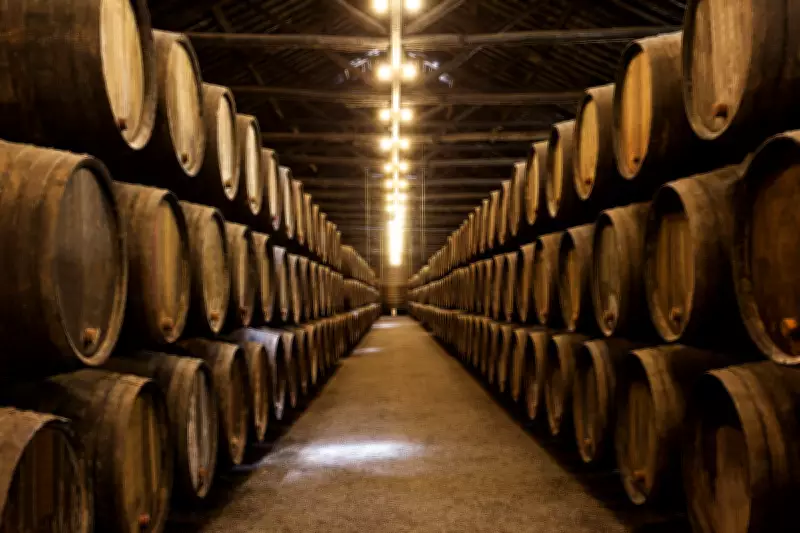
Whisky Investment Transforms into a Mature Asset Class in 2026
In 2026, whisky investment has shed its speculative past, emerging as a serious alternative asset class for investors seeking diversification amid stock market volatility and geopolitical pressures. Premium spirits are no longer a niche for quick flips on limited releases, as seen during the pandemic surge. Instead, whisky now stands alongside art and fine wines as a recognized collectible, transitioning into a more structured and disciplined phase.
A New Breed of Investors and Market Fundamentals
This evolution has attracted a more serious investor base, with buyers prioritizing brand and distillery reputation, age statements, cask fundamentals, and maturation processes. According to industry insights from firms like VCL Vintners, investors are adopting mid to long-term approaches, treating whisky as a business asset with clear documentation, chain of ownership, protection, taxes, and exit strategies.
From a personal investor perspective, whisky can complement other alternatives in a portfolio, provided it is managed with the rigor of a tangible asset. This shift reflects a broader trend toward professionalization in the market.

Global Challenges and Emerging Opportunities
Against a backdrop of geopolitical uncertainty, Scotch Whisky exports faced challenges in 2025, declining by 0.6% in value and 4.3% in volume, as reported by the Scotch Whisky Association. Factors such as international tariffs, increased business costs in the UK, and softening consumer demand contributed to this downturn.
Historically, the USA has been a key export market, but the re-introduction of tariffs led to a 15% drop in volume and a 7% loss in value from April to December 2025. This has sharpened focus on regional trade deals, particularly with India and other Asian markets.
Asian Markets Drive Growth and Premiumisation
New trade agreements, such as those between the UK, Europe, and India set to take effect in April 2026, will reduce whisky tariffs from 150% to 75% initially, eventually dropping to 40%. This opens significant opportunities for brands and investors.
In India, both international and domestic brands are investing in the long term, broadening access to the premium whisky market for affluent consumers. The trend of premiumisation, where consumers trade up to higher-quality products, is expected to be a key driver in the whisky category through the second half of the decade, anchoring value even as volumes fluctuate.
Across Asia, brands are building trust and loyalty over many years, starting with day-to-day consumption and moving toward sophisticated investment behaviors. Unlike other investment categories, whisky's correlation to financial markets remains low, with volatility that is slower and less dramatic than stocks, equities, or cryptocurrencies.
Scarcity and Supply Constraints Shape the Future
In Hong Kong, Singapore, and mainland China, high-net-worth buyers are accumulating maturing inventory, often in casks rather than bottles, locking away future aged stock before it reaches the secondary market. This behavior reduces long-term supply availability and can amplify price movements.
In China, buying patterns are episodic, with surges tied to improved domestic liquidity, easing capital controls, and stronger luxury sentiment. Demand focuses on aged Scotch from regions like Speyside and Islay, where brand prestige carries gifting and status value.
The most significant driver forward is supply. Many distilleries have reduced production in response to short-term market conditions, potentially creating a scarcity window six to twelve years from now when fewer casks reach optimal age. In 2026, the market is defined by disciplined capital rather than exuberance, with returns likely from genuine rarity, older age statements, and globally recognized brands.
Predictions for a "Grown-Up" Whisky Market
Whisky investment in 2026 is not for the impatient. The easy gains from the pandemic-era surge have passed, giving way to a quieter phase of recalibration, professionalization, and long-term positioning. Ironically, this subdued environment may offer better entry points for investors.

Periods of quieter sentiment often set the stage for future scarcity. Today's production slowdowns, combined with growing global wealth and premiumisation trends in Asia and emerging markets, suggest that whisky entering warehouses now will face a very different demand landscape at maturity. Investors are not buying current momentum but underwriting future availability.
The maturation process itself enforces discipline, requiring time, storage, and strategic exit planning, unlike equities that can be rushed. This favors investors with a horizon of years rather than quarters. In an era dominated by short-term news cycles and algorithm-driven markets, assets that reward patience play a crucial psychological and financial role in diversified portfolios.
As transparency improves, global distribution expands, and investor sophistication rises, whisky casks are increasingly viewed not as speculative collectibles but as tangible, long-duration assets linked to global luxury consumption. The market's cyclical nature, with potential tariff adjustments or improved UK-China trade dynamics, could reignite demand, but the long-term trend is fundamentally upward.





