

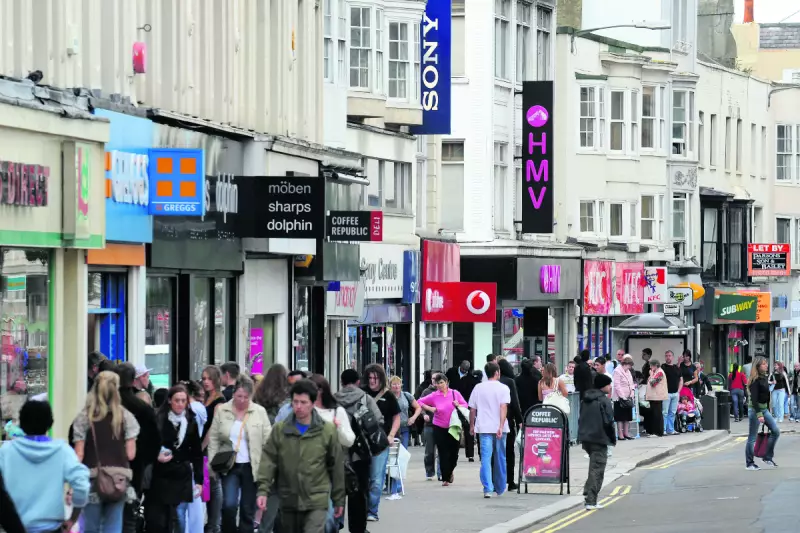
The traditional British high street, already battling rising costs and weak consumer confidence, faces its next great disruption: artificial intelligence that shops on our behalf. A stark new report from the Information Commissioner's Office (ICO) predicts that so-called 'agentic AI' will shift from a novelty to the norm for consumers within the next five years.
The Dawn of 'Agentic Commerce'
Unlike the reactive chatbots of today, these advanced AI systems are designed to act autonomously. They learn user preferences and can execute transactions in real time, with minimal human oversight. The ICO has labelled this emerging trend 'agentic commerce', a future where retailers increasingly sell not to people, but to algorithms acting as their proxies.
In practical terms, an AI agent could scan January sales across the web, check a linked bank balance for affordability, compare prices on multiple platforms, and complete a purchase—all before the user even opens an app. For retailers, especially physical stores already squeezed by online giants, this shift has profound implications. They must now learn to market and sell to bots.

A Threat and a Potential Lifeline for Retail
Research from Capgemini indicates this change is already in motion, with a quarter of consumers using generative AI shopping tools in 2025, and a further 31% planning to do so. Tech firms are racing to capitalise; OpenAI now lets ChatGPT users buy directly from retailers like Walmart, while Amazon has blocked rival AI crawlers to protect its advertising ecosystem.
Dreen Yang, Capgemini's global retail head, states that brands must pivot from being optimised for search to being optimised for algorithmic selection. This demands machine-readable product data, constantly updated pricing, and rich contextual detail. Elements like reviews and ratings, once seen as marketing fluff, could become critical inputs for AI decision-making.
For London's high streets, which still enjoy lower vacancy rates than the national average, this technological wave could be brutal. Yet, it may also offer a lifeline. By combining their unique physical experience and human touch—still sought by 66% of consumers, especially in luxury retail—with this new technology, bricks-and-mortar retailers could find a way to adapt and thrive.
Privacy Fears Loom Over AI Shopping Revolution
The ICO has issued strong warnings about the significant data privacy risks accompanying this future. To function effectively, agentic AI may require deep access to personal bank accounts, spending histories, and behavioural data. William Malcolm, the ICO's executive director for risk and innovation, cautioned: "While the potential benefits could be transformational, technological advancements must not come at the cost of data privacy."
The regulator is concerned that poorly designed, open-source systems could overreach, processing more data than necessary and making opaque decisions that consumers cannot easily challenge. The ICO has committed to closely monitoring developments in this space throughout the coming year, insisting that privacy protections must be embedded by design from the outset.
As the UK's high streets stand at a crossroads, the rise of the AI shopper represents a formidable challenge. The sector must now decide whether to see it as a final threat or as a last, crucial roll of the dice for survival.






