

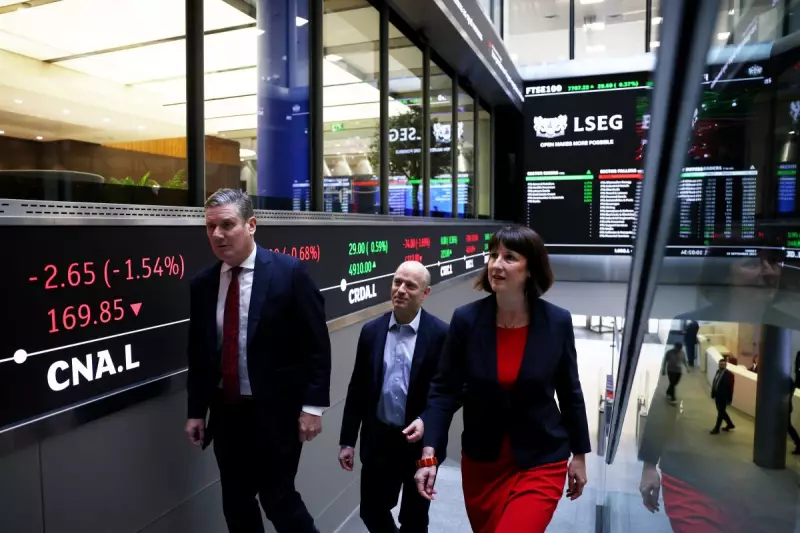
Business confidence across the United Kingdom has slumped to its lowest point in almost five years, according to a major new report. The findings place significant pressure on Prime Minister Keir Starmer and Chancellor Rachel Reeves, whose policies are cited as a key factor in the downturn.
Confidence "On the Floor" as Key Index Plummets
BDO's closely watched optimism index fell to its weakest reading since January 2021 at the close of last year. The index, which measures sentiment by surveying 4,000 business executives, revealed a sharp decline driven by weak consumer demand and serious concerns over employment levels.
Scott Knight, Head of Growth at BDO, did not mince words, stating the latest figures showed confidence was "on the floor". The drop was felt across both the vital services and manufacturing sectors, with bosses pointing to struggles with complex regulation and a heavy tax load as primary causes.

Policy Pressures and a Plea to the Bank of England
The report directly implicates the Labour government's agenda for dampening the economic mood. Specifically, it highlights how higher employment taxes, consecutive rises in the national living wage, and the proposed Employment Rights Bill have unsettled the jobs market.
Internal government analysis reportedly warns that the workers' rights reforms could further weaken employment and trigger a surge in tribunal cases. Business leaders are now anxiously awaiting the outcome of consultations on the bill, hoping for concessions on issues like union boss powers and sanction terms.
Knight also applied pressure on the Bank of England, urging "decisive action" to support firms. He called for further interest rate cuts and a clear economic roadmap to help businesses grow and invest. Lower borrowing costs, he argued, would drive up lending and ease crippling cost burdens.
A Broader Pattern of Economic Anxiety
The BDO survey is not an isolated signal. It forms part of a worrying pattern suggesting the UK economy's start to 2026 may be more challenging than anticipated.
- While the Institute of Directors' headline sentiment figure saw a minor rise, its employment expectations deteriorated.
- Reports from S&P Global and the Confederation of British Industry (CBI) also indicate business leaders are fretting about high costs in the coming months.
- This anxiety is redirecting investment away from hiring and towards technology instead.
In a faint silver lining, BDO's output index did record a slight rise as companies secured more new orders. However, the manufacturing sector remains on course for contraction, underscoring the fragile and uneven state of the recovery.
The combined data presents a stern early-year challenge for the Labour government, which had been expecting to oversee a modest improvement in the UK economy during this period.






