

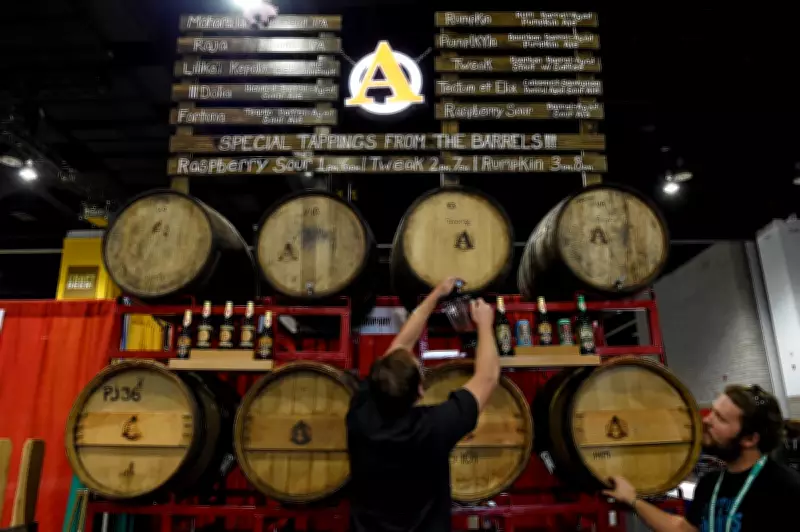
Craft Beer Industry Faces Decline as US Breweries Shutter Amid Changing Trends
The vibrant craft beer movement that swept across the United States in the early 2000s appears to be losing its fizz. After years of explosive growth and cultural prominence, the industry is now confronting a sobering reality of widespread closures and declining production.
From Boom to Bust: A Changing Landscape
In 2009, approximately 500 microbreweries operated across the United States according to industry data. By 2018, that number had skyrocketed to 4,500 establishments, representing an astonishing 800% increase. Craft breweries became community hubs and symbols of local entrepreneurship, offering innovative flavors and brewing techniques that captivated consumers nationwide.
"We were providing people with something brand new to like," explained Garrett Oliver, brewmaster at Brooklyn Brewery since 1994. "Craft beer offers unlimited flavor in every direction you could imagine, and if you think about it, why would people not love that?"

The Pandemic's Devastating Impact
The COVID-19 pandemic delivered a severe blow to the industry that many establishments couldn't withstand. Chris Bell's journey exemplifies this trajectory. After learning his craft at established breweries and opening Call to Arms Brewing Company in Denver in 2015, Bell experienced initial success, including winning a gold medal at the 2018 World Beer Cup.
"We felt very good about the future," Bell recalled of his brewery's peak in 2019. But pandemic-related challenges proved insurmountable. "It was heartbreaking," said Bell, who closed his business in December 2025. "I put my entire career into it."
Bell's story reflects a national pattern. Colorado alone saw 100 breweries close over two years, according to the Colorado Brewers Guild. Production numbers tell a similar story: microbreweries produced 4.9 million barrels of beer in 2019, but only 3.7 million barrels in 2024.
Multiple Factors Converge
The industry's challenges extend beyond pandemic disruptions. Stuart Keating, who operated Earthbound Beer in St. Louis from 2014 until its 2024 closure, identified several contributing factors.
"It was a shift away from alcohol consumption for health and societal reasons," Keating explained. "Some of it was a downturn in the economy. Our customers were all younger and weirder, and they are the ones that got hurt the most by the economic shocks post-Covid."
Bell cited additional pressures including rising labor costs, increased property taxes, maintenance expenses, and insurance premiums. Neighborhood changes also impacted his Denver brewery. "Low interest rates led to a real estate purchasing frenzy in the surrounding neighborhood," he noted. "It turned our entire neighborhood over, so we lost a lot of regulars."
Industry Adaptation and Future Prospects
Despite the contraction, industry leaders remain cautiously optimistic about craft beer's future. Shawnee Adelson, executive director of the Colorado Brewers Guild, believes the industry will evolve rather than disappear.
"Craft beer is part of the culture and the definition of Colorado, and so I don't think craft beer is going away, but it might just look a little different," Adelson suggested.
Some breweries are adapting through innovation. Brooklyn Brewery recently released Fonio Rising Pale Ale, made from what they describe as "an ancient super grain that supports smallholder farmers in Africa." Oliver sees this as part of expanding craft beer's appeal beyond traditional demographics.
"As craft brewers, we have not done a great job - we haven't done any job - of speaking to the 40-plus percent of people in the United States that are not of European background," Oliver acknowledged.
Generational Shifts and Market Cycles
Industry observers note that younger generations, particularly Gen Z, consume less alcohol than previous generations. However, Adelson sees potential for breweries to attract this demographic as they gain disposable income.
"As they enter the workforce, and they are able to have maybe more disposable income, they will find those spaces that are outside of their traditional home or workspaces," she predicted, "and hopefully, you know, put down their phone and go have a beer with their neighbor."

Oliver views the current downturn as part of a natural market cycle, recalling a similar contraction in the late 1990s when an industry expert described the situation as "a lot more people are jumping into the pool, and it's getting crowded. A lot of people are treading water, and some people are just drowning."
As the industry navigates this challenging period, the remaining breweries continue to innovate and adapt, hoping to reignite America's passion for craft beer while acknowledging that the landscape has fundamentally changed.





