

In a bold vision for the nation's future, a leading AI researcher argues that artificial intelligence is poised to shatter the absurd and costly decision-making paralysis currently stifling British progress. Samuel Albanie, frontier evals lead at Google DeepMind, contends that the primary bottleneck to national flourishing is no longer engineering capability, but a systemic failure to rationally weigh trade-offs.
The High Cost of Stagnation and Salmon Discos
Albanie paints a stark picture of Britain's economic malaise. He notes that while real wages grew by a robust 33 per cent per decade from 1970 to 2007, growth has flatlined since the financial crisis. This represents the longest period of wage stagnation since the Napoleonic Wars. Analysis by Matt Clifford suggests that had the UK maintained its pre-2008 trajectory, citizens would be £16,000 per person per year richer today.
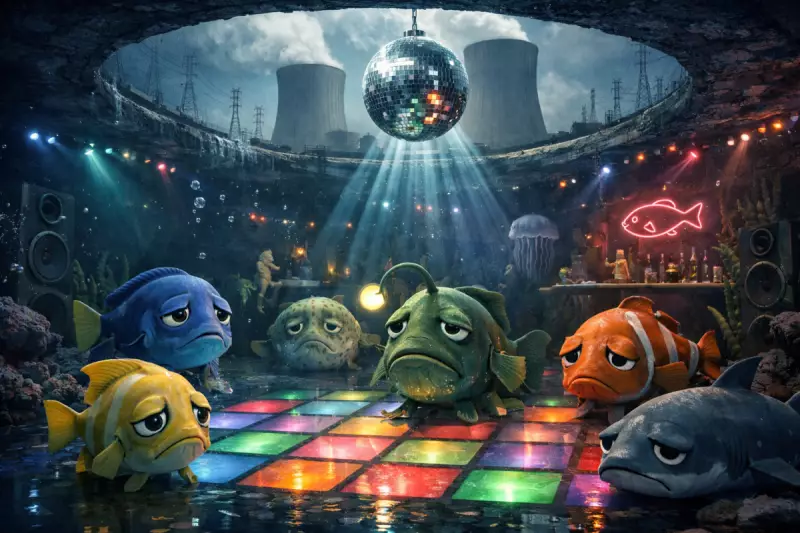
The problem is crystallised in infrastructure projects like Hinkley Point C, the nuclear power station whose cost has ballooned to an estimated £46 billion. Albanie highlights a particularly eye-watering detail: the plant's £700 million fish protection measures, which include an acoustic deterrent system nicknamed the "fish disco". According to the developer's own modelling, this system is expected to save approximately 0.083 Atlantic salmon per year.

This effectively values a single salmon's life at around £140 million—a figure Albanie wryly notes is about 700 times the fish's weight in cocaine. "What I want, as a citizen," he writes, "is a system going forward where the primary constraint on energy is not the acoustic preferences of 0.083 salmon."
The Shift from Engineering to Decision-Making Bottlenecks
Albanie identifies the core issue not as a loss of technical skill, but as a catastrophic failure in coordination and prioritisation. "The problem is not that we have forgotten how to pour concrete," he states. "What we lack is the ability to coordinate resources without forming a committee to investigate the feasibility of a committee."
He predicts that for future projects, the critical bottleneck will decisively shift from engineering challenges to decision-making and coordination failures. This is where he believes AI can fundamentally alter the landscape. As a proponent of the "Compute Theory of Everything," Albanie is optimistic that continued advances in AI hardware and software will drastically reduce the cost of high-fidelity forecasting and complex system modelling.
AI Forecasting and a Return to Pragmatic Audacity
The proposed solution hinges on AI-assisted decision-making. Albanie references concepts like Robin Hanson's "futarchy"—where policy is guided by prediction markets—but argues that AI can overcome the inherent unreliability of human beliefs in such models. He envisions a world where rigorous probabilistic forecasting, currently a "luxury good" for hedge funds and meteorologists, becomes broadly accessible to policymakers.
However, he cautions that even the best forecasting tools are useless within a culture that treats earnest ambition as a breach of etiquette. He expresses admiration for the American "practical audacity", embodied by figures like Benjamin Franklin, and urges Britain to rediscover a similar spirit. "We invented the steam engine before we invented the clipboard," he reminds readers.
Albanie concludes with a characteristically British metaphor of optimism: standing in the rain, flying a kite to catch lightning. He believes the nation has the inherent creativity and capital to harness the coming AI revolution. If it can rebuild its decision-making architecture, Britain could not only reignite growth but ensure the next generation of AI possesses, "at the very least, a dry sense of humour."






