

Google has issued a stark warning that quantum computers could potentially hack into encrypted systems by 2029, posing a severe threat to global cybersecurity. In a recent blogpost, the tech giant emphasized that banks, governments, and technology providers must urgently upgrade their security measures, as current encryption standards are on the verge of becoming obsolete.
The Quantum Threat to Encryption
According to Google, quantum computers, which leverage the principles of quantum mechanics to perform complex calculations at unprecedented speeds, could easily break the encryption currently used to protect sensitive information. The company stated, "The encryption currently used to keep your information confidential and secure could easily be broken by a large-scale quantum computer in coming years." This prediction has prompted Google to adjust its threat model, prioritizing the migration to post-quantum cryptography for authentication services and digital signatures.
Current State of Quantum Computing
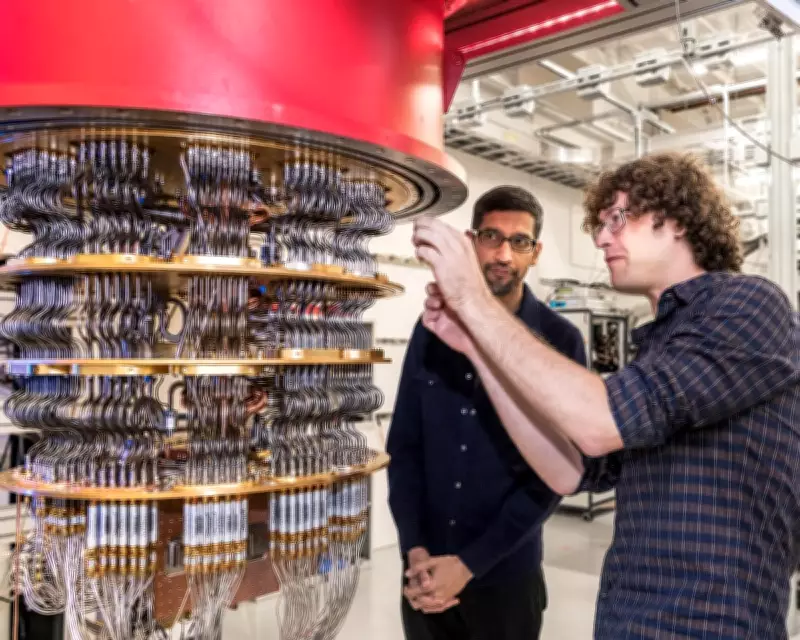
Quantum computing remains a nascent technology with immense potential but significant hurdles. Companies like Google and Microsoft, along with universities in the UK and US, are actively developing systems that harness quantum physics. However, these systems face major challenges, such as the need for massive helium cooling to near-absolute zero temperatures or precise laser alignment, making them difficult to build and scale. Most existing quantum computers are too small to perform the advanced tasks that excite scientists, requiring hundreds of thousands or millions of stable qubits to become truly powerful.

Expert Insights and Timelines
Leonie Mueck, former chief product officer at Riverlane, a Cambridge-based quantum startup, noted that Google's 2029 timeline is aggressive. Most experts estimate that a cryptographically relevant quantum computer—one capable of breaking encryption—will not emerge until the 2030s to 2050s. Nevertheless, the threat is real enough that intelligence agencies have been preparing for over a decade. Mueck explained, "We're basically seeing in the intelligence community already that for probably more than a decade, they've been thinking about this threat." She highlighted the risk of "store now, decrypt later" attacks, where data is harvested today for future decryption by quantum computers.
Urgent Calls for Action
In response, Google is urging engineering teams across the industry to adopt more advanced encryption systems immediately. The UK's National Cyber Security Centre has already advised organizations to guard against quantum hackers by 2035. Mueck stressed the importance of protecting classified documents, stating, "You need to have classified documents that are classified today in a way that a quantum computer in 10 years won't be able to decrypt them." This proactive approach is crucial to safeguarding sensitive data from future breaches.
As quantum technology advances, the race to develop robust post-quantum cryptography intensifies, highlighting the need for global collaboration to mitigate cybersecurity risks.






