

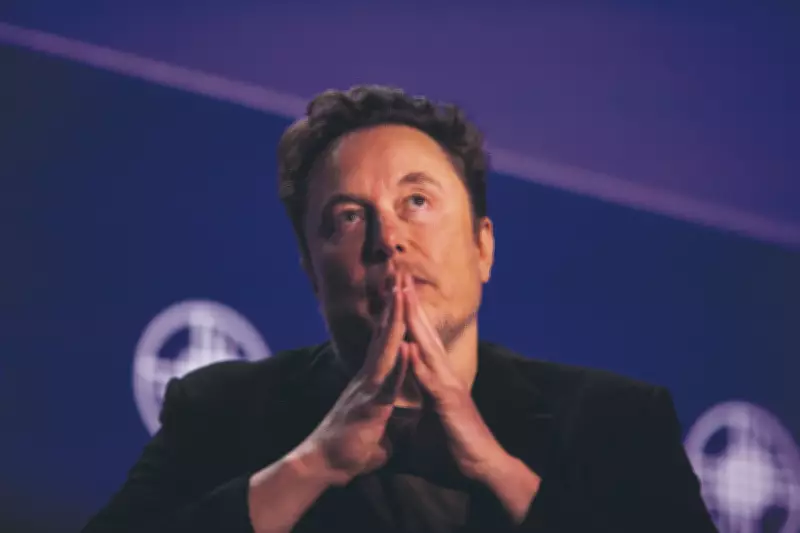
Tesla shares experienced a significant surge of approximately 3.5 percent on Monday following a major announcement from CEO Elon Musk regarding a substantial new semiconductor manufacturing initiative. The electric vehicle and technology company's stock price rose to around $381 as investors responded enthusiastically to Musk's unveiling of the Terafab project, a massive chip manufacturing facility designed to secure supply for Tesla's expanding ambitions in artificial intelligence and robotics.
Terafab: A $20 Billion Bet on AI and Robotics
Elon Musk described the Terafab project as absolutely essential to Tesla's future strategic direction, stating unequivocally that "We either build the Terafab or we don't have the chips." The facility, which will be constructed in Austin, Texas alongside Tesla's existing Gigafactory operations, represents a joint venture between Tesla, SpaceX, and Musk's artificial intelligence company xAI. This ambitious undertaking aims to consolidate the company's chip design, manufacturing, and packaging capabilities under a single operational roof.
Investors Focus on Technology Ambitions Over Vehicle Sales
Financial analysts note that Tesla's market valuation has become increasingly tied to its technological aspirations rather than its core automotive business. Investors appear willing to look beyond flat or declining vehicle sales figures, instead concentrating their attention on growth areas such as autonomous driving systems and the Optimus humanoid robot development program. This shift in investor focus reflects the broader market recognition of Tesla's transformation from a pure electric vehicle manufacturer to a diversified technology enterprise.

Prior to this recent announcement, Musk had repeatedly warned that semiconductor supply constraints could potentially become a critical bottleneck for Tesla's future product development, particularly as the company scales its robotaxi services and robotics initiatives. The Terafab project is specifically designed to produce two primary types of advanced chips: one optimized for Tesla's self-driving systems and robotic applications, and another engineered for high-performance artificial intelligence computing that could potentially be utilized in SpaceX's satellite-based data infrastructure.
Substantial Demand Projections for AI Chips
Industry demand for these specialized chips is expected to grow exponentially in the coming years. According to estimates from Morgan Stanley, Tesla's robotics ambitions alone could require tens of millions of chips annually, far exceeding the company's current automotive semiconductor needs. This projected demand surge underscores the strategic importance of securing a reliable, in-house chip manufacturing capability as Tesla expands beyond traditional vehicle production into more technologically advanced domains.
Significant Costs and Execution Challenges
Despite the positive market reaction following Musk's announcement, the sheer scale and substantial cost of the Terafab project present potential execution challenges. Current estimates place the project's cost between $20 billion and $25 billion, with some projections suggesting the final price tag could ultimately reach as high as $35 billion to $40 billion. This massive investment comes in addition to Tesla's existing plans to deploy over $20 billion in capital expenditures during 2026, representing more than double the company's previous year's investment in this area.
Initial chip production from the Terafab facility is targeted for late 2027, with volume output expected to ramp up around 2028. However, semiconductor manufacturing facilities are notoriously subject to construction and operational delays, creating potential timeline uncertainties. In the near term, Tesla will continue to rely on established semiconductor suppliers including Nvidia, Samsung, and TSMC, positioning Terafab as a long-term capacity expansion strategy rather than an immediate replacement for existing supplier partnerships.

Broader Market Context and Competitive Landscape
The Terafab announcement comes at a pivotal moment for Tesla, which recently lost its position as the world's leading electric vehicle seller to Chinese manufacturer BYD at the end of last year. Simultaneously, regulatory scrutiny continues to intensify around Tesla's full self-driving system, with millions of vehicles currently under review by various authorities. Despite these challenges, broader market sentiment received support from easing geopolitical tensions, which helped lift investor risk appetite on Monday and contributed to the positive reception of Musk's semiconductor manufacturing announcement.





