

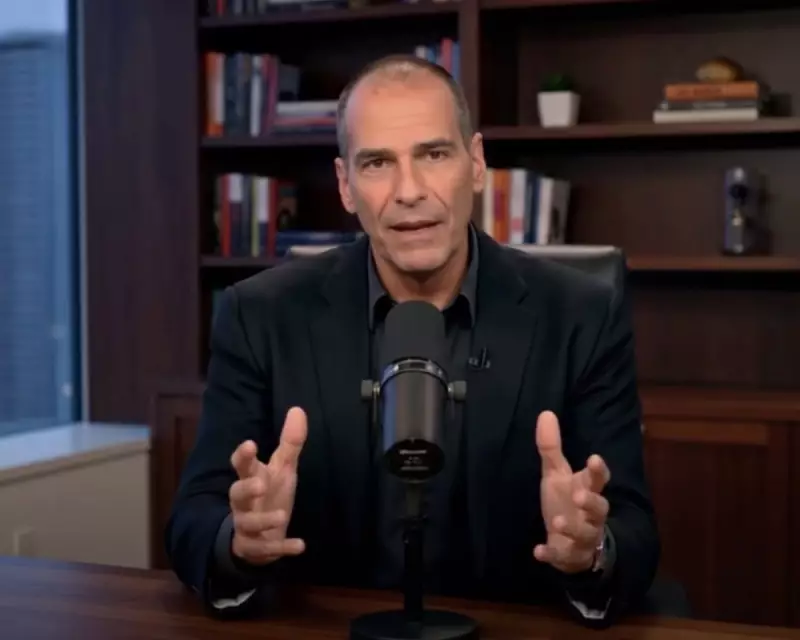
The former Greek finance minister and economist Yanis Varoufakis has revealed he is battling a proliferation of AI-generated deepfake videos that show him saying things he has never said.
The Unsettling Discovery of a Digital Double
It began with a congratulatory message from a colleague about a video talk. When Varoufakis clicked the YouTube link, he could not recall recording it. A few minutes in, he realised the figure on screen was an AI-generated doppelganger. The clue was a distinctive blue shirt, a gift from his sister-in-law, which had never left his island home but was clearly visible in the fake video set in his Athens office.
Since that first discovery, hundreds of such videos have spread across YouTube and social media. They synthesise his voice and likeness to lecture on various topics, most recently fabricating statements about the coup in Venezuela. The content mixes plausible opinions with outright fiction, creating a disturbing digital puppet show.

"Supporters send them to me, asking: 'Yanis, did you really say that?'" he writes. "Opponents circulate them as proof of my idiocy." Some even suggest the AI versions are more articulate than the real person. His initial attempts to have the content removed via Google and Meta's reporting systems proved futile, with deleted channels swiftly reappearing under new names.
From Rage to Reflection: Deepfakes as Technofeudal Enclosure
Varoufakis, a long-time critic of big tech's power, saw his anger give way to a grim realisation. This phenomenon confirmed his theory of technofeudalism, where platforms act as feudal lords and users are mere tenants on cloud estates. The deepfakes represent the ultimate enclosure: the appropriation of one's audiovisual identity.
"Our new lords see us as tenants on their cloud lands," he argues, "androids whose likeness they can appropriate at will to sow confusion, to muddy discourse." In this system, we own nothing—not our data, our social connections, or now, even our own digital face and voice.
A Paradoxical Hope: Could Deepfakes Revive Ancient Democracy?
Yet, a more optimistic thought emerged from this crisis, rooted in the ancient Athenian concept of isegoria. Contrary to modern 'free speech', isegoria meant the right to have your views judged seriously on their merits, regardless of your identity or eloquence.
Varoufakis poses a provocative question: "Might AI deepfakes salvage isegoria from the clutches of our technofeudal dystopia?" If it becomes impossible to verify who is speaking in a video, might we be forced to evaluate the argument itself, rather than the speaker? In debasing authenticity, big tech may have inadvertently created a space for genuine critical engagement.
However, this fragile hope is undermined by two asymmetrical advantages held by the technofeudal lords. First, they own the digital agora—the servers and algorithms—and can anoint their own speech as authentic while drowning others in noise. Second, their ideology is baked into the machine's very architecture, from data extraction to cloud rents.
Therefore, Varoufakis concludes the solution is not to beg for verification badges but to pursue political action. "We must socialise cloud capital," he asserts. Until then, he suggests we let the digital doppelgangers speak, hoping their endless spectacle will finally make us stop listening for a familiar voice and start judging arguments on their own terms—a paradoxical shard of hope in a hall of mirrors.






