

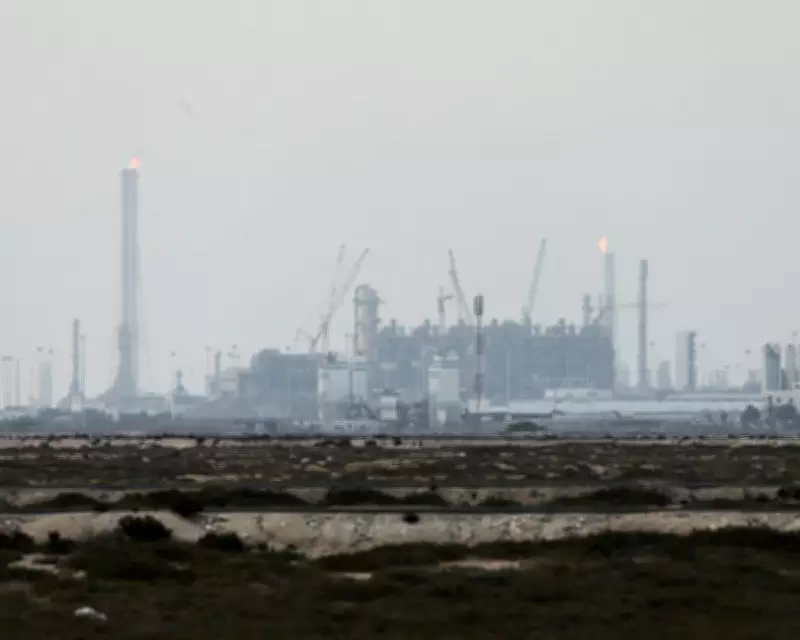
FTSE 100 Retreats as Iran Attack on Qatar Gas Hub Sparks Inflation Fears
The FTSE 100 index experienced a sharp decline, briefly dropping below the 10,000 mark on Thursday, following an escalation in tensions involving Iran. The trigger was a strike on Qatar's Ras Laffan industrial complex, a critical facility responsible for supplying approximately one-fifth of the world's liquefied natural gas (LNG). This event has reignited concerns about energy prices and their potential inflationary impact on global markets.
After reaching a peak earlier in the year, with the FTSE 100 surpassing 10,000 for the first time on January 2 and adding 900 points by the end of February, the index closed at 10,063, down 2.3% for the day. This reversal highlights the fragility of market optimism in the face of geopolitical instability.
Market Resilience vs. Inflation Risks
Investors appear to be maintaining a degree of faith, despite the attack on Ras Laffan. Nicolai Tangen, head of Norway's $2 trillion sovereign wealth fund, noted that markets are showing resilience and complacency, a sentiment that has surprised many analysts. One explanation for this steadiness is the adaptability of companies, which have learned from past shocks like the COVID-19 pandemic and Russia's invasion of Ukraine to enhance supply chain flexibility and manage costs.

In the FTSE 100, a size-weighted index, major constituents such as Shell and BP have actually benefited from higher energy prices, with gains of 24% and 31% respectively since the new year. This has helped cushion the overall index from more severe declines.
Energy Price Forecasts and Economic Implications
Despite the immediate shock, a consensus among fund managers suggests that energy prices may soon stabilize. A recent Bank of America poll found that only 11% of managers expect Brent crude to exceed $90 per barrel by year-end, with an average forecast of just $76. However, this optimism leaves room for significant disruption if the conflict persists and oil prices remain above $100 a barrel.
David Rees, head of global economics at Schroders, warns that current oil and gas prices could add around 1% to headline inflation in the coming months. Additionally, potential shortages in fertilizers might drive food inflation higher later in the year, compounding economic pressures.
Central Bank Caution and Future Outlook
The Bank of England's recent decision to hold interest rates reflects the uncertainty surrounding the duration of the conflict and future energy costs. Governor Andrew Bailey emphasized that the bank stands ready to act on inflation but cautioned that markets may be overestimating the likelihood of rate hikes. This mixed messaging underscores the challenges policymakers face in navigating volatile conditions.
If oil prices stay at $100 or higher for an extended period, central banks may be forced to implement interest rate increases to curb inflation. The coming weeks will be crucial in determining whether market optimism holds or if a more cautious approach becomes necessary.






