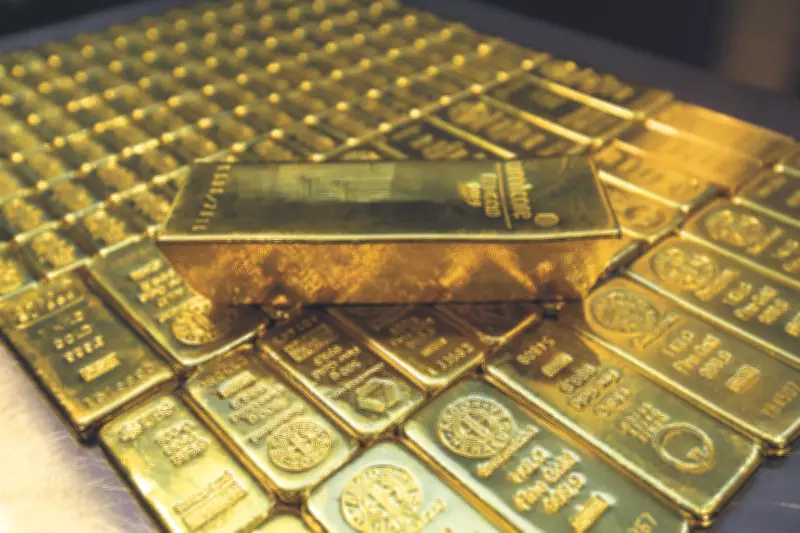
Iran Conflict Disrupts Gold's Safe Haven Status, Sparking Market Volatility
The ongoing conflict in the Middle East, specifically involving Iran, has dramatically shaken the financial markets, with gold's traditional role as a safe haven asset coming under intense scrutiny. Contrary to typical expectations during geopolitical crises, the price of gold has experienced a significant and unexpected selloff, raising questions about its reliability in turbulent times.
Sharp Decline in Gold Prices
Since the onset of the Iran war, gold prices have plummeted by more than 16%, a stark reversal from the initial stability observed in the first ten days of the conflict. Initially, investors flocked to gold as they abandoned stocks and bonds, but this trend quickly shifted. The asset has since become entangled in the broader market turmoil, dropping to $4,550.9 per ounce, equivalent to £3,397. This decline has abruptly halted gold's impressive rally, as investors cashed in their gains to cover losses in other market segments.
Catherine Thom, chief financial officer at Bullion By Post, explained the unusual dynamics at play. "Normally, the gold price benefits from geopolitical tension, but currently it seems stronger macro forces are offsetting that," she said. "The escalation involving Iran has pushed oil prices higher, supporting the U.S. dollar and reducing expectations for near-term rate cuts, both of which tend to weigh on gold. We've also seen gold's liquidity work against it in the short term, with some investors selling to quickly raise cash and meet margin calls amid wider market volatility."

Historical Context and Market Reactions
Gold had been on a remarkable upward trajectory, hitting multiple record highs since January 2024, largely driven by investor enthusiasm following Donald Trump's inauguration. However, this rally has now reversed after a brief stumble last month. Russ Mould, investment director at AJ Bell, highlighted that even safe haven assets are not immune to panic. "I think that's the first thing to bear in mind is that if people do reach for liquidity and look and then ultimately turn to cash, they will go for where they can find it and cash where some of the gold was... a logical place to look for," Mould noted, emphasizing the liquidity pressures in volatile markets.
The selloff intensified after the US and Israel began strikes on 28 February, causing investors to scramble to take profits and reduce risk in their portfolios. This move has led to a 16% decline in gold prices, underscoring the asset's vulnerability in the current crisis.
Central Bank Dynamics and Speculation
Adding to the market uncertainty, speculation has mounted that central banks might consider selling portions of their gold holdings to raise funds, contradicting earlier forecasts. The World Gold Council had predicted a "continuation of elevated central bank demand" in 2026, given persistent economic and geopolitical uncertainties. However, recent developments suggest a potential shift.
Earlier this month, Adam Glapiński, governor of Poland's central bank, indicated that selling or revaluing part of its gold reserves could be an option to cover defence spending. This is particularly notable as Poland was the largest buyer of gold last year, adding 102 tonnes to its reserves, bringing the total to 550 tonnes. In January, Glapiński had expressed intentions to further increase gold holdings for "national security reasons," making the current consideration a significant reversal.
Analysts point out that high oil prices, ongoing geopolitical risks, and the potential revenues from elevated gold prices "may encourage further sector selling." Additionally, expectations of higher interest rates, as central banks aim to address the war's inflationary impact, have further depressed gold prices. The Bank of England has hinted that anticipated rate cuts at the start of the year are no longer on the table, adding to the downward pressure.

Future Outlook for Gold
Analysts are divided on the future trajectory of gold prices. Some anticipate continued high volatility and enduring economic damage, regardless of whether Donald Trump's promises of a ceasefire with Iran and an end to the war materialize. Others, however, believe gold could regain its shine as the conflict persists, with sustained appetite for safe haven assets.
Catherine Thom remains cautiously optimistic. "There are clear signs of strong dip-buying, which suggests underlying demand remains intact," she said. "That said, some consolidation isn't surprising given the strength of the recent rally – gold has moved from around $2,600 in early 2025 to recent highs above $5,000. The core drivers, geopolitical risk, inflation pressures and currency uncertainty, remain firmly in place, so this looks more like a short-term correction than a change in the longer-term trend."
Russ Mould advises investors to maintain a long-term perspective. In an interview with City AM, he emphasized, "Keep informed, absolutely, but don't try and trade that news because I think in the end you're going to get yourself into an awful lot of trouble. Definitely keep a long-term perspective." This guidance underscores the importance of resisting knee-jerk reactions to daily market movements and focusing on broader wealth preservation strategies.
In summary, the Iran conflict has not only disrupted global markets but also challenged the conventional wisdom surrounding gold as a safe haven. While short-term pressures have led to a significant price drop, underlying factors such as geopolitical risks and inflation may yet support a recovery, making this a critical moment for investors to watch closely.