

Political Rhetoric Overwhelms Market Fundamentals, Sparking Fairness Debate
In a striking departure from traditional market dynamics, recent events highlight how financial systems are now reacting more to political signals than to hard economic data. This shift raises profound questions about resilience and fairness in global markets.
The New Normal: Markets Move on Ambiguous Political Cues
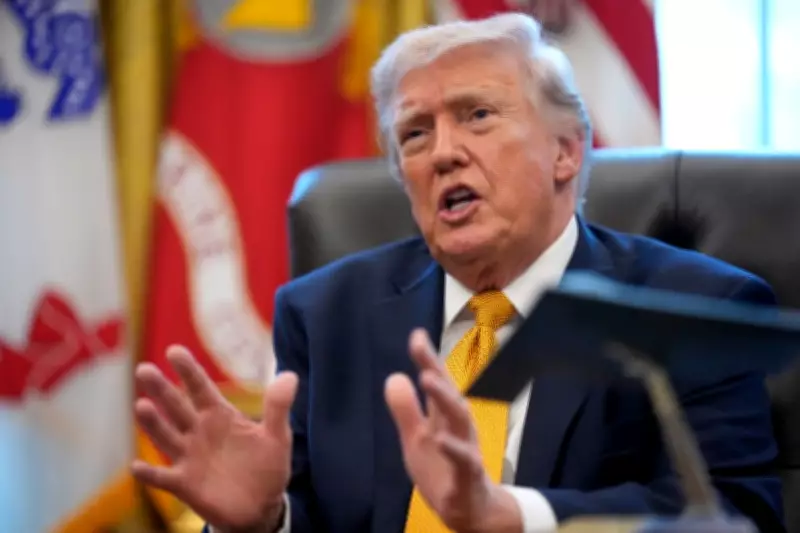
This week, oil prices plummeted and equity futures surged within minutes of a social media post by former US President Donald Trump, who mentioned "productive" talks with Iran. Traders had placed half a billion dollars in bets ahead of this announcement, a scenario that has become alarmingly routine. The focus should not merely be on potential insider trading but on the broader implication: free markets are no longer responding to specific events but to nebulous political intentions from leaders with inconsistent track records.
We have entered an era where a single line of ambiguous rhetoric can shift trillions of dollars in global assets, bypassing legislation, formal agreements, or confirmed policy shifts. This represents a fundamental change from markets that once prided themselves on forward-looking analysis based on empirical facts.

From Fundamentals to Interpretation: A Dangerous Shift
Historically, markets discounted future cash flows and economic outcomes, with volatility anchored in tangible fundamentals. Now, they are second-guessing political intent in real-time, particularly from unorthodox administrations. This creates a reflexive cycle where prices move because traders anticipate others' reactions to signals, not because underlying realities have changed. Such feedback loops can lead to self-reinforcing volatility, where positioning itself drives price movements, undermining market stability.
An Uneven Playing Field Emerges
The advantage in today's markets no longer lies solely with those who excel at analyzing balance sheets or economic data. Instead, it favors individuals and institutions quickest to interpret political language or with the infrastructure to act on it rapidly. This is not about accusing anyone of wrongdoing but recognizing that market structures now systematically reward proximity to political signaling, creating an uneven playing field that erodes trust.
The Erosion of Trust and Market Health
When market participants believe prices are driven more by access to political signals than by fundamentals, trust deteriorates, and liquidity becomes fragile. This moment is not just another episode of oil volatility; it signifies a shift in the centre of gravity from detailed economics to politics. Prices are increasingly set by implied possibilities rather than concrete facts, which may be efficient in a narrow sense but is ultimately unhealthy for market function.
Markets are designed to aggregate information, not amplify ambiguity. Continuing down this path risks a system where political phrasing, not economic performance, becomes the primary driver of financial outcomes. At that point, we must acknowledge that markets are not functioning as intended but are merely reacting to the next speaker, a precarious position that threatens global financial stability.
Tim Focas, head of capital markets at Aspectus Group, underscores these concerns, highlighting the urgent need for reflection on market integrity in an era dominated by political noise.






