

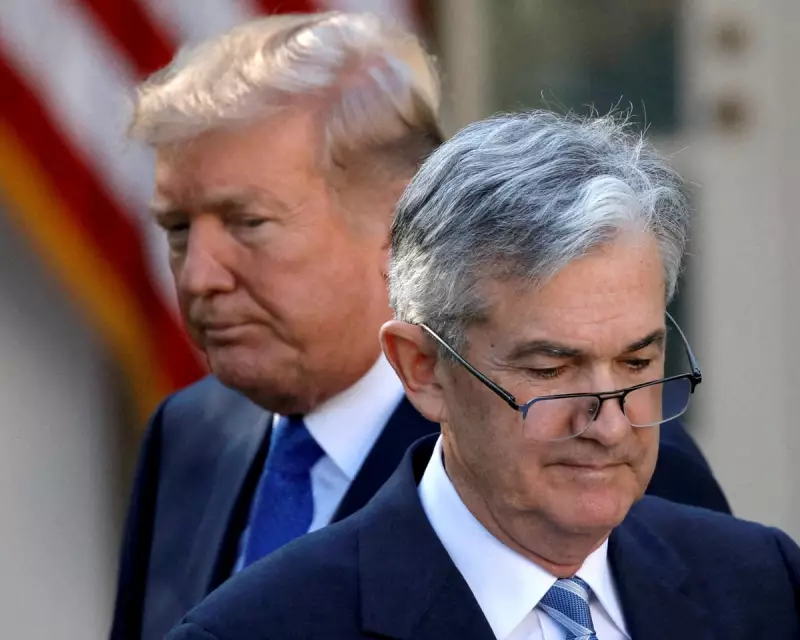
Federal Reserve Chair Jerome Powell has delivered an extraordinary and stark warning, stating that a criminal investigation into him and the central bank represents an attempt to bully officials into setting monetary policy according to political whims. The move, which involves the US Department of Justice probing renovations at the Fed's headquarters, has ignited serious concerns about the erosion of the Federal Reserve's cherished independence.
A Stark Warning Against Political Intimidation
In a necessary and forceful statement, Powell framed the issue in fundamental terms. "This is about whether the Fed will be able to continue to set interest rates based on evidence and economic conditions, or whether instead monetary policy will be directed by political pressure or intimidation," he declared. The investigation comes amidst a year-long campaign by former President Donald Trump, who has previously labelled Powell a "stubborn mule" for not cutting interest rates faster and has publicly mused about firing him.
While Trump has denied knowledge of the DoJ probe, the involvement of the justice department marks a significant escalation. Previously, the conflict was characterised by public insults and complaints. The shift to a potential criminal investigation, however flimsy the premise of an overspend on a building refurbishment may seem, moves the dispute into a far more serious arena, one that echoes tactics seen in less stable political systems.

Market Complacency in the Face of Institutional Risk
Initially, financial markets reacted with surprising calm to the alarming scene. The dollar weakened only slightly, and US Treasury bonds saw modest selling pressure. This sanguine response appears rooted in several assumptions: that the investigation may fizzle out, that Powell's term ends in May 2025, and that the Fed is already in a rate-cutting cycle, aligning somewhat with political desires for cheaper money.
Furthermore, analysts note that an entire committee sets rates, not just the chair. Therefore, even if a future chair were more amenable to political pressure, imposing control would not be instantaneous if other committee members value their independence. However, this market complacency may be dangerously misplaced. Powell is right to sound the alarm, as the underlying principle is under threat at a perilous economic moment.
The High-Stakes Economic Backdrop
The United States is navigating a complex economic landscape. The country is running an enormous fiscal deficit, while data on unemployment and inflation sends mixed signals. Although headline growth remains decent, momentum shows signs of slowing. The medium-term inflationary impact of proposed new tariff policies remains uncertain and could complicate the Fed's task further.
In this environment, the anchor provided by an independent central bank is crucial. As currency analysts at ING warned, "A combination of hot inflation and more bets on the Fed’s loss of independence would feed real rate concerns that could cause major dollar depreciation." A loss of confidence could trigger a flight from US assets, driving up long-term borrowing costs for American businesses and consumers through the bond market—a directly self-defeating outcome for any administration.
The critical question remains whether those seeking to undermine the Fed recognise how such actions could backfire spectacularly. For now, markets cling to the belief that lines will not be crossed. Yet, with the campaign against the central bank's autonomy ongoing for over a year, that assumption remains untested. A pre-emptive revolt in the US bond market, signalling investor alarm, might be the most effective defence of the institutional stability that underpins global confidence in the American economy.






