

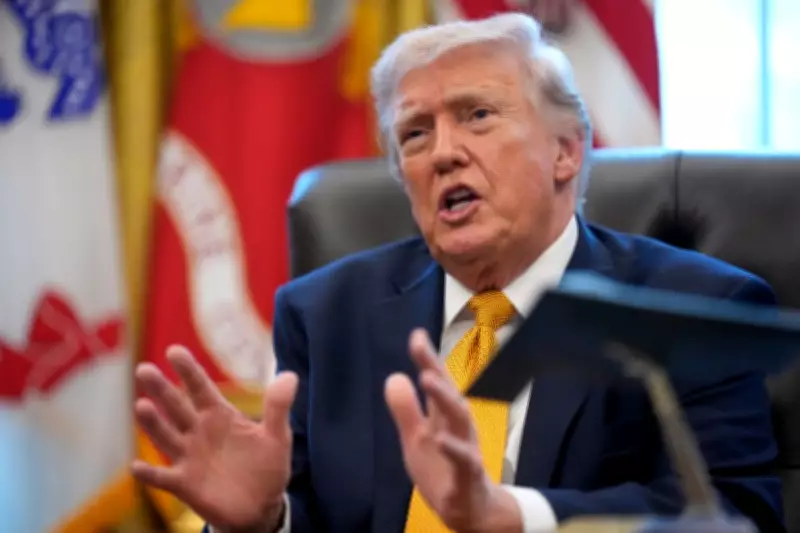
In a dramatic escalation of geopolitical tensions in the Middle East, former US President Donald Trump has issued a stark threat to "take the oil in Iran," drawing immediate comparisons to his administration's previous stance on Venezuela. This provocative statement, made during an interview with the Financial Times, has sent shockwaves through global energy markets and financial centers, including London's City district.
Oil Prices Spike Amid Trump's Comments
The immediate impact of Trump's remarks has been felt in commodity markets, with Brent crude oil prices climbing sharply to exceed $115 per barrel this morning. This surge represents a continuation of recent volatility driven by ongoing conflicts and supply concerns in the region. Market analysts are closely monitoring the situation, as such price movements can have far-reaching effects on inflation, consumer costs, and broader economic stability.
Expert Analysis on Potential Long-Term Impact
Maritime expert Lars Jensen provided a sobering assessment to The Times, warning that the current oil shock could be "substantially larger" than the crises witnessed in the 1970s. Jensen emphasized that even a rapid de-escalation, such as the reopening of the critical Strait of Hormuz, would not immediately alleviate pressure. "There would be six to 12 months of higher prices," he stated, highlighting the persistent nature of supply chain disruptions and market uncertainty.

Trump's comments come amid what he described as "productive" talks with Iran, though details remain scarce. The juxtaposition of diplomatic overtures with aggressive resource claims has added a layer of complexity to an already volatile geopolitical landscape. Financial observers in London and beyond are bracing for potential ripple effects across sectors, from energy and transportation to banking and insurance.
Broader Financial and Political Context
The threat to Iranian oil reserves coincides with other significant developments in UK and global finance. Key stories this morning include calls for the G7 to follow Britain's energy initiatives, a noted decline in housebuying demand linked to rising mortgage rates amid the Iran conflict, and high-level discussions between energy executives and political leaders. These interconnected issues underscore the delicate balance between energy security, economic policy, and international relations.
As the situation evolves, market participants and policymakers alike are urged to consider the long-term implications of resource-driven conflicts. The stability of global energy supplies remains a critical concern, with potential consequences for everything from everyday consumer prices to strategic national investments.






