

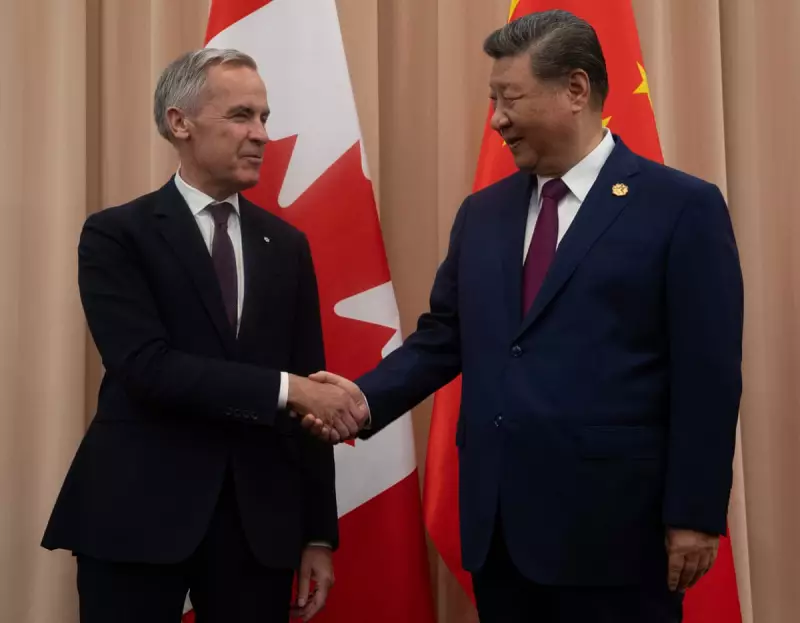
In a significant diplomatic shift, Canadian Prime Minister Mark Carney has embarked on a high-stakes state visit to Beijing, marking the first such trip by a Canadian leader in nearly a decade. The journey, scheduled for January 2026, comes as Ottawa urgently seeks to diversify its trade partnerships and stabilise a long-fractured relationship with the global superpower, driven in large part by the economic fallout from a punishing trade war with the United States.
A Fraught History and a Deliberate Thaw
The path to this week's meetings has been methodical, following years of severe diplomatic strain. The relationship hit a deep freeze in 2018 when China detained two Canadian citizens, Michael Kovrig and Michael Spavor, for over 1,000 days in a move widely seen as retaliation for Canada's role in the arrest of Huawei executive Meng Wanzhou. That crisis shattered hopes for a Canada-China free trade deal.
Carney, who during the 2025 election campaign labelled China Canada's "biggest geopolitical risk," has since orchestrated a careful diplomatic dance. A meeting with Chinese Premier Li Qiang in September 2025 was followed by a handshake with President Xi Jinping at a global summit in South Korea in October. Carney described that encounter as a "turning point," framing the upcoming Beijing visit as an attempt to create a "stable" bilateral relationship.

Despite allegations of Chinese electoral interference in recent Canadian votes—though none believed to have swayed results—and ongoing concerns over human rights and Arctic sovereignty, Ottawa's economic imperative appears paramount. "You can walk and chew gum at the same time," said Roland Paris, a former foreign affairs adviser, referencing the strategy of pursuing trade while managing disagreements.
The Trump Factor: Forcing Canada's Hand
The urgent recalibration of Canada's foreign policy is inextricably linked to the "America First" agenda revived under US President Donald Trump. With the US historically buying 76% of Canada's exports, the Trump administration's aggressive trade policies have inflicted mounting economic pain, compelling Ottawa to accelerate its "reliance to resilience" plan.
"There is a risk that China views Canada as weak, struggling and abused by President Donald Trump’s administration," warned Michael Kovrig, the former diplomat detained in China. He suggests Beijing may seize the chance to position itself as "the reasonable and stable adult in the room," offering Carney potential leverage in negotiations.
Trade tensions with China itself remain acute. After Canada joined the US in imposing tariffs on Chinese electric vehicles in 2024, Beijing retaliated with 100% duties on Canadian canola oil and meal, later adding an additional 75.8% anti-dumping tariff, effectively shutting Canadian producers out of a crucial market. Mending this rift is a key objective for Carney's delegation.
Prospects and Perils of a Reset
Analysts expect the talks to focus on energy, agriculture, and international security. While a flurry of near-term agreements is possible, experts urge extreme caution. Margaret McCuaig-Johnston, a senior fellow at the University of Ottawa, warned that Canada must stay "miles and miles away" from discussing sensitive sectors like aerospace technology, artificial intelligence, and critical minerals with Beijing, citing risks to intellectual property.
She acknowledged the need for market diversification—currently, China accounts for only 4% of Canadian exports—but stressed that engagement must not come at the cost of national security or values. "It’s important to remember that China is not our friend," McCuaig-Johnston stated, pointing to unresolved issues including the execution of Canadian citizens and China's growing Arctic presence.
For Carney, the visit represents a delicate balancing act. The prime minister must secure tangible economic benefits to offset US pressure while confronting a regime with which Canada has profound differences. As Kovrig notes, the challenge is to carve out a space for diplomacy and opportunity with a nation whose "power depends on fear, and its legitimacy rests on myths." The success of this pivotal mission will define Canada's geopolitical and economic trajectory for years to come.






