Today marks 69 years since the Suez Canal reopened on 24 April 1957 after six months of closure. The strategically vital waterway had been blocked on 31 October 1956 when Egyptian forces deliberately scuttled 47 vessels, mostly at Port Said. The crisis that led to this closure offers enduring lessons about geopolitics, energy security, and the power of controlling global trade routes.
The Canal's Strategic Importance
The Suez Canal opened on 17 November 1869, built and operated by the Compagnie de Suez. Initially, 50 per cent was owned by French investors and 44 per cent by Egyptian rulers. In 1875, British Prime Minister Benjamin Disraeli purchased Egypt's shares, giving Britain significant influence. At 120 miles long, the canal shortened journeys between Europe and Asia by 4,000 to 5,000 miles, reducing sea travel by 16 to 18 days. This boosted trade and provided Britain a vital shortcut to its empire, including India, Burma, Malaya, Singapore, and Hong Kong.
By the 1880s, Egypt relied on British advisers and finance. A nationalist revolt in 1882 was suppressed by Anglo-French intervention, and Egypt became a de facto British protectorate until 1914, then formally occupied during World War I. In 1922, an independent Kingdom of Egypt was established, but King Fuad I and his son Farouk I remained under British control, especially over the Canal Zone.

The Rise of Nasser and Nationalism
In July 1952, the Free Officers Movement, led by Major General Mohamed Naguib and Lieutenant Colonel Gamal Abdel Nasser, overthrew Farouk in a military coup. Britain was withdrawing forces to the Canal Zone under the 1936 Anglo-Egyptian Treaty, but Arab nationalists demanded complete British withdrawal. By late 1954, Nasser was Prime Minister and acting President.
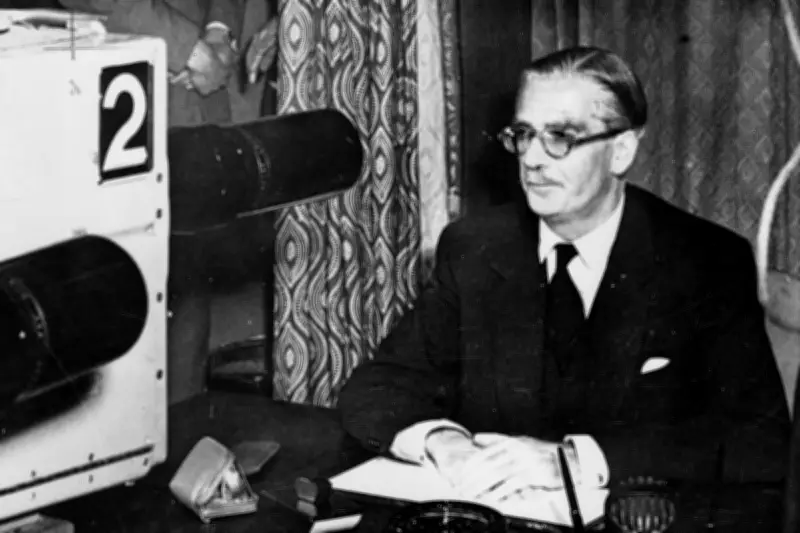
British Prime Minister Sir Anthony Eden, a foreign affairs expert who had been Foreign Secretary for 12 of the previous 20 years, viewed Nasser as a latter-day Mussolini. On 26 July 1956, Nasser nationalised the Suez Canal Company, promising to use toll income to fund the Aswan High Dam. This followed the UK and US withdrawing an offer of finance for the dam a week earlier.
The Crisis Unfolds
Britain and France argued that nationalisation violated the 1888 Convention of Constantinople and the 1858 concession. They saw it as a direct challenge to their influence. Eden, who had resigned over the Munich Agreement in 1938, believed Nasser had to be faced down. International support was limited; the UN Security Council Resolution 118 in October recognised Egypt's right to nationalise as long as free transit was maintained.
Nine days later, Foreign Secretary Selwyn Lloyd met French and Israeli officials at Sèvres. The resulting Protocol of Sèvres planned an Israeli invasion of Sinai, followed by Anglo-French intervention to separate combatants and secure the canal. Israel invaded on 29 October. The Anglo-French response, Operation Musketeer Revise, began with air strikes on 30 and 31 October, after which Egypt blocked the canal. Paratroopers and marines captured Port Said against resistance.
Military Success, Political Failure
Militarily, the operation succeeded: the Egyptian Air Force was crippled. But international support evaporated. The Soviet Union had invaded Hungary to suppress an uprising, and the US pressured Eden to end the crisis. The US blocked IMF assistance and threatened to sell sterling bonds, risking devaluation of the pound. Eden announced a ceasefire on 7 November.
Eden was severely ill from a botched bile duct operation in 1953, suffering fevers and jaundice. He was taking Drinamyl and Benzedrine balanced with sedatives. He resigned on 9 January 1957, succeeded by Harold Macmillan. The canal closure caused petrol rationing in the UK and increased shipping costs for tea, sugar, and milk.
The Reopening and Legacy
The Suez Canal reopened fully on 24 April 1957 under Egyptian control, with a UN Emergency Force replacing British and French troops. The crisis demonstrated that even a middling state could exert global power by controlling a vital waterway. As historian Eliot Wilson notes, history rhymes: the Suez crisis echoes in today's Middle East tensions, where control of strategic chokepoints remains central to global energy security and geopolitical influence.