The United States' first overt military attack on an Amazon nation last weekend has dramatically escalated its extractivist rivalry with China. The outcome of this aggression will fundamentally shape whether the vast mineral wealth of South America fuels a 21st-century energy transition or bolsters US military power to defend outdated fossil fuel interests.
A Struggle for Resources Beyond Oil
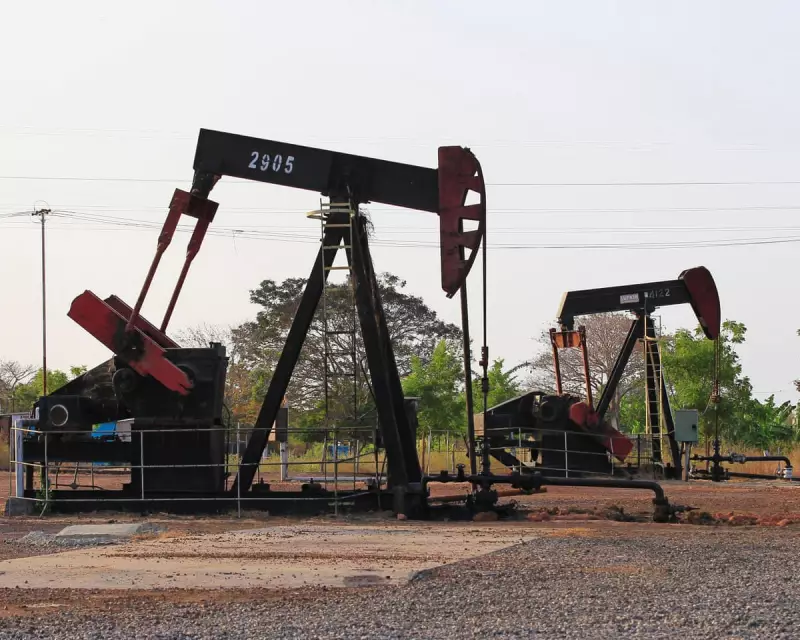
While Venezuela's colossal oil reserves are an obvious prize, they are far from the only objective. The country's Orinoco Belt holds over 300 billion barrels of crude, the largest proven reserves on the planet, accounting for a fifth of the global stock. Former President Donald Trump has explicitly stated his desire for US companies to tap these resources. However, the industry is in a dire state after years of sanctions and mismanagement. Experts estimate that repairing the crumbling infrastructure would require tens of billions of dollars and many years, a questionable investment amid low oil prices and the global shift to renewables.
The broader, and perhaps more strategic, contest is for control of the critical minerals essential for renewable technology, advanced weapons, and artificial intelligence. China currently dominates the global supply chain for these materials. South America offers a potential counterweight: Bolivia possesses the world's largest known lithium deposits, Brazil has the second-largest reserves of critical minerals and is a leading producer of niobium, and Chile, Peru, and Colombia are rich in rare earths. China has heavily invested in processing and infrastructure across the continent, while US policy under Trump has largely relied on tariffs.

A New Doctrine of Hemispheric Control
The Trump administration's actions are guided by a stark new national security strategy, published in November. It shifts focus from Russia to perceived threats in the Americas and declares an imperative to "re-secure our own independent and reliable access" to critical raw materials. The strategy explicitly aims to eject foreign rivals, namely China, from influence over ports, infrastructure, and strategic assets in the region. A US State Department social media post on 5 January bluntly reinforced this stance, declaring: "This is our hemisphere."
This muscular approach has been cheered by a handful of right-wing regional leaders. Argentina's Javier Milei, reliant on US financial support, and Ecuador's President Daniel Noboa, who seeks to build a US military base on the protected Galápagos Islands, align with Washington's vision. In contrast, the governments of Mexico, Brazil, Colombia, Uruguay, and Cuba have condemned the US intervention as a threat to regional stability.
Regional Backlash and Future Flashpoints
The backlash has been sharp. Colombian President Gustavo Petro, a prominent climate champion, has mobilised forces to his border with Venezuela and vowed armed resistance if threats intensify. He faces re-election this year, and his supporters allege he is already a target of a White House misinformation campaign. Trump has verbally attacked Petro, making unfounded allegations about drugs.
Brazil's President Luiz Inácio Lula da Silva has also felt Washington's pressure. After criticising Trump, he faced retaliatory tariffs of 50% on Brazilian goods. This move backfired, boosting Lula's domestic popularity and prompting US industries to remind their president of their dependence on Brazil's critical minerals.
The US is now attempting to reverse the east-west flow of trade with military force and political interference, supported by its largest military buildup in the Caribbean in generations. For many South American leaders striving to address the climate crisis, this represents a catastrophic push in the wrong direction—prioritising fossil fuel extraction and diverting critical minerals towards military might rather than the energy transition.
This doomsday bunker mentality, focused on asset-stripping neighbours for supplies, poses a severe threat to democracy, environmental protection, and regional cooperation. However, South America is unlikely to accept the role of mere pantry and fuel tank for the north without a formidable struggle.