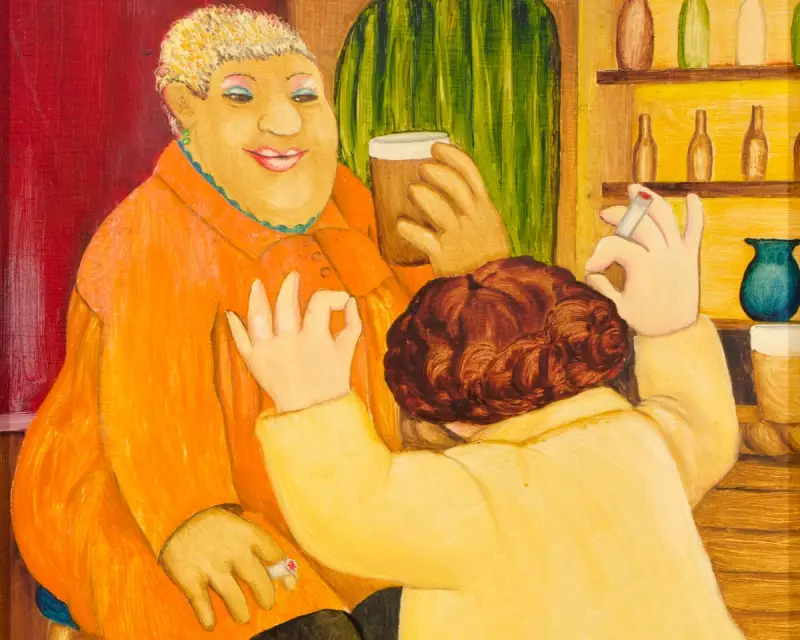
A major new exhibition in Plymouth is set to challenge the long-held critical view of Beryl Cook, aiming to reposition the beloved painter as a significant and serious chronicler of social history. The 'Pride and Joy' retrospective opens at The Box in Plymouth on Saturday 24 January 2026 and will run until 31 May.
From Kitsch to Critical Acclaim
During her lifetime, Cook's vibrant, colourful depictions of everyday life were often dismissed by art critics as whimsical or kitsch. This comprehensive show, featuring more than 80 paintings, seeks to overturn that perception. Curator Terah Walkup describes the venue as "awash with colour" and insists Cook was far more than a painter of caricatures.
"Beryl Cook wasn't painting caricatures," Walkup stated. "She was documenting communities and identities that were actively marginalised with affection, mastery and honesty. Her work from the 1970s to 2000s captures working-class joy, body positivity, and queer culture."

Plymouth's Unapologetic Chronicler
Cook, who died in 2008 aged 81, moved to Plymouth in 1968, and the city's pubs, streets, and lido became the vivid backdrops for her iconic work. The exhibition coincides with two significant milestones: 2026 is the centenary of Cook's birth, and it marks half a century since a feature in The Sunday Times propelled her to national fame following her first Plymouth exhibition.
The show also aligns with Plymouth's bid to become the UK City of Culture. Deputy council leader Jemima Laing said Cook put Plymouth on the cultural map, painting its people "always with warmth, humour and genuine affection."
Radical Joy in the Details
The exhibition includes rarely seen sculptures, textiles, and access to Cook's personal archive. A section on "identity and representation" highlights how she painted those who were "othered." Walkup points to the 1972 painting 'Bar Girls', featuring two women with pints of beer, as a subtly radical act for its time.
"She's not making fun of her subjects at all – she's painting people occupying spaces unapologetically," Walkup explained. "She celebrates her subjects and we think there's something so important and radical and joyous in that."
A Meticulous and Influential Practice
Further sections reveal Cook's meticulous process, where she mined local media for inspiration, and her diverse influences, ranging from saucy seaside postcards to the works of Modigliani and Bruegel. Writer and former museum director Julian Spalding hailed Cook as "one of the glories of British painting," comparing her to William Hogarth and Thomas Rowlandson.
As a love letter to the artist, larger-than-life sculptures of her characters will appear across Plymouth. The 'Pride and Joy' exhibition presents a compelling case for the long-awaited critical recognition of an artist who found profound joy in the unapologetic lives of ordinary people.