Punk's Visual Rebellion: New Exhibition Charts DIY Design Legacy
A groundbreaking new exhibition, curated by writer Philip Hoare, delves into the thrilling visual legacy of punk and post-punk, showcasing how the DIY designs of the 1970s and 1980s became profoundly influential. Titled So This Is Real Life, the exhibition at the John Hansard Gallery in Southampton runs until 9 May, featuring a collection of posters that capture the era's raw energy and cultural critiques.
Bold Statements and Cultural Monstrosities
From anti-Nazi posters to acid-drenched reinterpretations of Jean Cocteau, the exhibition highlights the innovative and often provocative artwork that defined punk and post-punk. One standout piece is the cover of Buzzcocks' Orgasm Addict, designed by Malcolm Garrett using a photomontage by artist Linder. Linder described creating "peculiar jigsaws" from soft-porn magazines and Argos catalogues, highlighting what she called "cultural monstrosities." This image remains one of the most memorable of the era, embodying the movement's rebellious spirit.
Political Activism and Artistic Innovation
The exhibition also features political works, such as David King's Anti-Nazi League Carnival poster from 1978, which aimed to create a visual style for the left. This poster promoted a march in London that drew 80,000 protesters against the far-right National Front, culminating in a concert secretly headlined by the Clash. Other notable pieces include Ian Pollock's eerie design for Magazine's Secondhand Daylight album, using a photo from a Save the Whale rally, and John Lydon's grimacing puppet heads for Public Image Limited's Death Disco single, a tribute to his dying mother.

European Connections and Post-Punk Eeriness
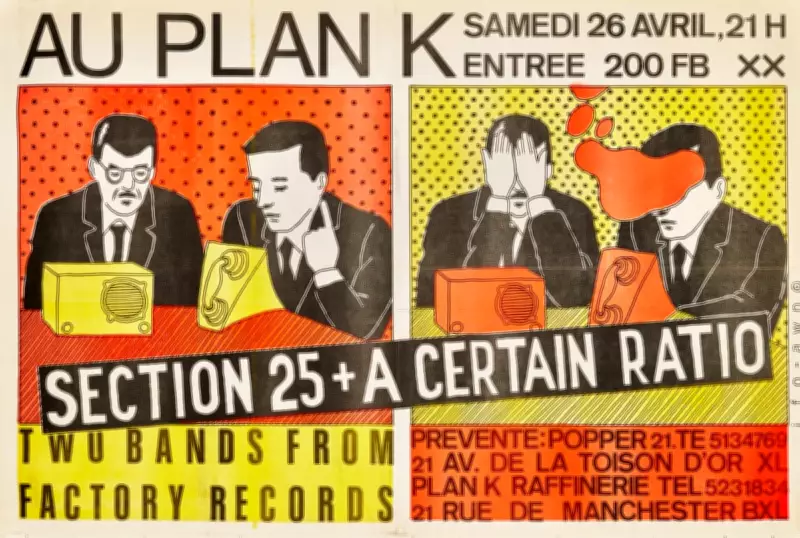
British post-punk's artistic ties to Europe are explored through works like Benoît Hennebert's poster for the Plan K event in Brussels, which reimagined Jean Cocteau's art in acid colours. The exhibition also includes Jocelyn Coster's screenprint for a Joy Division concert at Plan K, a venue where the band first performed Love Will Tear Us Apart. After lead singer Ian Curtis's tragic death, the band reformed as New Order, with designs like Peter Saville's poster for their Movement album drawing on Italian Futurist influences, albeit controversially due to fascist associations.
Feminist Stances and Design Disruptions
Feminist perspectives are represented through bands like The Raincoats, whose provocative stance sometimes led to violent opposition, such as a car vandalised with a swastika after a concert. Additionally, fanzines evolved from punk's Sniffin' Glue to more elaborate designs, like Nick Cave's collage for Elemental fanzine, exploiting photocopying for disruptive ends. The exhibition also features vibrant posters by designers like Bob Last, who used dynamic colour fields inspired by Russian constructivists, and Edwyn Collins's illustrations for Postcard Records bands.
Legacy and Impact
Overall, the exhibition underscores how punk and post-punk visuals, from anti-establishment protests to avant-garde aesthetics, left an indelible mark on culture. Through bold graphics and DIY ethos, these designs challenged norms and inspired future generations, making So This Is Real Life a must-see for art and music enthusiasts alike.