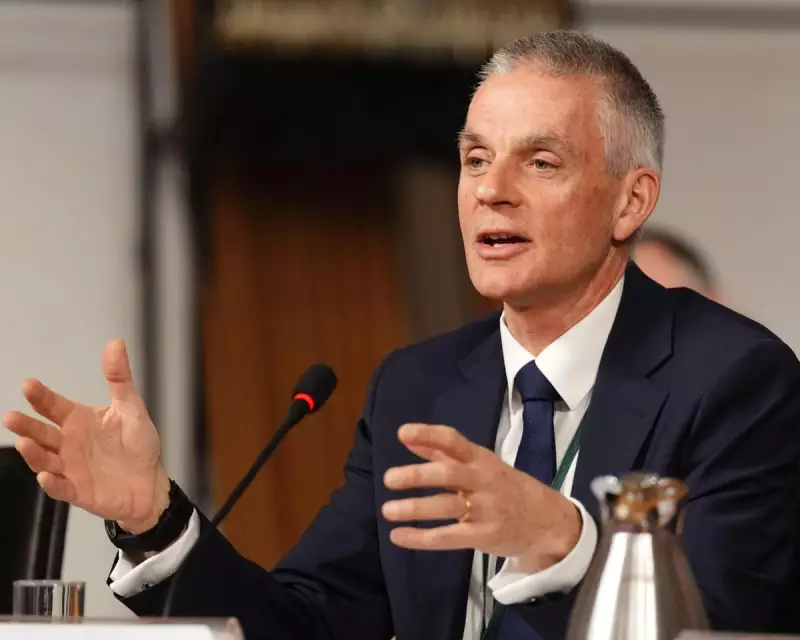
Tim Davie's journey to becoming the BBC's Director General represents one of the most fascinating career transitions in British media history, moving from corporate marketing to leading the nation's public service broadcaster.
From Corporate Marketing to Broadcasting Leadership
Davie began his professional life in the fast-moving consumer goods sector, joining Procter & Gamble as a marketer while still studying English at Cambridge University. His marketing career accelerated when he moved to PepsiCo in 1993, where he served as vice-president of marketing and franchise, responsible for European marketing campaigns that included the dramatic decision to colour both a Concorde aircraft and the Daily Mirror newspaper blue for a major Pepsi promotion.
In 2005, Davie made the unexpected transition to public broadcasting, becoming director of the BBC's marketing, communications and audiences division. This marked the beginning of a long and varied career within the corporation that would see him take on numerous senior roles.

Rising Through BBC Ranks During Turbulent Times
Davie's BBC career progressed rapidly through several key positions. In 2008, he took leadership of the audio and music division, overseeing flagship radio stations including Radio 1, 2, 3, and 4. During this period, he controversially proposed closing 6 Music and the Asian Network, arguing the corporation operated too many stations and needed to focus resources on "unique, high-quality radio" content. Both stations were ultimately saved following significant public opposition.
The executive's career took another significant turn in 2012 when he became chief executive of BBC Worldwide, the corporation's commercial arm. Later that same year, in November, he stepped into the role of acting director general following George Entwistle's resignation during the Jimmy Savile scandal.
Davie's brief tenure as acting director general proved eventful, requiring him to manage the fallout from a Newsnight report that had incorrectly implicated Tory peer Lord McAlpine in child sexual abuse allegations. His interim leadership lasted only months until Tony Hall's appointment as permanent director general in 2013.
Consolidating Commercial Operations and Final Ascent
Davie continued to shape the BBC's commercial strategy, overseeing the 2018 merger of BBC Worldwide with the corporation's production arm to form BBC Studios, which became the primary commercial subsidiary. His compensation reflected his senior status, making him the BBC's highest-paid executive with £642,000 in earnings for 2019 – substantially more than director general Tony Hall's £475,000 salary.
Before reaching the top position, Davie declined an opportunity to lead the Premier League in 2019. His appointment as BBC Director General came in June 2020, with him formally assuming the role that September. In a symbolic gesture, he initially accepted Hall's lower salary of £475,000 until mid-2021, when his compensation increased to £525,000.
Beyond his BBC responsibilities, Davie maintained an active role in broader cultural and creative industries. He served as chair of Comic Relief until assuming the director general position and held trusteeships at both the Tate galleries and the Royal Television Society. His contributions to international trade were recognised in 2018 with his appointment as Commander of the Order of the British Empire (CBE).
Educated at Whitgift School in South Croydon, which he attended on scholarship, Davie's career trajectory demonstrates the increasingly diverse paths to leadership in British public institutions, blending corporate marketing expertise with public service broadcasting values.