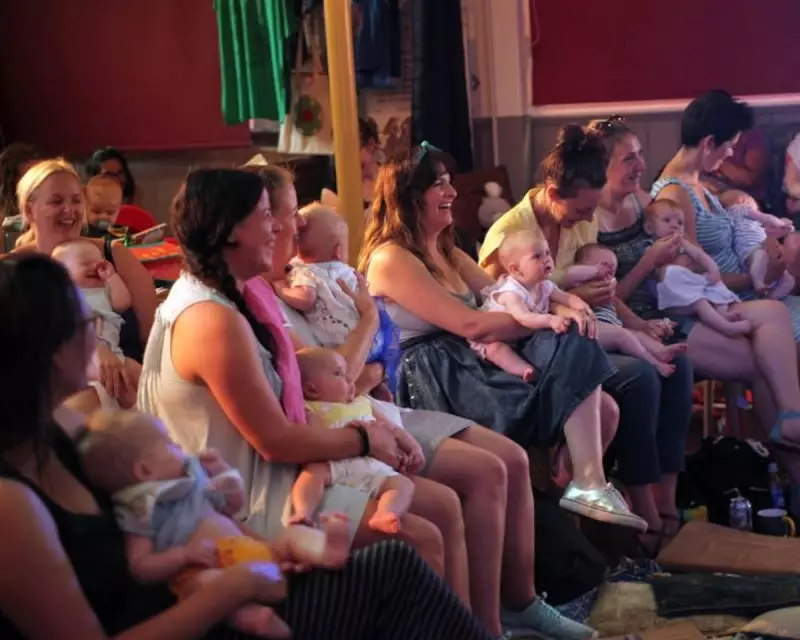
A new wave of comedy clubs is sweeping across Britain, offering a sanctuary for exhausted parents and their infants. These daytime gigs, where feeding, crying, and the occasional nappy disaster are not just tolerated but welcomed, are proving to be a sellout success, providing laughter and community for new mothers and fathers.
Navigating the Unpredictable Audience
For performers, however, these gigs present a unique challenge. Frankie B, founder of Milk Club Comedy in Bingley, started her venture when her own baby was just a month old and quickly had to move to a larger venue due to demand. She notes the difficulty in reading the room, stating, "New mothers can be harder to gauge than your usual audience because they’re bringing complex baggage with them."
This sentiment is echoed by Angie Belcher, who runs the regularly sold-out Aftermirth gigs in Bristol. She often has to reassure comedians that a quiet, exhausted audience doesn't mean a bad performance. "I have to explain to performers that new mothers aren’t raucous because they’ve just had nine months of obesity, three days of pain, no sleep for months – and probably still have stitches," Belcher says, adding that she comforts acts by suggesting the mums are "probably smiling on the inside."

Comedy Stripped Back to Its Essence
Some comedians have learned to thrive in this chaotic environment. Harriet Beveridge loves performing at mum-and-baby gigs precisely because it forces a shift in perspective. "You have to give up the arrogance and ego-centric nature of being a comedian, where you want all the attention all the time because you absolutely are going to be upstaged," she explains. Her best joke about a baby snack resembling a tampon was once stolen by a toddler who rushed on stage, grabbed the prop, and ate it.
For Julie Jepson, these shows are a highlight. She fondly recalls a little girl wandering into her spotlight, taking the microphone, and licking it like an ice cream. "She stole the show but I forgave her because she was so sweet," Jepson said. The ethos of embracing the chaos is shared by Angela Garwood, co-host of London's Every Other Mother, who doesn't mind being pelted with Lego. "The chaos is completely welcome. How boring if all the children sat there perfectly," she remarks.
A Different Kind of Comedy Success
The clubs operate on a simple, liberating premise: comedy in daylight hours, with feeding encouraged and meltdowns guaranteed. Hatty Ashdown, who runs Screaming With Laughter, observes that big-name comics can sometimes falter here. "New parents aren’t looking for clever, enigmatic jokes with long pauses. To get them, you’ve got to be totally funny bones and high energy," she advises.
The success stories are remarkable. Comedian Nick Page once jokingly suggested turning his set into a sleepover for the exhausted mothers in his audience. To his surprise, they enthusiastically agreed. "We all just had a little nap together," Page recalled. The comics later wrote jokes on paper for the mothers to memorise, so they could pretend they'd seen a full show. The plan worked perfectly; the mums later posted glowing five-star reviews online.
For Sally McIlhone, who left a corporate career to co-found Every Other Mother, the most resonant comedians are those who have been through the parenting trenches themselves. "They can give new mothers hope that their toddler will stop melting down. On the other hand, they’ll then become teenagers who give you lip," she notes with humour.
Perhaps Nick Page best summarises the surreal, rewarding nature of these gigs. "These are gigs where people will cry, scream, probably won’t care you’re there, might shit themselves and will probably get a tit out," he said. "It’s like doing a gig in Portsmouth in the old days." As these clubs continue to sell out from London to Bingley, it's clear they are filling a vital gap, offering laughter, solidarity, and a much-needed break from the relentless demands of early parenthood.