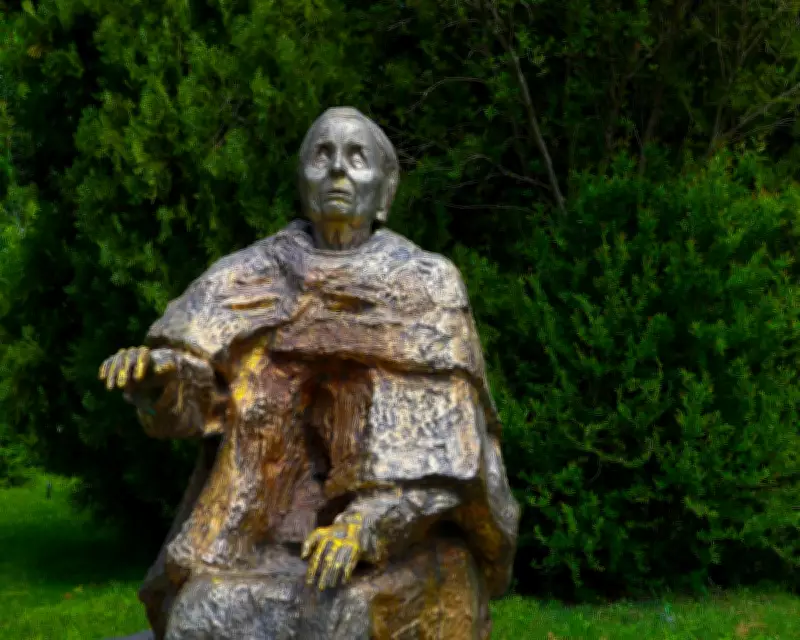
The Myth of Baba Vanga: How a Mystic's 'Prophecies' Fuel Online Propaganda
In the digital age, the Bulgarian mystic Baba Vanga has ascended to mythical status, with social media and tabloids worldwide attributing to her predictions of cataclysmic events like the 9/11 attacks, the Covid-19 pandemic, and the war in Ukraine. Recently, headlines have escalated, questioning whether she foresaw conflicts such as the Israel-Iran war, US interference, and missile crises. Articles even speculate on her "predictions for 2026," including the onset of World War III and humanity's first alien contact.
The Reality Behind the Legends
However, a growing chorus of voices from Bulgaria and beyond warns that many of these prophecies were likely never uttered by Vanga. Instead, the so-called "Nostradamus of the Balkans" has been transformed into a potent avatar, exploited for sensationalized clickbait and the promotion of pro-Russian narratives. Ivan Dramov of the Bulgaria-based Baba Vanga Foundation dismisses these claims as absurd, highlighting false assertions amplified on platforms like TikTok, YouTube, and various media outlets, from UK tabloids to Albanian state-run publications.
"Absolute lies have been told about this holy woman," said Dramov, whose organization was founded by Vanga's followers and chaired by her before her death. "Vanga dealt mainly with people's health problems, not with upcoming cataclysms in the world."

From Humble Beginnings to International Fame
Born Vangeliya Pandeva Gushterova in 1911 in the Ottoman Empire, Vanga lost her eyesight as a teenager after a tornado threw her into a field. She gained local prominence during World War II as people sought her guidance on the fate of loved ones at the front. By the 1960s, she had become a regional phenomenon, attracting crowds to Petrich, the southwestern Bulgarian town where she resided with her husband. Her reputation soon spread internationally, drawing visitors from Russia, Romania, and Greece.
Dramov emphasizes that Vanga's pronouncements were typically focused on the personal lives of her visitors, offering advice on medical care and daily actions, rather than global events. Yet, her star rose globally through TV series, books, and talk shows delving into her life and supposed prophecies.
The Russian Connection and Disinformation Campaigns
Russians have been particularly eager to embrace Vanga, with researchers at the University of Texas at Austin noting her as "one of the most noteworthy mediums of 'truth' in 20th- and 21st-century Russian imagination." Her influence is so embedded in Russian culture that it inspired the verb vangovat, meaning to predict, and a common expression questioning one's knowledge.
Today, her name and alleged prophecies are frequently referenced in Russia, often to bolster Kremlin-aligned political narratives. A 2024 report by BIRN Albania, which surveyed 36 Albanian publications over a year, found at least a dozen articles—mostly citing Russian media—where Vanga's predictions were used to reinforce anti-NATO and anti-EU narratives.
Fabricated Prophecies and Political Manipulation
Viktoria Vitanova-Kerber, a PhD student at the University of Fribourg, points out that many predictions attributed to Vanga, such as the fall of the Soviet Union or Russia's future primacy, likely originated from Russian writer Valentin Sidorov, who claimed to have met her in the 1970s. With no recordings of these meetings, Sidorov had free rein to interpret or even construct Vanga's words.
"Some of his writings from the early 1990s suggest that Vanga had predicted the future primacy of Russia over the US—a narrative well-received in today's Russia as well," said Vitanova-Kerber. This has given rise to a new generation of Russian "Vanga experts" who distort historical facts to fit political agendas, promoting national grandeur, anti-westernism, and traditional values.
The Legacy of Misuse
Zheni Kostadinova, a Bulgarian author whose books on Vanga have been translated into multiple languages, notes the irony: no one recorded Vanga while she was alive, and she left no written records, yet "everyone puts words in her mouth that she never said." Her prophecies, Kostadinova describes, lie somewhere between truth and myth, often retold and reinterpreted.

Dramov recalls that Vanga herself foresaw the misuse of her name. In 1989, as Bulgaria's communist regime crumbled, she witnessed her image being commercialized for products like clothing and handkerchiefs. "In general, she stated that her name would be misused," said Dramov. "She said many times that people will use her name during her life and after her death."
This exploitation has now extended into the realm of disinformation, making Vanga a flexible medium for various propaganda purposes, from sensationalism to geopolitical manipulation, highlighting the enduring power of myth in the digital era.