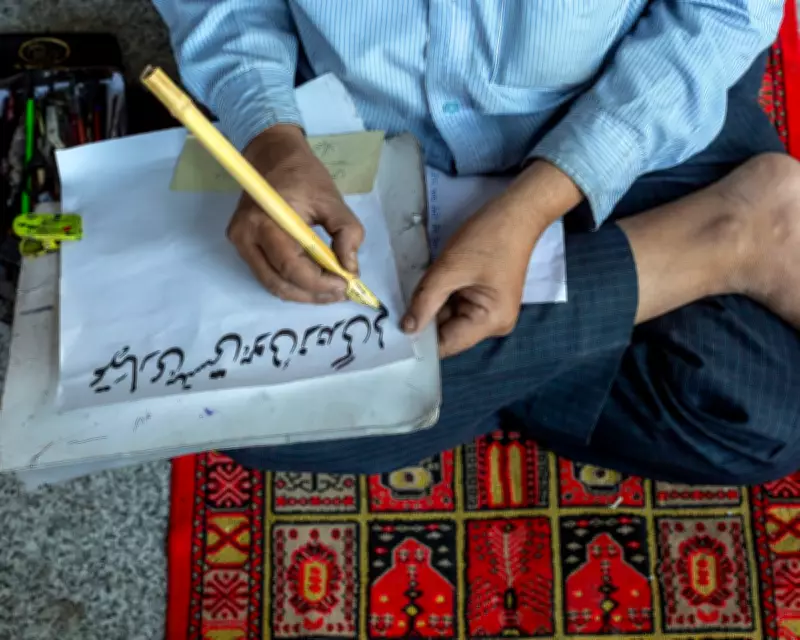
As someone who speaks, thinks, and writes novels in English, it feels strange to recall a version of myself who couldn't utter a single word of it. Until age five, my world was entirely in Urdu—the language of family, home, and childhood comfort. Then, just before starting primary school, we left Pakistan. One of my clearest memories is the panic upon learning I'd attend a British school: How would I communicate, learn, or survive without the words to express myself? My mother, in her no-nonsense way, assured me I'd figure it out.
The Swift Transition to English Dominance
And figure it out I did, perhaps too well. English quickly became omnipresent, then internalized. By the time we relocated to Australia, it had embedded itself so deeply it no longer felt borrowed—it felt inherently mine. It became the language of school, friends, university, work, and most crucially, my imagination and writing. English ceased to be foreign and became my instinctive linguistic choice.
Meanwhile, Urdu began to slip from easy reach. We still spoke it at home, so I never lost it completely, but my earliest language grew less certain on my tongue. I'd pause mid-sentence, searching for the right Urdu word, translating frantically in my head before surrendering to English. This created a familiar migrant dialect—a hodgepodge of mother tongue and adopted tongue, stitched together from memory and convenience.

The Unexpected Reawakening in Pakistan
It wasn't until a recent visit to Pakistan that I realized how much Urdu had remained intact, buried beneath layers of English. What startled me was not just its return, but the speed. From the moment I landed in Karachi, Urdu rushed in from all sides—airport officials, family, drivers, shopkeepers, and neighbors. My brain didn't ease into it; it simply switched. I fell into conversational rhythm almost immediately, though any hesitation prompted my family to gleefully accuse me of losing my Urdu ability.
Soon, the opposite occurred: Urdu embedded itself so fully back into my mind that I struggled for English words. Speaking to my English-only children, I'd get stuck mid-sentence, trying to translate Urdu thoughts already forming. One night in Islamabad, I woke and asked for the heater to be turned on in Urdu, unaware my Scottish husband only understands English. Half-asleep, my brain had decided this detail was irrelevant.
Language as a Bridge to Belonging
This experience revealed that despite leaving Pakistan young, my mother tongue had never truly left me. It had been buried and muffled by years of distance, but remained alive and waiting. There was something instinctive about it, like a current pulling me back toward the language of my parents and grandparents, and toward my earliest self.
My relationship with home has always been complicated, but language offered a belonging geography alone couldn't. It reminded me that home isn't always a place on a map—sometimes it's a sound or a way of being understood before finishing a sentence.
The Intimate Gifts of Bilingualism
Research shows bilingualism may benefit the brain, linking it to improved decision-making and reduced brain ageing. But in ordinary life, its gifts feel less clinical and far more intimate. Speaking Urdu while traveling through Pakistan enriched every interaction, allowing conversations with people I might otherwise have smiled at politely and passed by. It granted access not just to dialogue, but to texture, humor, intimacy, and nuance, making the country feel less like a visit destination and more like a place that still knew me.
Most importantly, it provided connection. It helped bridge years with long-unseen family and made me feel tethered to a country I left at five, but which had never fully left me. Language isn't only about communication—it can also be about inheritance, a profound link to roots that endure despite time and distance.