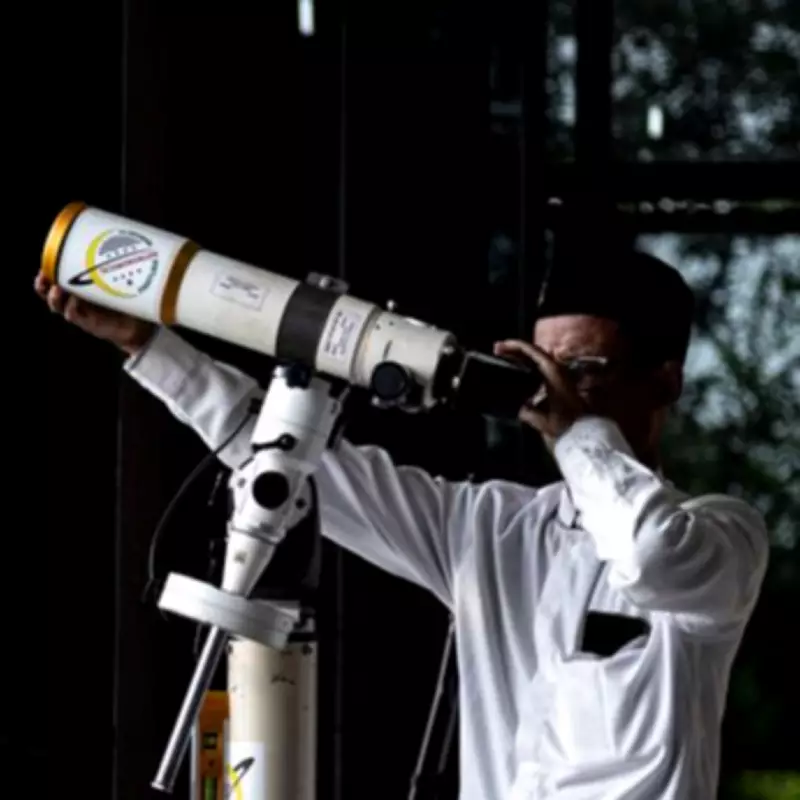
As Muslims approach the final days of Ramadan in 2026, communities across London, the United Kingdom, and the globe are preparing for the critical sighting of the new crescent moon. This astronomical event signifies the end of Ramadan's thirty days of fasting and heralds the beginning of Eid al-Fitr, the "festival of breaking the fast," which also commences the Islamic month of Shawwal.
Global Moonsighting Challenges and Predictions
This year, the new moon is born on Thursday, March 19, 2026. However, according to data from the Royal Observatory in Greenwich, the crescent will be too slender and faint to be visible with the naked eye in several key countries on that date. Experts indicate that Saudi Arabia, Pakistan, Indonesia, Bangladesh, and South Africa will not witness the moon on March 19 due to its minimal visibility.
In the United Kingdom, Morocco, and Turkey, spotting the crescent on March 19 will be extremely difficult, potentially requiring telescopes for any chance of observation. The New Crescent Society plans to livestream a UK Eid al-Fitr moonsighting attempt on YouTube and Facebook starting at 6:35 PM on Thursday, March 19, offering a public window into this significant religious observance.

National Variations in Eid Celebrations
Saudi Arabia's national calendar has already designated Friday, March 20, 2026, as Eid al-Fitr based on its astronomical calculations. Having begun Ramadan earlier, Saudi observers may gather as early as Wednesday, March 18, to attempt sighting the moon, with celebrations expected to proceed on March 20.
Conversely, the UK and Morocco face a different scenario. The New Crescent Society notes that moonsighting in these regions will occur on Thursday, March 19, but the crescent's extreme thinness makes visibility highly unlikely. Consequently, Ramadan is projected to extend an additional day, with Eid al-Fitr anticipated on Saturday, March 21, 2026. The society emphasizes that Morocco, which relies solely on naked-eye sightings, has not encountered such a faint moon in decades of records.
Key Dates for Eid al-Fitr 2026
- Saudi Arabia: Moonsighting begins Wednesday, March 18; Eid expected Friday, March 20.
- United Kingdom: Moonsighting begins Thursday, March 19; Eid expected Saturday, March 21.
- Morocco: Moonsighting begins Thursday, March 19; Eid expected Saturday, March 21.
- Pakistan, Bangladesh, and South Africa: Moonsighting begins Thursday, March 19; Eid expected Saturday, March 21.
The forecasts indicate that the crescent moon will become easily visible globally by Friday, March 20, and Saturday, March 21, as it gains size and brightness. This variation in dates stems from the Islamic tradition's reliance on local moonsighting, which can lead to a split Eid, as seen previously when UK Muslims began fasting on different days in February based on following Saudi or local sightings.
As families and communities await these celestial confirmations, the diversity in celebration dates underscores the rich cultural and religious practices within the global Muslim ummah, uniting believers in anticipation of Eid's joyous festivities.