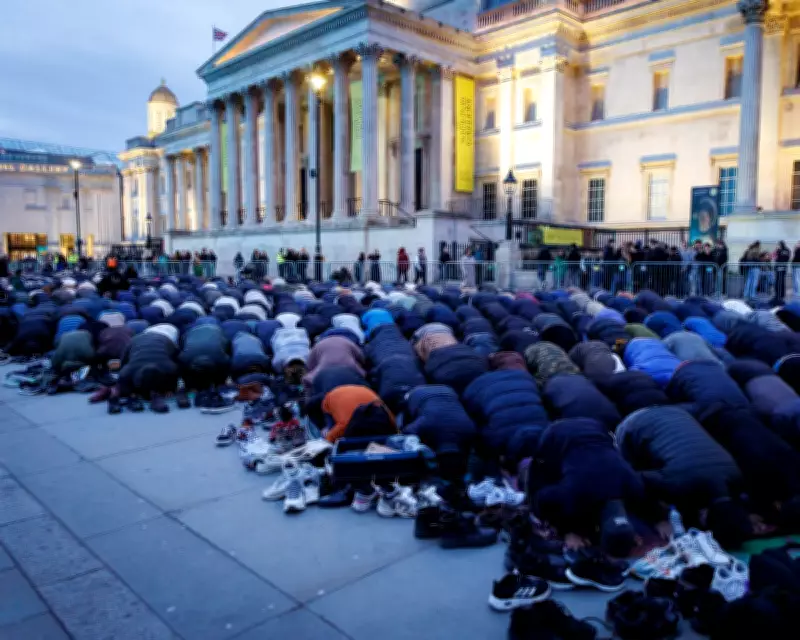
Public Ramadan Prayer Event in London's Trafalgar Square Sparks Heated Debate
A public prayer event to mark Ramadan at Trafalgar Square in London on March 16, 2026, has become the center of a fierce national discussion about religious freedom and integration in Britain. The event, which saw Muslims gathering for peaceful prayers, drew negative comments from Conservative and Reform UK politicians, leading to a wave of responses from citizens defending the rights of the Muslim community.
Political Criticism and Community Backlash
Shadow justice secretary Nick Timothy described the public prayer as an "act of domination," a characterization that has been widely condemned as unjust and divisive. In letters to the editor, British Muslims and allies expressed deep concern over such rhetoric, arguing that it unfairly singles out one faith group and undermines the principles of fairness and equal treatment that Britain stands for.
As a young British Muslim, Sarmad Anwar from Bradford, West Yorkshire, voiced his distress, stating that public prayer should not be viewed as threatening. He emphasized that if other faiths are allowed to gather in public spaces like Trafalgar Square for their religious observances, Muslims must be afforded the same right without facing criticism or suspicion.

The Contradiction of Integration Demands
Dr. Maleeha Mansur from Raynes Park, London, highlighted a troubling contradiction in the political discourse. While Muslims are often encouraged to integrate into British society, they face condemnation when they participate visibly and peacefully in public life, such as through open iftars or prayer events. She argued that equality cannot be conditional and that portraying Islamic practices as threatening is both false and irresponsible.
Dr. Mansur pointed out that there is no evidence of Muslims imposing their beliefs on others, citing the Islamic principle of "for you your religion, and for me my religion." She warned that such rhetoric risks fueling division and making Muslims targets of abuse, eroding the foundation of justice in a multicultural society.
Historical Context and Religious Freedom
Mariam Sohail from Brigg, Lincolnshire, questioned why the sight of Muslims praying in Trafalgar Square seemed unfamiliar to critics, noting that people of other faiths have congregated there for years to mark their religious days. She suggested that fear may stem from a lack of understanding, encouraging those with concerns to learn more about Islamic practices, such as by attending iftar events or reading translations of prayers.
Titus Alexander from Galashiels, Scottish Borders, drew parallels to historical persecution of minorities, including Catholics and Jews, urging British citizens to uphold norms of religious freedom and tolerance through democratic means like voting. Sylvia Rose from Totnes, Devon, added a satirical note, observing that "British values" often include similar practices by Christian monks and nuns without controversy, highlighting a double standard when non-Christians engage in them.
Broader Implications for Society
The debate extends beyond this single event, touching on core issues of diversity, inclusion, and the role of religion in public spaces. Critics argue that peaceful acts like breaking the fast or offering short prayers do not constitute domination but rather foster community cohesion. They call for consistent application of the law to all faiths, warning that discrimination against Muslims deepens societal divisions and makes young British Muslims feel unwelcome in their own country.
As the discussion continues, it underscores the need for greater empathy and education to bridge gaps in understanding. The letters reflect a broader call for politicians and the public to reaffirm commitments to religious freedom, ensuring that Britain remains a place where all communities can practice their faith openly and without fear.