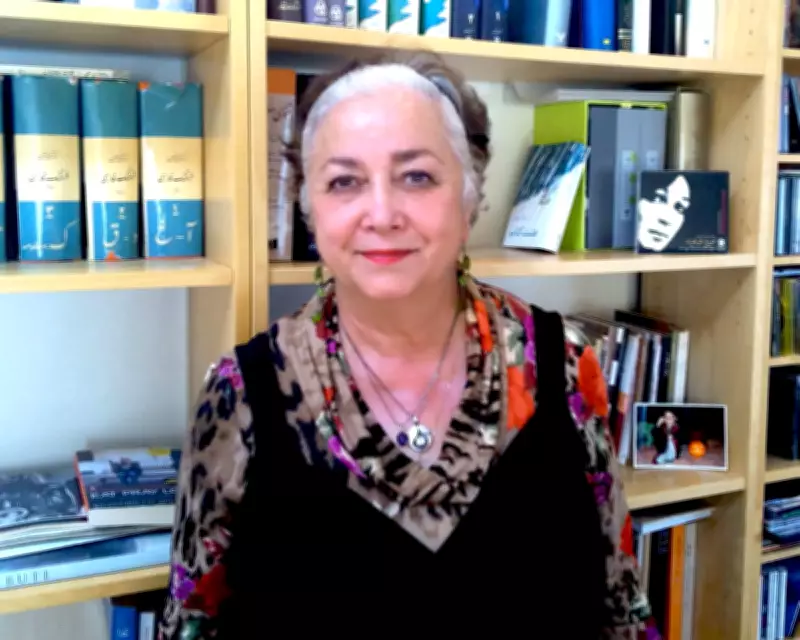
Shahrnush Parsipur: The Feminist Voice Defying Iran's Regime
As Iranians worldwide await the potential collapse of the Islamic Republic, the banned 1989 novella Women Without Men by Shahrnush Parsipur makes its UK debut. Longlisted for the 2026 International Booker prize, this groundbreaking work arrives amid ongoing "Woman, Life, Freedom" protests, state crackdowns, and regional tensions.
A Life of Literary Resistance and Imprisonment
At 80 years old, Parsipur stands as one of Iran's most celebrated living writers and a pioneering feminist voice. During the 1980s, her stories captivated Iran's literary circles, leading to nearly five years of imprisonment without formal charges. Following her release, she published Touba and the Meaning of Night and Women Without Men in 1989.
These works became underground sensations among Iranian women, circulating secretly until Women Without Men reached the wife of an Islamic Republic official. Parsipur faced rearrest and imprisonment for her depictions of women's bodies and sexuality, highlighting the regime's fear of female autonomy.

The Revolutionary Narrative of Women Without Men
Set during Tehran's 1953 coup, the novella blends magical realism with traditional Iranian allegory to critique the policing of women's bodies. Through five interconnected stories, Parsipur creates a powerful condemnation of patriarchal control:
- Munis escapes her brother's domination by leaping from a rooftop, continuing her narrative beyond death
- Pious Faezeh experiences a faith-shattering rape
- Sex worker Zarrin begins seeing clients as faceless and flees her profession
- Mahdokht's intense fear of sex leads to her transformation into a tree
- Farrokhlaqa abandons her middle-class husband to purchase a garden outside the city
These women converge at Farrokhlaqa's garden, creating a temporary sanctuary from marriage, male authority, and sexual shame. Despite remaining banned in Iran, the work has achieved international recognition through translations and a 2009 film adaptation.
The Virginity Taboo and Personal Cost
In a video interview from her California exile, Parsipur reflects on the personal sacrifices her writing demanded. "The Islamic Republic wanted to scare and punish me," she reveals, noting that officials particularly objected to discussions of virginity (bekarat).
"It has a deep meaning for Iranians," Parsipur explains. "This shows that this woman hasn't been with others. My grandmother would tell me a non-virgin woman will go to hell." She shares her own childhood confusion about female anatomy, leading her to believe she had lost her virginity prematurely due to societal silence on the subject.
"I suffered for so long thinking I'm not a virgin, so I decided to write this book so other girls don't suffer," she states, emphasizing the universal nature of women's desire for freedom from male expectations.
Changing Social Dynamics and Female Independence
Parsipur acknowledges evolving attitudes among Iranian women, despite persistent challenges. She notes the rise of "white marriages"—unregistered cohabitation arrangements—as evidence of women seeking personal independence outside traditional structures.
"The Islamic Republic doesn't know. Nobody checks," she observes. "It's not because divorce is hard. They want their personal independence."
Exile and the Future of Iranian Women
Living in an Iranian community near San Francisco for two decades, Parsipur has largely withdrawn from writing, feeling disconnected from her homeland. "I can't write a California story," she admits, though her legacy continues to inspire.
Regarding current protests, she declares with conviction: "The women of Iran have changed so much, so many without hijab. They don't care what the Islamic Republic thinks." After a thoughtful pause, she adds the powerful prediction: "The women of Iran will cause the fall of the Islamic Republic."
As Women Without Men finds new readers through its UK publication, Parsipur's work continues to resonate with those fighting for gender equality and political change in Iran and beyond.