Cornwall's St Piran's Day Festivities Illuminate Cultural Renaissance Across the Region
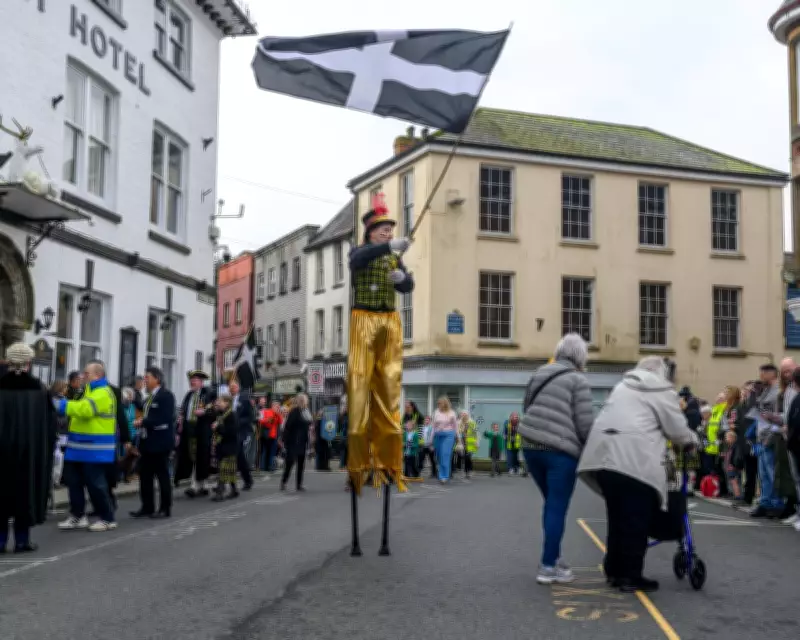
On a crisp spring morning in Launceston, the ancient capital of Cornwall, the town buzzed with energy as St Piran's Day celebrations unfolded in full splendor. Children paraded through the streets with colorful displays, traditional songs echoed across the historic center, and heartfelt speeches celebrated the unique spirit of Cornish identity that has become a defining feature of modern Cornwall.
A Spring Highlight in Britain's Far South-West
The annual St Piran's Day has transformed into a premier spring event across Cornwall, offering residents and visitors alike an opportunity to honor the region's patron saint while engaging in deeper conversations about contemporary Cornish identity. While March 5th marks the official date, festivities now extend throughout the weekend, with celebrations spreading to Bodmin, Truro, Falmouth, and beyond.
"This is a brilliant day that showcases our deep patriotism and pride in who we are," declared Launceston Mayor Nicola Gilbert, a lifelong Cornish resident. "We sometimes feel forgotten at the far end of the country, but we never forget our distinctive heritage and cultural roots."

Cultural Resurgence and National Recognition
The modern incarnation of St Piran's Day celebrations reflects a broader cultural resurgence across Cornwall. In January, the Cornish language Kernewek received official recognition under the European Charter for Regional or Minority Languages, granting it protected status alongside Welsh, Irish, and Scottish Gaelic. This linguistic milestone coincides with the UK government's exploration of a bespoke devolution deal for Cornwall that could provide greater autonomy over transport, housing, and economic development.
"There's definitely a resurgence in Cornish culture happening right now," observed Ross Wheeler, a stilt walker who participated in the Launceston parade. "The energy is palpable, and many of us believe this celebration deserves official recognition as a bank holiday."
Historical Roots and Contemporary Celebrations
According to Joanie Willett, co-director of the Institute of Cornish Studies at the University of Exeter, the modern prominence of St Piran's Day traces back to the late 1990s. This period coincided with the 500th anniversary of the Cornish rebellion and Cornwall's pursuit of European Union funding as one of the UK's most economically challenged regions.
"That era created an environment where Cornishness became genuinely cool," Willett explained. "Our heritage suddenly mattered in practical ways while remaining culturally significant. But let's be clear—these celebrations are fundamentally about fun and community spirit. At our institute, we're even hosting an inaugural pasty toss competition!"
Beyond Stereotypes: Cornwall's Multifaceted Identity
Cornish artist and commentator Seamas Carey noted the dramatic transformation in how St Piran's Day is celebrated compared to his school years. "This represents Cornwall finally grappling with its distinct identity," Carey reflected. "While Wales has St David's Day and Scotland celebrates St Andrew's Day, St Piran's Day offers a fresh canvas for creative expression. Being Cornish means embracing our 'otherness'—we're definitely not just another English county."
In the House of Commons, Labour MP Perran Moon (whose name derives from St Piran) emphasized Cornwall's diverse identity during a Global Cornish event. "When people think of Cornwall, they often picture beaches, pasties, and cream teas," Moon stated. "But there's so much more—our rich culture, revived language, industrial innovation in renewable energy, and critical mineral resources like lithium and tin. Cornish heritage has become truly international, with St Piran's events now occurring in Toronto, Mexico, Hong Kong, and Australia."
Community Empowerment and Inclusive Nationalism
In Redruth, communities leveraged St Piran's Day to promote their bid for UK Town of Culture 2028, screening the special film "The 'Druth Is Out There." Will Coleman, who appears in the film, described a "palpable wave" of positive energy surrounding Cornish identity over the past decade.

"There's growing understanding of our distinctive past combined with optimism about a more prosperous future," Coleman observed. "After years of being mischaracterized as merely an English county, Cornwall is renegotiating its position as one of Britain's five nations. While flag-waving might resemble defensive nationalism elsewhere, our Cornish resurgence feels inclusive, empowering, and genuinely celebratory."
The Cornwall Heritage Trust recounts that St Piran, a fifth-century Irish priest, was tied to a millstone and cast into the sea after displeasing a king. Rather than sinking, he miraculously floated to Cornwall's shores, where he preached Christianity. Reverend Jess Lancaster, who participated in the Launceston parade, noted the enduring Celtic traditions within modern Cornish Christianity, describing them as embodying "a calmness and gentleness" that continues to shape the region's spiritual character.