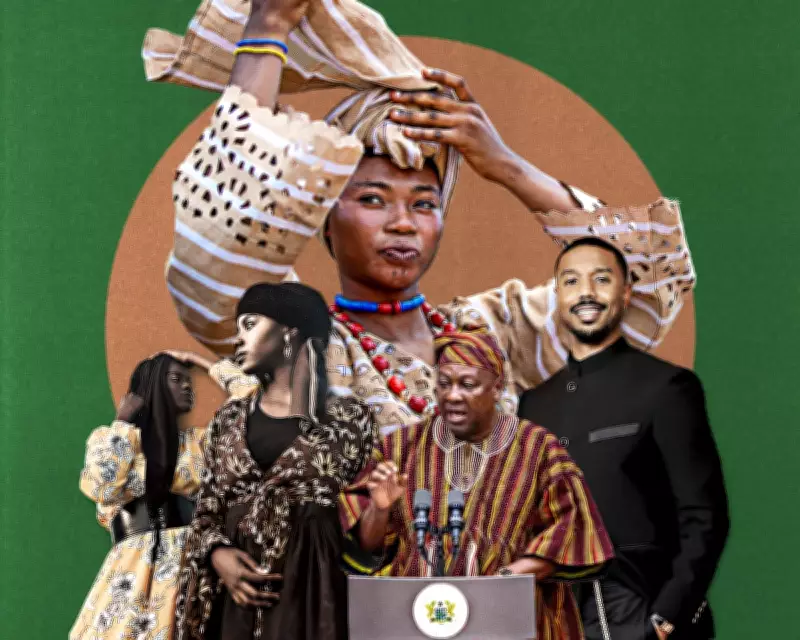
The Politics of Traditional Dress: A Cultural and Identity Exploration
Across the African continent, sartorial customs reflect a rich tapestry of unique styles rooted in unapologetic innovation. For many individuals, both on the continent and within the diaspora, navigating multiple identities through cultural attire is considered a birthright. However, this practice often comes with significant complications and political undertones.
Why Traditional Dress Matters in Modern Contexts
Several weeks ago, Ghanaian President John Dramani Mahama wore the traditional fugu, a patterned smock, during a state visit to Zambia. This choice sparked mockery on social media, with some Zambians humorously referring to it as a "blouse." In response, the Ghanaian government declared every Wednesday as "Fugu Day," prompting widespread participation and igniting conversations about the politics of traditional clothing.
The Long Wave team, with origins in Nigeria, Ghana, Sudan, and Trinidad and Tobago, delved into why wearing traditional attire can be so fraught. From ceremonial events to daily wear, the adoption of traditional dress varies dramatically across different regions and cultures.

Regional Variations in Traditional Attire
In Sudan, the male galabeya and female thobe are staples worn by everyone in various contexts, from weekends to casual errands. Similarly, Nigerians frequently don traditional clothes, such as kaftans, in their daily lives. In Morocco, kaftans are ubiquitous among both men and women.
Contrastingly, in cities like Nairobi, Johannesburg, and Cape Town, traditional clothing is rarely seen outside of ceremonial events. Western dress has become the norm, often associated with cosmopolitanism and class. This disparity may stem from factors such as the diversity of tribes in countries like Kenya, where no single national attire has emerged, or the lasting impacts of settler-colonialism.
For instance, Kenya's parliament recently decreed that African attire, including the Kaunda suit, is not welcome, mandating instead a Western-style dress code. This stands in stark contrast to Nigeria, where traditional fashion thrives in political spheres, highlighting how colonial histories continue to influence sartorial choices.
Diaspora Dynamics and Dress Code Switching
For those in the diaspora, wearing traditional dress involves navigating complex social norms. While attire like turbans, head scarves, and dashikis could easily integrate into Western wardrobes, many opt for muted color palettes and synthetic fabrics over the superior cottons and linens of traditional garments.
The mockery of Mahama's fugu underscores a broader perception that traditional clothing is primitive or silly, tying it to notions of modernity. This can lead to self-consciousness, as wearing such attire out of context may feel performative or politically charged.
Authenticity and Identity in the Diaspora
Attitudes toward traditional dress vary among diaspora communities, including those living in Africa, those born in Africa but now abroad, and those born abroad. There is often a perception that outside Africa, traditional attire is reserved for older generations or younger individuals seeking to sharpen their identities.
For many, not wearing signifiers of origin becomes a way to assert comfort in their identity without relying on external markers. This extends to practices like henna tattoos, which may be casually adopted by younger diaspora members but viewed as inappropriate outside traditional settings by others.
Embracing Multiple Identities Through Attire
Despite these complexities, traditional dress represents a stylistic treasure trove in an era dominated by neutral "quiet luxury." It is a birthright that should not be relinquished without good reason. To cut through self-consciousness, individuals might consider adopting a personal weekly traditional dress day, embracing modifications and innovations wherever they are.
Ultimately, the politics of traditional clothing intertwine with national histories, colonial legacies, and personal identity journeys, making it a powerful yet challenging aspect of cultural expression.