What makes a truly great unlikeable character in cinema? It's a question that resonates in film criticism, especially following recent debates about unsympathetic protagonists. A group of Guardian writers have now compiled their personal selections of the most memorable love-to-hate leads, figures who fascinate and repel in equal measure.
The Charm of the Super Grouch
For many, the archetype begins with Jack Nicholson's Melvin Udall in As Good As It Gets. A bestselling romance novelist who despises humanity, Udall weaponises his obsessive-compulsive disorder and delivers iconic, searing insults. His journey, forced upon him by a neighbour he dislikes and a waitress he needs, offers a masterclass in character erosion, where rudeness slowly gives way to a changed, yet still fundamentally grouchy, man.
In a similar vein of stunted development, Charlize Theron's Mavis Gary in Young Adult presents a brutally realistic portrait of a peaked-in-high-school bully. A middling ghostwriter for young adult novels, Mavis returns to her hometown on a deluded mission to "save" her ex-boyfriend. Diablo Cody's script daringly denies her a redemptive arc, letting her slide from relatable cynicism into fully monstrous behaviour, making her a tragically compelling watch.

Arrogance, Ambition, and Empty Sociopathy
The Coen brothers have made a career out of crafting irritating protagonists, but John Turturro's Barton Fink might be their pinnacle. A painfully awkward, intellectually neurotic, and staggeringly arrogant playwright, Fink is a masterpiece of annoyance. Yet, like many great unlikeable characters, a underlying spark of morality and restless energy makes him impossible to look away from.
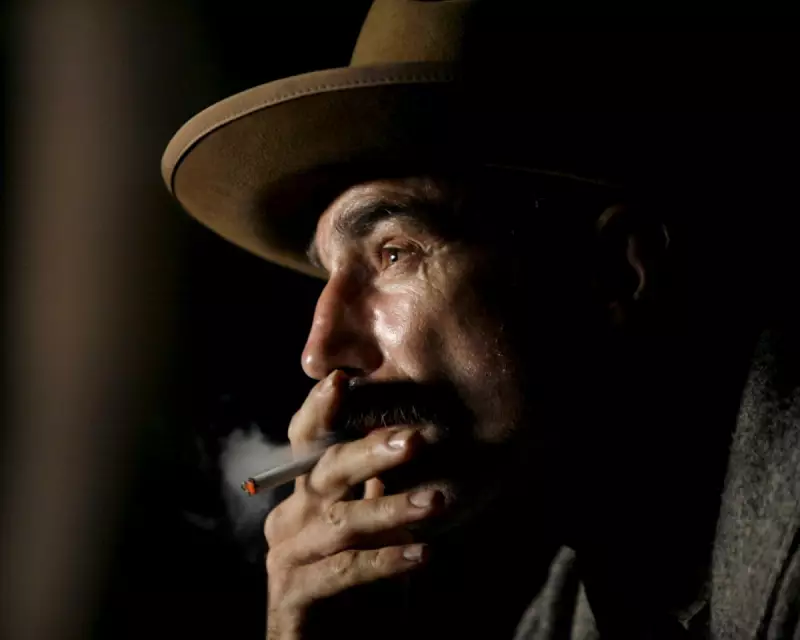
Ambition turns toxic in the form of Daniel Day-Lewis's Daniel Plainview in There Will Be Blood. A cold-hearted, manipulative oil tycoon, Plainview is exhilarating in his ruthless focus and brutal honesty. Despite being a murderer and a terrible parent, his formidable presence and darkly relatable frustrations ("I can't keep doing this on my own, with these … people") cement him as a towering antihero.
This theme of corrosive ambition finds its ultimate expression in Christian Bale's Patrick Bateman in American Psycho. Mary Harron's satire presents Bateman's sociopathic murder spree as indistinguishable from the vacuous corporate greed of his peers. His utter odiousness is essential to the film's critique of a world built on slick, empty surfaces, making him a chillingly recognisable figure in a new Gilded Age.
The Deeply Flawed and Unapologetic
Noah Baumbach's Greenberg features Ben Stiller's Roger Greenberg, a man drowning in mid-life disappointment. Unemployed, prickly, and caustic, Greenberg directs his rage through petty complaint letters and self-destructive outbursts. His insecure, adolescent impulses manifest not as immaturity but as profound frustration with life's failed promises, making him uncomfortably relatable.
Mike Leigh's 2024 film Hard Truths offers one of the most unrelenting portraits in Marianne Jean-Baptiste's Pansy Deacon. A howling locus of resentment and cruelty, Pansy finds almost no redemption or pity across the film's runtime. Her vivid, exacting miserableness is a stunning, if difficult, cinematic creation.
Finally, the blueprint for the corruptible American dream can be found in Orson Welles's Charles Foster Kane. The media baron's youthful idealism curdles into predatory self-service, his silky charisma a weapon for personal gain. He remains the towering archetype for cynical figures like Plainview or Mark Zuckerberg, seductive in his ambition and tragic in his emptiness.
These characters, from the grouchy to the monstrous, prove that unlikeability in cinema is not a flaw but a potent tool for exploration. They hold up a dark mirror to our own frustrations, ambitions, and failings, ensuring their place in film history is anything but forgettable.