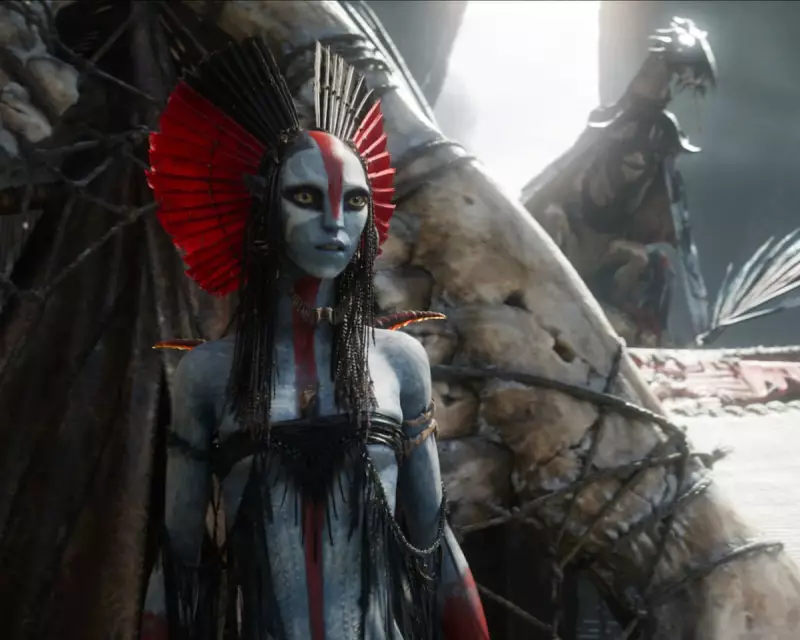
For over a decade, the world of James Cameron's Avatar has offered a comforting, if stark, moral certainty. The universe of Pandora was presented as a spiritually pure, interconnected system, where listening to nature guaranteed harmony and the destructive forces were always the invasive, profit-driven humans. The third instalment, Avatar: Fire and Ash, systematically dismantles this foundational reassurance, delivering a sequel that is darker, more complex, and argumentative with its own established lore.
The Fractured Na'vi: A World No Longer in Harmony
The most significant shift comes from within Pandora itself. The film introduces the volcano-dwelling Mangkwan clan, led by Oona Chaplin's ferociously unimpressed Varang. These are not the peaceful, tree-connected Na'vi of the forests. The Mangkwan believe their deity, Eywa, has abandoned them. In response, they have severed their neural connection entirely, dedicating themselves to raiding, torching human sky-ships, and violently opposing anyone who still preaches harmony.
Crucially, the film treats their perspective as coherent, not corrupt. Their aggression is framed as a survival strategy born from spiritual abandonment, not a simple moral failing. This internal fracture introduces concepts like sectarian conflict and resource wars to the bioluminescent moon, quietly detonating the franchise's core assumption that conflict only arrives from outside and that harmony is Pandora's default state.

An Unpredictable God: Eywa's Troubling Silence
Earlier films established Eywa as a tangible, responsive defence network. Characters could interface with it, appeal to it, and expect intervention when the stakes were high. Fire and Ash fundamentally alters this dynamic. Eywa becomes enigmatic and unpredictable. Sigourney Weaver's Kiri spends long stretches unable to summon the deity's aid, her prayers seemingly unanswered.
When intervention finally occurs, it is late, blunt, and indiscriminate. The deity behaves less like a responsive system and more like a vast, ancient entity with inscrutable priorities. The film posits a deeply unsettling idea: the only thing more frustrating than having no proof a god exists is having absolute proof—and still being unable to secure its help.
Moral Clarity Collapses: Survival Trumps Ideology
This tonal shift reaches its peak in the film's most chilling development. When the human character Spider is in mortal danger, Eywa doesn't send a sign or answer a prayer. Instead, through Kiri, the planet edits him biologically. Living mycelia envelop him, retrofitting his body to breathe Pandora's air without his consent.
This act of adaptation, not assimilation, shatters the saga's moral framework. If Eywa's goal is to defend against alien invasion, why demonstrate a biological path for humans to stay? The Resources Development Administration now knows adaptation is possible; the problem of human survival shifts from ethics to scalability. How long before they replicate the process without permission?
This moral decay even infects the heroes. Sam Worthington's Jake Sully is shown seriously contemplating the cold-blooded murder of Spider, viewing him not as a person but as a dangerous proof of concept. That he and Zoe Saldaña's Neytiri ultimately refrain doesn't restore clarity—it exposes how fragile their righteousness has become. Survival now means living with compromised ideals and unacceptable risks.
Quaritch: The Ultimate Spiritual Blind Spot
Amid this chaos, Stephen Lang's Colonel Miles Quaritch evolves into the saga's most dangerous element. His alliance and romance with Varang is a marriage of nihilistic convenience. Unlike Jake or Spider, Quaritch exploits Pandora without ever seeking to understand it. He represents a terrifying prospect in a story about adaptation: a man who is spiritually colourblind, believing only in leverage. His potential survival suggests a threat that no amount of natural wonder can counter, because he will never open his eyes to see it.

By the end of Avatar: Fire and Ash, James Cameron has successfully mutated his own creation. The saga that promised balance is now fascinated by fracture, asking harder questions about faith, survival, and the price of coexistence. Harmony is no longer guaranteed, and the path forward for Pandora looks more perilous and morally ambiguous than ever before.