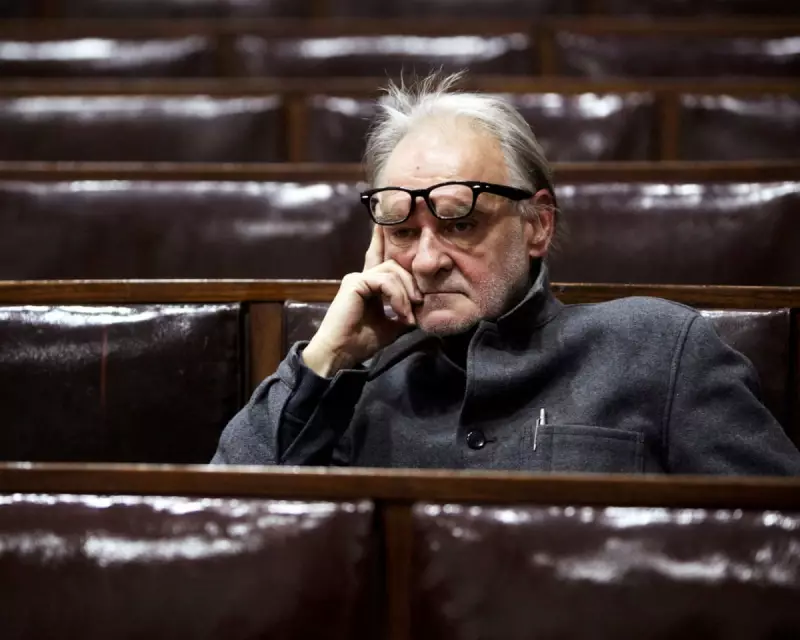
The film world is in mourning following the death of the revered and uncompromising Hungarian director, Béla Tarr. He was 70 years old. Tarr was celebrated for a singular body of work defined by poetic narratives, extended black-and-white cinematography, and a profound exploration of human desolation.
The Architect of Cinematic Time
Tarr's reputation rests on a handful of austere, meticulously crafted films that defiantly rejected conventional pacing. His 1994 epic, Sátántangó, runs for over seven hours and was famously championed by the critic Susan Sontag, who said she would be "glad to see it every year for the rest of my life". This film, along with Damnation (1988), Werckmeister Harmonies (2000), and his final feature, The Turin Horse (2011), established him as a giant of arthouse cinema.
His style was characterised by long, unbroken takes that followed "the logic of life", embracing repetition and a near-hypnotic rhythm. The average shot length in Sátántangó is two-and-a-half minutes, a stark contrast to modern editing techniques. He saw the technical limitation of film reels—capped at around 11 minutes—as "the worst form of censorship".

A Cosmic Vision Rooted in Community
Set in remote, often bleak Hungarian communities, Tarr's films are filled with a deep sensitivity to loss and a constant air of foreboding. He had a unique ability to locate epic, sometimes nightmarish, scale within mundane settings, earning comparisons to the painter Bruegel. An acute, layered use of sound further deepened the immersive, oppressive atmospheres of his work.
While he insisted his primary goal was to "talk about a kind of eternity", he acknowledged that warnings about populism and demagoguery were ingrained in films like Sátántangó and Werckmeister Harmonies. A fierce critic of Hungary's Prime Minister Viktor Orbán, Tarr labelled the regime "the shame of our country" for waging a "political war against intellectuals".
From Social Realism to Stylistic Mastery
Born in Pécs in 1955 and raised in Budapest by parents who worked in theatre, Tarr began making socially conscious documentary shorts at 16. His early features, such as Family Nest (1979), were gritty works of social realism. His distinctive style crystallised with Damnation, which first united the key elements of his mature period: black-and-white photography, a screenplay by Nobel laureate László Krasznahorkai, extended takes, and inclement weather.
His collaborations were central to his process. He frequently worked with his editor and first wife, Ágnes Hranitzky, cinematographer Fred Kelemen, and composer Mihály Víg. Despite his formidable reputation, his influence remained niche, directly inspiring only a few filmmakers like Gus Van Sant, who thanked Tarr in the credits for his film Gerry.
After The Turin Horse, which he declared his final film, Tarr retired from directing features. He remained active in film, producing projects like the Icelandic folk horror Lamb (2021) and running the film.factory school in Sarajevo, which he launched in 2013. In a 2024 interview, he described filmmaking as a "drug" but stated simply of his retirement: "The work is done."
His legacy is experiencing a resurgence. In the 2022 Sight & Sound critics' poll, Sátántangó was ranked the 78th greatest film of all time. For a new generation seeking depth over distraction, Tarr's demanding, cosmic cinema offers a powerful and enduring alternative.
His marriage to Ágnes Hranitzky ended in divorce. He is survived by his second wife, the art curator Amila Ramovic.