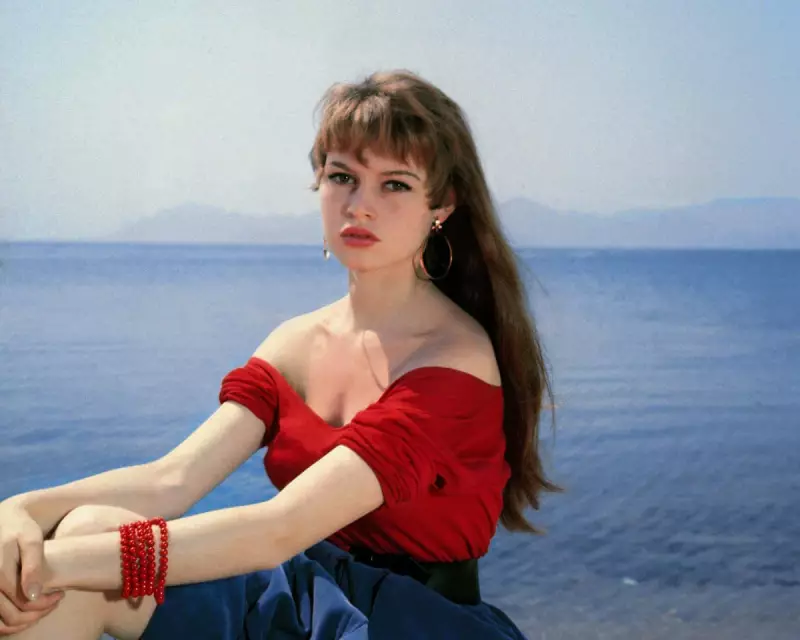
The world of cinema and activism has lost one of its most enduring and controversial figures. Brigitte Bardot, the French actress who became a global sex symbol in the 1950s and 1960s before dedicating her life to animal rights, has died at the age of 89. Her passing marks the end of an era for a woman who defined a certain image of French femininity and passion on the international stage.
From Screen Siren to Reclusive Activist
Bardot's journey from a ballet student to a cinematic icon was meteoric. Discovered by director Roger Vadim, whom she later married, her breakthrough role came in 1956 with And God Created Woman. The film, directed by Vadim, shocked audiences with its then-daring sensuality and catapulted Bardot to instant, worldwide fame. She became the embodiment of a new, liberated post-war femininity, with her signature blonde bouffant, feline eyeliner, and carefree attitude.
Throughout the late 1950s and 1960s, she starred in a string of successful films, working with esteemed directors like Jean-Luc Godard in Contempt (1963) and Louis Malle. Her on-screen persona was a potent mix of innocence and provocation, making her one of the first true international movie stars of the modern media age. However, at the height of her fame in 1973, Bardot made a stunning decision. She retired from acting at the age of 39, declaring she had given enough of herself to the public eye.

A Second Act Defined by Animal Advocacy
Bardot's retirement from cinema was not a retreat into quiet privacy. Instead, she launched a second, fiercely combative career as an animal rights activist. In 1986, she founded the Brigitte Bardot Foundation for the welfare and protection of animals. This new chapter saw her leverage her immense fame for a cause she described as her true life's purpose.
Her activism was relentless and often landed her in legal trouble. She was convicted multiple times for inciting racial hatred due to inflammatory comments in her campaign writings, where she frequently compared animal slaughter to human atrocities. Despite the controversies, her foundation became a powerful force, campaigning against seal hunting, bullfighting, and the consumption of horse meat. Her uncompromising stance made her a polarising but undeniably influential figure in the animal welfare movement.
A Complex and Enduring Legacy
Brigitte Bardot leaves behind a legacy that is impossible to simplify. As a film star, she was a cultural phenomenon who helped shape the image of modern celebrity. Her visual style and persona influenced fashion, beauty, and the very idea of the screen goddess for generations. Films like And God Created Woman remain landmark works in cinematic history.
Yet, her later years were dominated by her fervent, and often problematic, activism. While adored by animal lovers worldwide, her outspoken views frequently strayed into territory that drew condemnation. This duality—the beloved icon of French cinema and the contentious, reclusive campaigner—defines her story.
Bardot was married four times, notably to actor Jacques Charrier, with whom she had her only son, Nicolas-Jacques Charrier. She spent her final decades largely out of the public spotlight at her home in La Madrague, Saint-Tropez, with her animals, far from the film sets that made her famous. The death of Brigitte Bardot closes the final chapter on one of the 20th century's most fascinating and contradictory public lives.