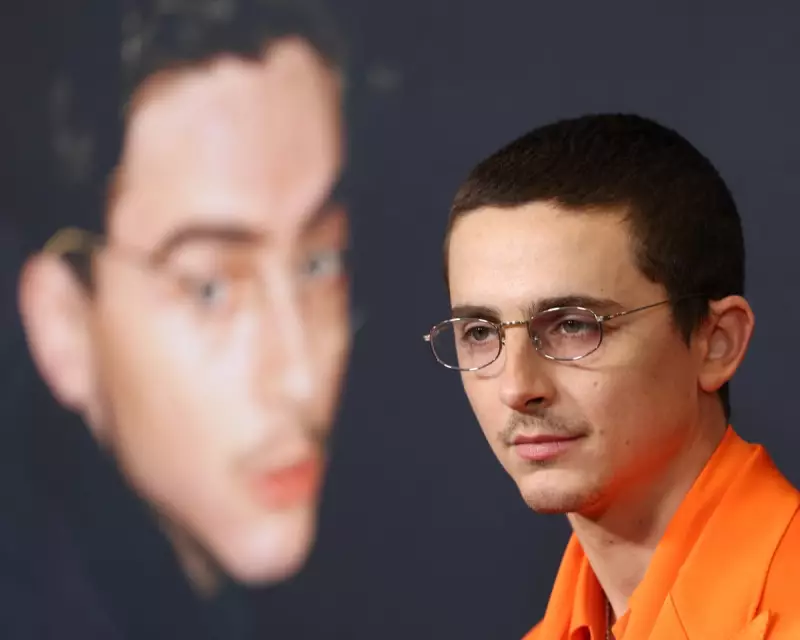
In a year where star-studded original films have consistently crashed at the box office, Timothée Chalamet is attempting to rewrite the rulebook with a marketing campaign so committed, so bizarre, it has become a piece of performance art in itself. The campaign is for Marty Supreme, Josh Safdie's 1950s-set ping-pong epic, and it represents a desperate, ingenious, and wildly entertaining fight for audience attention.
The Meta Leak That Started It All
On 15 November, Chalamet uploaded an 18-minute video to his Instagram, cryptically titled "video93884728.mp4". It purported to be a leaked Zoom call where the actor pitched increasingly unhinged marketing ideas to A24 staff. Proposals included painting the Statue of Liberty and the Eiffel Tower a specific shade of orange to "highlight international cooperation." The video was a satirical masterstroke, simultaneously mocking the tedium of corporate marketing while launching an actual, equally thirsty campaign. "Movie marketing is trying to be passive, trying to be chic," Chalamet declared in the clip. "We're not trying to be chic."
A Blitz of Orange and Absurdity
What followed was a press run that was anything but passive. The campaign, built around the film's signature orange, has been a flood of surreal stunts:

- Pop-up screenings where Chalamet was flanked by bodyguards with giant orange ping-pong balls for heads.
- A near-silent Instagram Live that hammered home the mantra "Marty Supreme Christmas Day."
- An ad campaign featuring 'GOATs' like Tom Brady and Misty Copeland in a branded windbreaker.
- A mock talent show judged by Chalamet and his ping-pong-headed security.
- The pièce de résistance: a bright orange blimp floating over Los Angeles, ferrying journalists. A24 even managed to light the Las Vegas Sphere in the film's specific rust hue.
The hype reached a fever pitch when Chalamet debunked rumours he was secretly rapper EsDeeKid by appearing in the artist's music video. The strategy appears to be working. In limited release in New York and Los Angeles, the film scored the best per-theatre average opening since 2016, a crucial win for A24's most expensive film to date, with a budget around $60 million.
A Stark Contrast to a Year of Star-Studded Flops
This success shines a harsh light on a dismal year for original, A-list cinema. Despite massive star power, films like A Big Bold Beautiful Journey (Margot Robbie, Colin Farrell), The Smashing Machine (Emily Blunt, Dwayne Johnson), and Anemone (Daniel Day-Lewis's comeback) failed to draw crowds. Even Jennifer Lawrence's charm offensive on Hot Ones couldn't save Die, My Love.
The old playbook—late-night show anecdotes, glossy magazine profiles—is broken. Marketers now chase the "New Media Circuit," a vast ecosystem of podcasts and viral gimmicks to "activate the internet." This has led to surreal sights like George Clooney and Leonardo DiCaprio on the Kelce brothers' podcast. As Chalamet noted in interviews, "People's attention spans are so short these days... I have an audience, so I engage with them, and I give it 150%."
The Larger Crusade for Cinemas
Chalamet, a veteran of innovative campaigns like last year's for A Complete Unknown, has framed his antics as a crusade for original filmmaking. On The Tonight Show and Good Morning America, he directly pleaded with viewers to see the film in cinemas. This echoes the sentiment of Ryan Coogler, whose hit Sinners succeeded partly on a sincere pitch for theatrical cinema as a societal pillar.
While not every film can match Marty Supreme's alchemy of a game star, a sellable pitch, and a solid cause, Chalamet's 150% effort has provided a new, exhilarating blueprint. In an oversaturated media world, the campaign proves that surprise, memorability, and sheer audacity might just be the keys to convincing audiences to leave their sofas. The question for Hollywood in 2026 is: who will be brave enough to pick up this new playbook?