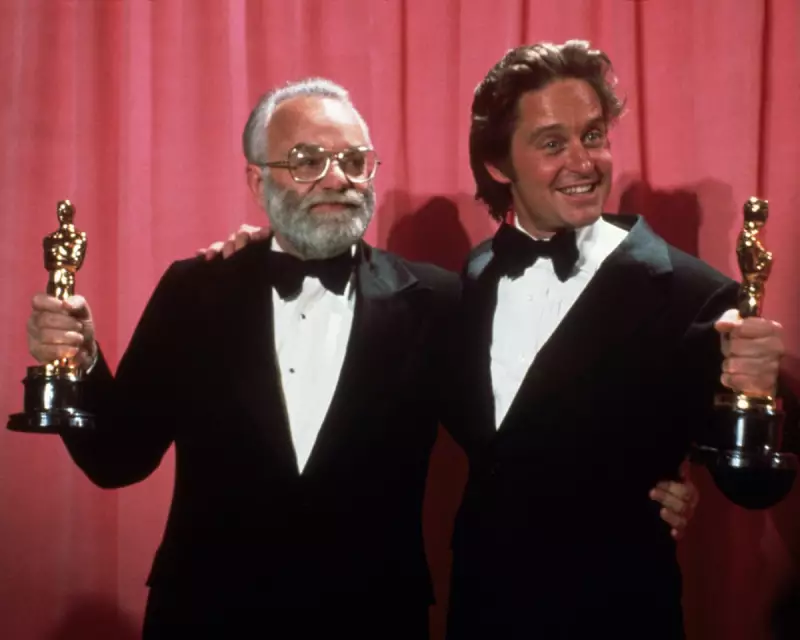
Fifty years after its seismic release, the Oscar-sweeping film One Flew Over the Cuckoo's Nest continues to be a touchstone for rebellion. For Michael Douglas, who made his producing debut on the project at just 31, its themes feel chillingly contemporary.
A Timeless Tale of Rebellion
Speaking via Zoom from Santa Barbara, the 81-year-old actor and producer reflected on the film's enduring power. "It's about as classic a story as we'll ever have and it seems timeless now," Douglas observed, linking the narrative to modern political climates. "It's about man versus the machine and individuality versus the corporate world." He pointed to a global trend towards "autocratism" in times of insecurity, where people seek "an omnipotent figure that will solve everything."
The film's iconic antagonist, Nurse Ratched, played by Louise Fletcher, embodies that oppressive authority. Her battle of wills with the rebellious Randle McMurphy, a career-defining role for Jack Nicholson, lies at the heart of the story. Released on 4K Blu-ray last month for its anniversary, the film's journey to the screen was a long and personal one for the Douglas family.

A Family Legacy and a Generous Gesture
The rights to Ken Kesey's 1962 novel were originally acquired by Michael's father, Kirk Douglas, after his success in Spartacus. Kirk starred in a 1963 Broadway adaptation but struggled for years to get a film made. "I never thought about producing," Michael Douglas admitted, "but I said let me run with it and he was generous enough and kind enough to let that happen."
His gamble paid off spectacularly. The film became a critical and commercial triumph, but Michael ensured his father benefited. "My half of the producing fee I gave to Dad," he revealed, noting Kirk made more from that deal than from any other film in his career. While Kirk was disappointed not to play McMurphy, his son said he was ultimately "proud and impressed," viewing Michael with a newfound respect. "To your father you were always a kid," Douglas mused, "so it was nice."
Serendipitous Casting and Groundbreaking Authenticity
The casting process was filled with fortuitous moments. After securing a commitment from Jack Nicholson, the search for Chief Bromden seemed daunting. The answer came from a chance encounter on a flight to New York. A used-car dealer from Oregon later called Douglas, describing "the biggest sonofabitch Indian I ever seen." That man was Will Sampson.
"Will comes off [a plane] with his cowboy boots on and his hat and he's over seven feet," Douglas recalled of meeting Sampson with Nicholson at Portland airport. "Jack shouts: 'Oh, my God, it's the chief!'"
Casting Nurse Ratched proved difficult in the feminist era of Gloria Steinem, with four major actresses turning down the villainous role. Director Miloš Forman found Louise Fletcher in a Bob Altman film, and she delivered an Oscar-winning performance.
To achieve authenticity, the production filmed in an active Oregon psychiatric hospital in January. The hospital's director, Dr. Dean Brooks, encouraged patients to work on the crew and integrated the actors into real group therapy sessions. "We had an arsonist working in the art department," Douglas remembered with a hint of concern. This immersive approach, where actors sometimes slept on set, created an unparalleled bond and realism.
Actor Brad Dourif, who played the stuttering Billy Bibbit, valued the experience. "We would go up and spend four hours in maximum security with dangerous people," he recalled from his home in Woodstock, New York. Forman's direction was clear: "He kept saying, 'Do it natural, natural'." Dourif worked on his character's stutter in places like Grand Central Station, understanding it as an act of courage.
A Defining Cinematic Triumph
Despite being rejected by every major studio, One Flew Over the Cuckoo's Nest made history by winning the "big five" Academy Awards: Best Picture, Director, Actor, Actress, and Screenplay. Steven Spielberg later said he would have voted for it over his own Jaws for Best Picture that year.

Dourif credited Nicholson with elevating the entire cast. "He brought everybody up... He was the only person who had done a lot of movies. The rest of us had done stage so he knew what we were supposed to do." Nicholson's innate rebellious spirit, Dourif noted, evolved into a message of collective empowerment: "'I can do what I want, and you can too.'"
The film's powerful ending, featuring the Chief's escape, remains iconic. Douglas highlights composer Jack Nitzsche's bowed saw score and Christopher Lloyd's ecstatic reaction as key to its success. "It was one of those pictures where we're firing on all cylinders," Douglas said. "My first movie as a producer, it lends me so much information for the rest of my career." Five decades on, the spirit of McMurphy's rebellion, and the story of its making, continue to inspire.