Mother Mary Review: A Visually Stunning but Muddled Pop Star Drama
For dedicated pop music enthusiasts, idolizing a diva often involves embracing their unique brand of philosophical rambling. When Anne Hathaway, portraying the eponymous singer in David Lowery's Mother Mary, explains that her new single Spooky Action explores Einstein's "transubstantiation of feelings," I dismissed the skeptical chuckles from nearby theatergoers. Initially, this reminded me fondly of Lady Gaga's era of describing her music as a reverse Warholian explosion—a pop icon unafraid to embrace high-concept absurdity. However, my goodwill evaporated as I recognized that both the character and the film were critically deficient in a quality essential for any contemporary pop sensation: genuine self-awareness.
A Haunted Pop Star's Fashion Emergency
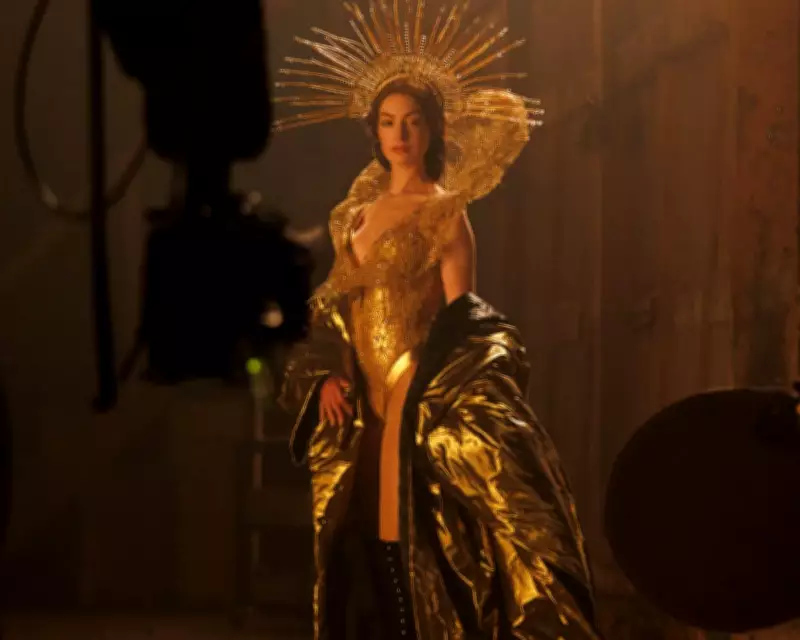
Mother Mary follows a once-top-tier musician seeking a career resurgence after a mysterious hiatus. She appears profoundly troubled, compounded by a sartorial crisis as she scrambles to find an outfit for her impending comeback performance. Just three days before her grand return, she arrives drenched at the Gothic estate of fashion designer Sam Anselm, portrayed with delicious extravagance by Michaela Coel. Desperate for a garment that "feels like me," Mary pleads for assistance.
Sam has evolved significantly since her previous collaboration, and possible romantic involvement, with the pop star. In fact, she harbors intense disdain for Mary, describing her in voiceover as "a carcinogen, a tumor" with rising bile. Despite this animosity, Sam experiences an almost supernatural attraction to Mary and agrees to design her stage costume. Working with chiffon in a decaying barn, Sam crafts a look under Mary's sole restriction: no red, due to a haunting by a crimson-hued demon.

Style Over Substance in a Preposterous Narrative
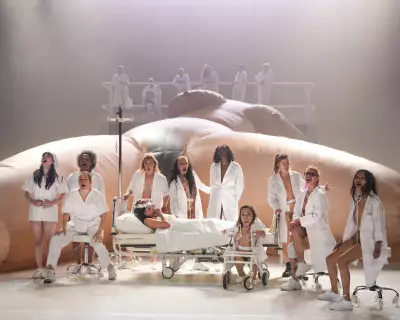
This premise launches two hours of absurd yet consistently elegant cinema, featuring grandiose performances amidst eerie barn settings, extravagant flashbacks to Mary's electrifying arena concerts, a venture into body horror, and visually breathtaking sequences merging Dalí-esque surrealism with the polished aesthetics of modern pop stages.
While Hathaway earned an Academy Award for her last musical role in 2012's Les Misérables, similar accolades seem unlikely for Lowery's often bewildering stylistic experiment. Nevertheless, she convincingly embodies a pop superstar in flashbacks, executing polished choreography with backup dancers and performing the FKA twigs-penned My Mouth Is Lonely For You under dramatic blue lighting. The soundtrack also includes contributions from Charli xcx and Jack Antonoff.
Given that much of the film centers on tense dialogues between Mary and Sam in the designer's Miss Havisham-esque barn, a significant portion of the reported $100 million budget evidently funded the spectacular concert sequences. Compared to recent films like Trap and Smile 2, which demonstrate commendable effort, Mother Mary's pop spectacle stands in a league of its own regarding visual ambition.
Coel's Performance Outshines the Material
Although Hathaway has the more flamboyant role, Michaela Coel delivers the film's standout performance with nuanced subtlety. Her portrayal of Sam is as remotely icy and authoritative as the Dickensian character she references. Like Mary, Sam communicates as if she ingested a philosophy textbook, but she delivers the sharpest one-liners and unearths humor within Lowery's predominantly somber script. This provides a crucial counterbalance to Hathaway's intensely earnest approach, which treats Mother Mary with the gravity of Hedda Gabler.
Admittedly, the script's deficiencies limit the actors' potential. When Sam inquires if Mary desires to "look like a knife," Mary responds, "I want to have a point." One might speculate whether Lowery ever posed himself the same question regarding his film's narrative coherence.

Underutilized Supporting Cast and Missed Opportunities
The film offers respite when shifting focus from Mary and Sam's existential barn debates to the supporting actors. FKA twigs commits fully to a quasi-erotic tango with Mary in a strange Ouija board flashback, while Sian Clifford from Fleabag provides hilariously expressive reactions as Mary's overwhelmed manager. Regrettably, other notable cast members are severely underused: Hunter Schafer's role feels unnecessary, and Kaia Gerber receives minimal opportunity to showcase the comic talent she displayed in Bottoms.
Further frustration arises from Mother Mary's avoidance of substantive themes it implicitly raises. Marketed as a "psychosexual pop thriller," the film displays puzzling reticence regarding its central queer relationship, seeming prudish in today's era of sapphic pop prominence. Additionally, viewers may question how Coel's Sam, described as working-class in production notes yet speaking with regal Received Pronunciation, developed a fashion philosophy akin to Joan of Arc's armor. A more insightful film might have explored parallels between Hathaway's celebrity status and Mary's pop icon persona, examining how prolonged stardom impacts psychological well-being.
Clear Influences Without Mastery
Lowery's film certainly possesses dazzling moments. However, as with one of the director's evident inspirations, many will recognize his references all too transparently. A sweeping backstage shot of Mary between performances will immediately evoke The Cook, the Thief, His Wife & Her Lover for any cinema student—an unwise choice for a confused film far removed from Peter Greenaway's exquisitely perverse fashion fantasy. Similarly, an early scene where reverse shots of the leads' faces dissolve into each other too obviously nods to Liv Ullmann and Bibi Andersson in Ingmar Bergman's 1966 masterpiece Persona. Lowery is no Bergman.
As the screening concluded, I overheard an audience member describe Mother Mary as an ideal "gay guy movie." On paper, it contains the essential ingredients: glamorous actors, a central will-they-won't-they dynamic, and a ghost seemingly crafted from glittering fabric. Unfortunately, Lowery's excessively solemn approach lacks the wit necessary to transform its jumble of concepts into a future cult classic. The irony is palpable for a film centered on a dress. Mother Mary releases in US cinemas on April 17, in the UK on April 24, and in Australia on May 14.