The Oscars' Newest Category Faces a Defining Moment
For the first time since 2002, when Best Animated Feature debuted, the Academy Awards have introduced a brand-new competitive category: Achievement in Casting. This 2026 addition represents Hollywood's attempt to finally recognize one of the film industry's most invisible yet absolutely vital crafts. However, this new award faces immediate challenges regarding its purpose and independence within the awards landscape.
Why This Category Matters Now
As veteran casting director Mark Summers explains, 'Casting is a bit like The Wizard of Oz – lots of smoke and mirrors. Few people truly see how hard we work, or how much support we give actors throughout the process.' Summers emphasizes that casting directors are typically the first professionals brought onto a production, making the initial calls and selections, yet they're often the last to receive recognition. The creation of this award represents long-overdue acknowledgment for a craft that fundamentally shapes every film production.
The Betting Odds Versus Artistic Merit
According to leading bookmaker Paddy Power, the musical vampire thriller Sinners stands as the overwhelming favorite at 3/10 odds, with One Battle After Another trailing at 13/5. The Brazilian political drama The Secret Agent remains a distant outsider at 13/1. The bookmaker's assessment captures the conventional wisdom: 'Sinners looks to have this one in the bag, but Hollywood always loves an underdog story!'

Yet this betting landscape highlights precisely the problem facing the new category. If Achievement in Casting simply follows the momentum of Best Picture contenders, it risks becoming redundant rather than establishing its own distinct criteria for excellence.
The Inaugural Shortlist's Revealing Pattern
The first-ever nominees for Achievement in Casting all come from Best Picture contenders: Hamnet, Marty Supreme, One Battle After Another, The Secret Agent, and Sinners. This overlap presents a significant concern for the category's future relevance. As Summers notes, 'A lot of Hollywood films are pre-packaged: they come with the director and the star already attached. But casting awards arguably should recognise the people working in independent films.'
He draws a crucial distinction: 'On an indie, you start with just a script and no cast and you do absolutely everything. On bigger budget studio films, you often already have a starting point.'
Why The Secret Agent Represents Transformative Casting
For the new award to establish meaningful criteria separate from box office success or production scale, it must recognize casting that creates something that wouldn't otherwise exist. Nowhere is this achievement clearer than in The Secret Agent, set in late-1970s Brazil under military rule.
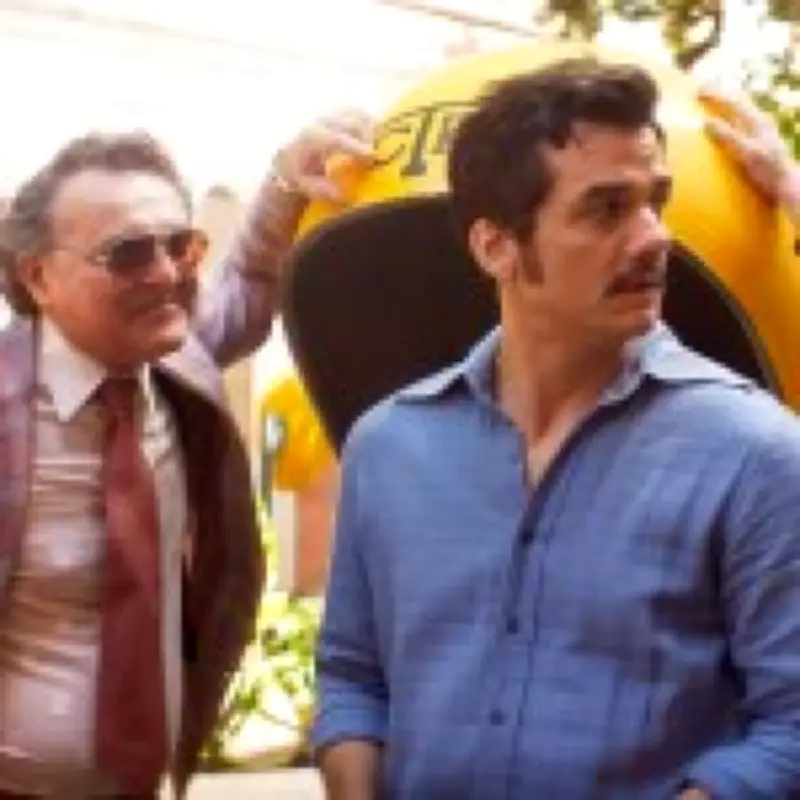
Casting director Gabriel Domingues's work constructs an entire social world from scratch, blending professional actors with non-actors in what feels like anthropological authenticity. The film unfolds primarily within a Recife safe house filled with misfits, refugees, radicals, and survivors. Faces appear genuinely lived-in, bodies shaped visibly by labour, class, and history.
The film's masterstroke comes in the character of Dona Sebastian, portrayed by 79-year-old first-time actor Tânia Maria in a role written specifically for her. Her performance as Wagner Moura's landlord becomes the film's gravitational center – unvarnished, specific, and impossible to manufacture through traditional training or star casting. This performance exists because someone recognized that Maria's presence carried an entire history within it.
The Category's Existential Challenge
A revealing awards split highlights the issue: The Secret Agent earned a Best Casting nomination but not a Best Director nomination, where Joachim Trier edged it out. This gap suggests the film's most singular creative intervention may not occur behind the camera, but in the act of choosing who stands in front of it.

Summers states plainly: 'The entire production relies on casting. Without casting, there is no production.' If the Academy simply crowns whichever Best Picture frontrunner has the strongest overall narrative, the new category signals that casting remains subordinate to directing and producing. Conversely, if it honors work that transforms a script into a living social organism, it establishes casting as a primary creative force.
Industry and Fan Perspectives
The Secret Agent's nomination has already sparked significant discussion among awards observers who hope the category can prove its independence. One Reddit user wrote: 'The Secret Agent showing up here was probably my favorite nomination.' Another commented: 'The cast is wonderful! It should win this award if the category is going to matter at all.'
While Sinners casting director Francine Maisler deserves recognition for her legendary career and the thousands of auditions required to find first-time actor Miles Caton, her achievement operates within an already powerful industrial machine – a major studio film with significant backing, profile, and momentum.
The Path Forward for Achievement in Casting
In betting terms, The Secret Agent taking home the trophy remains a long shot. But if the Academy wants Achievement in Casting to mean something distinct from Best Picture and Best Director – if it wants this category to justify its own existence – then the winner must be the film whose casting fundamentally changed its very essence. On that crucial measure, The Secret Agent stands apart as the choice that would establish meaningful criteria for years to come.
The 2026 Oscars present not just an awards competition, but a test of whether Hollywood can properly recognize the art of casting as distinct from other filmmaking disciplines. The decision will set a precedent that either establishes casting as a primary creative force or relegates it to secondary status within the industry's hierarchy of recognition.