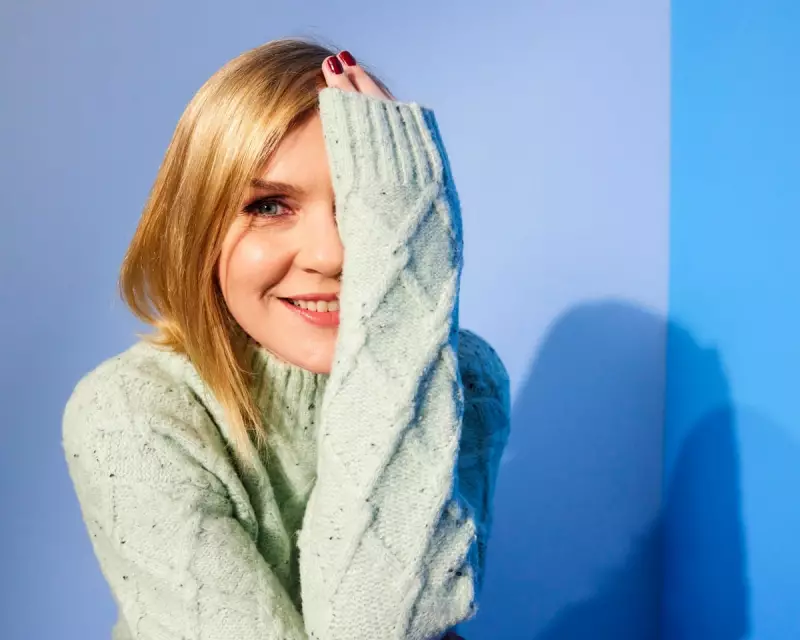
Rhea Seehorn, the acclaimed star of Apple TV's breakout hit Pluribus, has experienced a transformative year, finally stepping into the spotlight as a series lead after years of being hailed as an underappreciated talent. The show, which recently became the streaming service's most-watched programme, has catapulted her to a new level of fame, a shift she navigates with a mix of excitement and characteristic humility.
The Challenge of a Lifetime and Crosswords
In a recent interview, Seehorn's vibrant personality shone through, a stark contrast to her character Carol Sturka—a world-weary grouch tasked with saving humanity from an alien hive mind. "I love making the show," she revealed. "It has been the most challenging thing I’ve ever done, and the most rewarding." Before delving into the show's intensity, however, she was preoccupied with a more personal puzzle: her ongoing battle with the Guardian crossword, a challenge she has yet to conquer.
The premise of Pluribus is high-concept and deeply resonant. Created by Vince Gilligan, the mind behind Breaking Bad and Better Call Saul, the series explores a world where an alien virus has pacified the global population into a blissful, unified consciousness. Seehorn's Carol is one of the few unaffected individuals, burdened with the monumental and lonely task of restoring free will, a mission complicated by a deadly consequence: millions die whenever she loses her temper.

Avoiding the Online Discourse and Finding Joy in Surprise
The series has sparked fervent online debate, with some viewers questioning why Carol wouldn't simply submit to the virus's peaceful existence. Seehorn, however, finds the concept devoid of true joy. "When I think about happiness and joy, it always comes down to surprise," she explained. In the world of Pluribus, she argues, there is no new art, literature, or genuine laughter because nothing is unexpected.
Despite the show's passionate fanbase, which rivals the obsession once seen with Lost, Seehorn consciously avoids diving into the digital discourse. "I’m too much of a scaredy-cat to look online," she admitted. Her method of decompressing from the show's emotional and physical demands is decidedly analogue: Lego sets, jigsaw puzzles, embroidery, and painting litter her home, serving as therapeutic outlets.
Co-Star Support and the Tradition of Living Together
The pressure of carrying her first major series did not go unnoticed by her former colleagues. Bob Odenkirk, her co-star from Better Call Saul, expressed concern after watching early episodes. "He called to check on me after he saw a couple of episodes," Seehorn shared with a laugh, noting that Odenkirk is familiar with her creative, "squirrelly" methods of unwinding.
This camaraderie stems from a unique tradition established during Better Call Saul, where Seehorn, Odenkirk, and Patrick Fabian chose to live together during production to support each other through the mentally taxing work. For Pluribus, which films in Albuquerque, she continued this practice by moving in with the show's head of hair department, Trish Almeida. "Sometimes even just seeing somebody for a cup of coffee can make your week," she said, highlighting the isolation that came with playing such an intense, solitary character.
The first season concluded on a major cliffhanger on Boxing Day, leaving audiences eagerly awaiting the next instalment. While a second season is confirmed, Seehorn remains in the dark about Carol's future, receiving scripts one at a time, much like her experience on Better Call Saul. "I haven’t a clue in the world where they’re going," she said of the upcoming plot, trusting entirely in Gilligan and his writing team. For now, the star of the moment is content to focus on the present, her Lego bricks, and that elusive crossword solution.