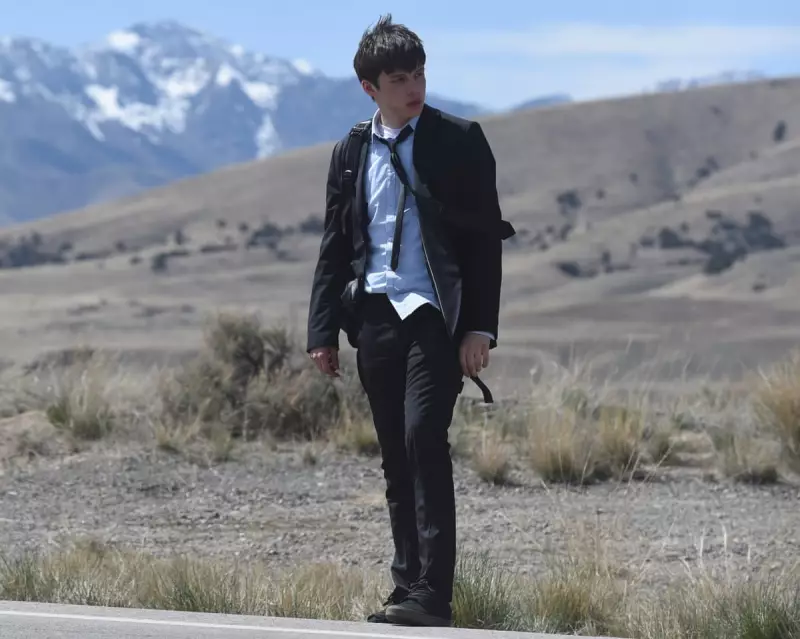
The 2016 film Being Charlie has been irrevocably transformed from a little-seen indie drama into a piece of cinematic history shadowed by real-life horror. Directed by the late, celebrated filmmaker Rob Reiner, the movie was a collaborative project with his son, Nick Reiner, who co-wrote the screenplay based on his personal struggles. The film's exploration of addiction and fraught family dynamics now carries an unbearable weight, following Nick Reiner's arrest in connection with the murder of his parents.
A Departure from the Norm
In the context of Rob Reiner's filmography, Being Charlie was a distinct outlier. By the 2010s, Reiner had settled into making star vehicles for veteran actors like Michael Douglas and Morgan Freeman. This film, however, was a gritty, grounded drama focused on addiction, featuring younger talent and more explicit content than his usual work. It starred Nick Robinson as Charlie, a college-aged young man cycling in and out of rehab, with Cary Elwes playing his disapproving father, David.
The screenplay, co-written by Nick Reiner and Matt Elisofon, was loosely inspired by the Reiners' own father-son relationship. In a curious fictional twist, the father character is not a director but a former actor-turned-politician running for Governor of California—a path Rob Reiner himself once considered. The film transposes the elder Reiner's comedic legacy onto Charlie, who pursues stand-up comedy.

The Unsettling Authenticity in Hindsight
Watching the film today, its most authentic-feeling moments are not the broad family melodrama or the heightened consequences of addiction, but the quieter, uneasy sequences in between. The scenes where Charlie is restless in rehab or navigating sobriety in a halfway house resonate with a palpable, uncomfortable truth. The other narrative elements can feel like an intrusion, perhaps a result of Reiner shaping the project into a redemptive family story.
Technically, the film stands apart from Reiner's later work. It shows a keen attention to its young cast and possesses a visual texture distinct from his more mainstream offerings. Reiner was always a director who served the script, and here his attempt to lavish care on his son's story was clearly a labour of love—a fact that now makes the viewing experience profoundly harrowing.
A Story Missing Its Crucial Piece
The central tragedy of Being Charlie is its inherent limitation. The character of Charlie, while flawed, shows no hint of the violence or profound instability alleged in the real-world case. His struggles are familiar and empathetic. Rob Reiner, a filmmaker fascinated by the stories we tell ourselves, crafted a narrative seeking understanding and redemption. Yet, the film now feels like it was eliding a greater, darker pain—a pain that has since erupted with devastating consequences off-screen.
What was once a personal project about hope and recovery has become a tragic puzzle piece. Being Charlie no longer exists solely as a film; it is a document of a father's hope for his son, a hope that met a reality far more terrible than any screenplay could contain. The film is available on Amazon Prime in the UK, Tubi in the US, and Plex in Australia.