The final chapter of Netflix's global phenomenon, Stranger Things, is barrelling towards its conclusion, and the penultimate batch of episodes in Season 5, Volume 2, delivers a paradoxical experience. It's a series simultaneously buckling under the weight of its own convoluted mythology while still managing to deliver pulse-pounding, nostalgic spectacle that, against all odds, absolutely slaps.
A Mountain of Mythology and Admin
Let's be clear: this is not the entry point for newcomers. After nearly a decade on air, the show's lore has become a sprawling, often unwieldy beast. A significant portion of these new episodes is dedicated purely to explanation, with characters constantly reminding each other—and by extension, the audience—of the increasingly complex rules governing the Upside Down. At one point, Maya Hawke's Robin is forced to deliver a painstaking, prop-assisted plot recap, a moment that prioritises clarity over entertainment.
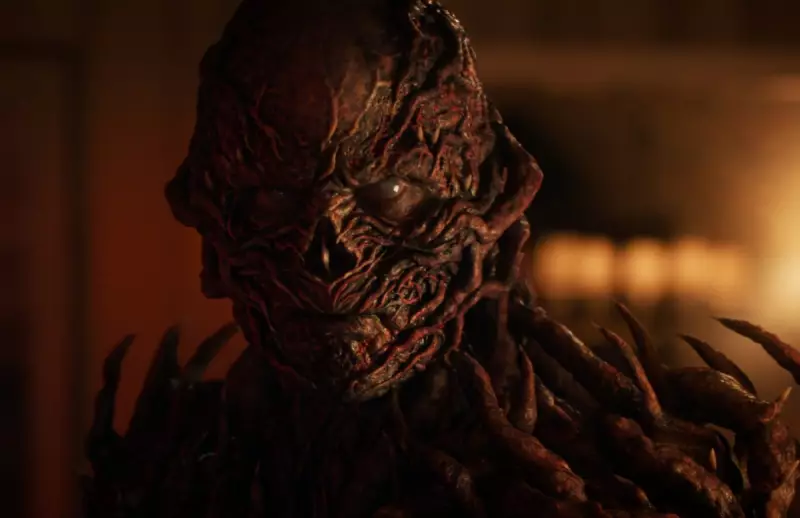
The core revelation this volume is that the Upside Down isn't merely a parallel dimension but a wormhole to something far worse. The villainous Vecna, described in one brilliantly scathing critique as "a winning cross between the Grinch and an unbroadcastable outtake from a colon cleanse commercial," aims to collapse this gateway and conquer our world. To stop him, our heroes are scattered across multiple realities: some in the real world, some in the Upside Down, and others in a secret memory world nested within it. For reasons best known to the Duffer Brothers, two characters even find themselves trapped in a room slowly filling with yoghurt.

The Ageless Cast and Narrative Sprawl
One of the most jarring elements is the undeniable ageing of the core child cast, now young adults whose Adam's apples are prominently on display. More egregious is the criminal sidelining of veteran star Winona Ryder, whose character Joyce Byers has been relegated to the narrative sidelines. The show also suffers from a severe case of character bloat; with an ensemble cast now numbering in the teens, many feel dramatically superfluous, their presence serving only to complicate the Herculean task facing the finale.
Unlike prestige dramas like Breaking Bad or The Sopranos, which streamlined their narratives for a powerful climax, Stranger Things continues to add. The finale must now defeat Vecna, rescue children, save the world, stop the evil scientists, and provide satisfying emotional closure for roughly 17 characters. It's a staggering amount of narrative admin for a limited runtime.
Why It Still Somehow Works
Yet, the miracle is that much of this volume remains supremely watchable. When the show commits to action, it remains a pedal-to-the-metal spectacle. The sequences are beautifully choreographed, the 80s nostalgia still hits effectively, and the emotional stakes are pitched at a consistently operatic level. On a moment-to-moment basis, the sheer craft and energy are undeniable.
The main pitfall of the split-season release is that it grants audiences time to think. In the week-long gap before the final episode, logic intrudes. You notice characters conveniently fluctuating in intelligence, the bloat of the cast, and the more tired plot mechanics. But when you're in the thick of it, Stranger Things retains an infectious, chaotic magic. Whether the Duffer Brothers can tie this sprawling saga together with a satisfying bow remains to be seen. But as the show itself has taught us, stranger things have certainly happened. The final episodes are on Netflix now.